



Photo: Microsoft Stock Images
Packaging creates long-term waste
Plastic packaging remains one of the biggest environmental concerns associated with grocery shopping. Individually packaged snacks, produce containers, and single-use bags often create large amounts of waste that can sit in landfills for years.
Overpackaged products also typically require additional materials, shipping space, and manufacturing energy. You can reduce unnecessary waste by choosing products with recyclable packaging and buying larger household essentials in bulk. Reusable shopping bags also make a difference over time. One plastic bag may seem small, but if you use it repeatedly, it can quickly add up to your weekly shopping needs.
Impact of transportation on the environment
Many groceries travel long distances to reach stores. Transporting food across countries and countries requires fuel, refrigeration, and extensive transportation networks, which increases emissions.
Seasonal and locally grown produce often requires less transportation than produce imported from further away. Farmers markets and local suppliers can help reduce the environmental burden associated with transportation while supporting local agriculture.
Food waste causes hidden problems
Food waste is more than just discarded leftover food, it has an impact on the environment. Water, land, fuel, fertilizer, and labor all go into producing food and can end up being thrown away unused.
Buying more than you need often increases household waste, especially when it comes to perishable foods. Planning meals before shopping can help households cut down on spoiled produce and unused ingredients throughout the week.
Proper storage of food is also important. Refrigerating produce properly and freezing leftovers early can extend shelf life while reducing waste.
Meat and dairy products require more resource use
Animal-based products generally require more land, water, and feed production compared to many plant-based foods. Beef production, in particular, often has a greater environmental impact due to land use and emissions associated with livestock farming.
This doesn’t mean people have to completely eliminate meat and dairy from their diets to make environmentally responsible choices. Some families are mitigating the impact by adding more plant-based meals per week or choosing smaller meals more frequently.
Summary: Small changes add up over time…
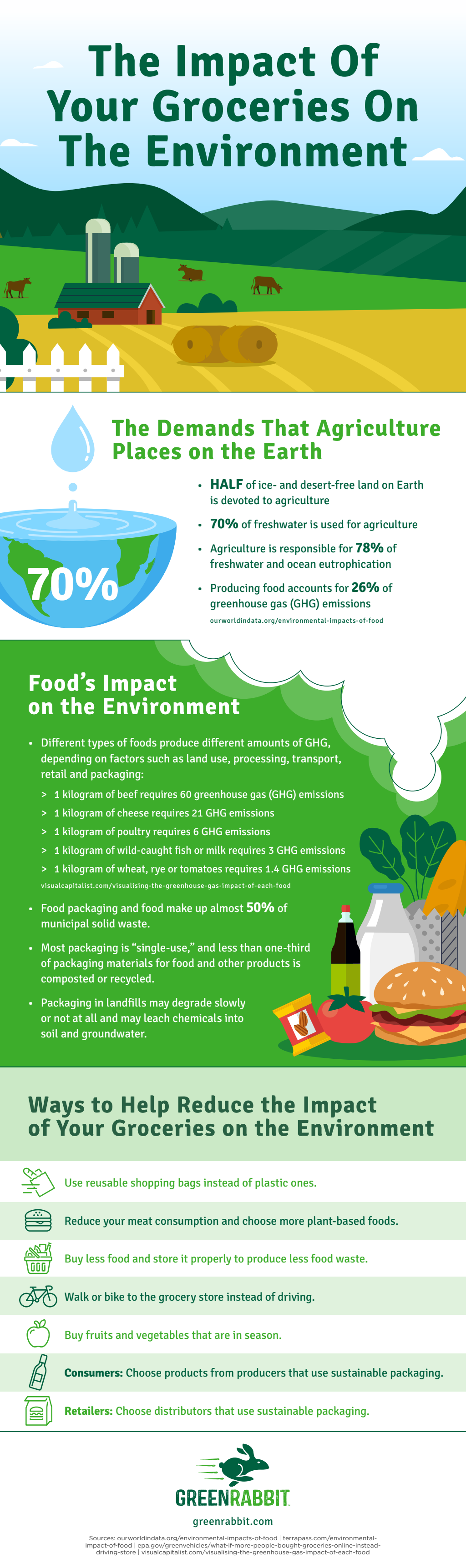
Grocery shopping has a much bigger impact than your weekly home meals. By making small adjustments to your shopping and food storage habits, you can reduce waste and support more thoughtful household consumption in the long run. See the infographic below for more information.
Source: Lizbreygel: Beauty, Fashion, Lifestyle – www.lizbreygel.com



