



There’s a lot of art that pushes boundaries, but this piece goes beyond the standard push and stares right back at you.
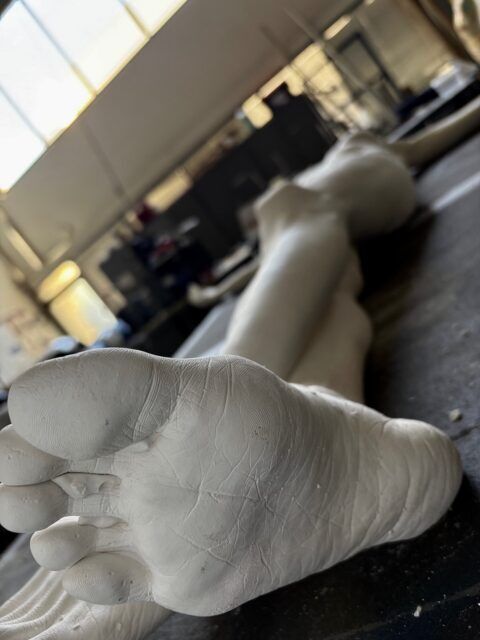
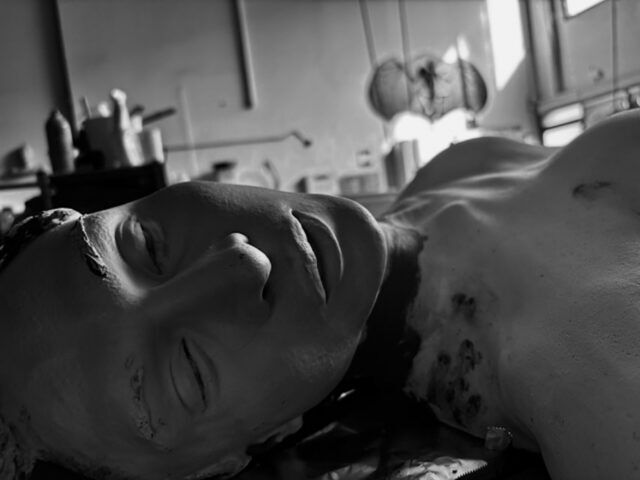
On May 17th, a life-sized chocolate sculpture of a trans model will be unveiled. Rain Batingana It slowly melts away over three hours on a global livestream. The work, the passion of christis the latest work by artist Cosimo Cavallaro, known for his controversial chocolate sculptures. This time, the central body is not abstractly symbolic. It’s specific. That’s intentional. According to Lane, it’s entirely on her terms.
“No one took my body,” she told me. “There’s a reason I made the offer. The difference is consent, cooperation, and purpose.”
That distinction is important. a lot.
Why she said “yes”
When Laine got his chance, he didn’t hesitate. Visibility, especially for trans women, remains limited and often distorted.
“As trans women, we pay attention to anything that makes us seen, heard, and understood, because we rarely are,” she explains. “I said yes, because this is an eye-opener for those who criticize our existence.”
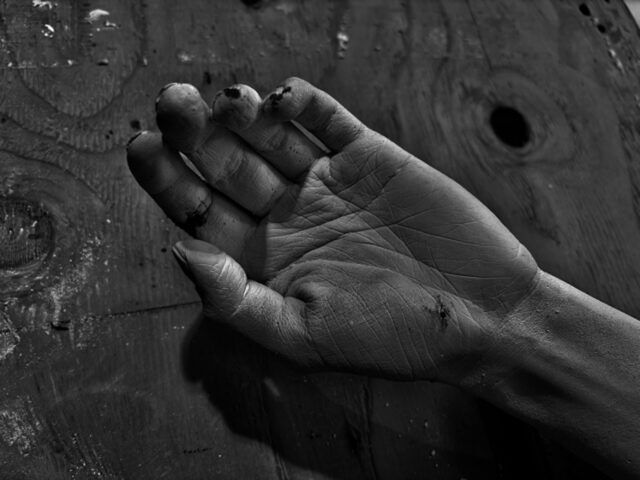
The process itself was intense. She held the crucifix pose for more than an hour while her body was cast, an experience that blurred the lines between performance and endurance.
But for Lane, the physical challenge wasn’t important. That was the message.

restore religious image
Religious iconography carries weight, and Rain is well aware of that. Her interpretation of Jesus is less about shock value and more about reframing who is considered sacred.
“The image of Jesus represents sacrifice, suffering, and holiness,” she says. “I was testifying to what his image means to people like me, that you can be holy even when crucified by public opinion.”
That idea runs through every layer of the project. It’s not just the sculpture, but the act of watching it melt.
controversy is key
Let’s be real. Jesus’ melting chocolate, modeled after a trans woman, will never go unnoticed.
Rain knows that.
“My goal is not to disrespect Jesus, but to make sure that trans bodies have a place,” she says. “What’s controversial is that transgender lives are still up for debate. I’m here to change that.”
This performance comes at a time when transgender rights remain under intense scrutiny, adding a new layer to how audiences interpret the work. Still, Rain isn’t interested in softening the edges.
More than just an expression
Ms. Lane is clear that she does not speak for all transgender people, nor does she want to.
“I didn’t create this to represent all trans people. I can only represent myself,” she says. “But I was touched by the messages from people who said they finally felt seen.”
That response speaks to something deeper than visibility. It’s about inclusion in spaces that have historically excluded transgender bodies, especially in religious narratives.
“The trans community is being targeted,” she added. “This work says that we also belong to the story.”
Art, identity and activism collide
For Rain, it is impossible to separate art and identity.
“I don’t think of art, identity, and activism as separate things,” she tells me. “I see them as overlapping circles. I’m a trans woman. It’s not a costume I put on for a project. It’s my life.”
This perspective shapes how she approaches every opportunity, including this one. Performances are more than just visual spectacles. It is a declaration of existence.
watching it melt
If the creation of sculpture means presence, then dissolution means something more difficult to sit on.
“I love watching the chocolate sculptures melt and transform,” says Lane. “That’s the part I’m really looking forward to and watching the whole process unfold.”
There is beauty in that change, but there is also discomfort. This slow disappearance reflects the reality many transgender people already face.
Still, Lane hopes audiences leave feeling something more than a shock.
“I just hope that people reflect on this experience and reevaluate their views and opinions about transgender people,” she says.
What remains
The sculpture will be temporary. That’s design.
But what about the conversations it creates? It’s harder to melt that way.
Lane puts it simply: “The sculpture on my body will melt. The chocolate Jesus will melt. But our being should not melt.”
And that’s the part that remains.
Source: Gayety – gayety.com


