



The One Shot podcast has been going strong since 2013 with over 600 episodes and counting. Dillin Apelyan (mirror pronouns) took over as host in February of 2025, and since then has expanded the possibilities of actual play with every series. You may have seen them on Dorkspawn, My First Dungeon, Unprepared Casters, and more. And you may have also played their games like HUNT(er/ed), All’s Fair, and more. Their musical improv series The Last Train to Bremen was nominated for an ENNIE in 2026.
Not long after Gen Con, I got to talk to Dillin about their work on the series including production, meta-plot, and finding the parasocial without being personal.

Ciera “Panda”: You were nominated for an ENNIE for your series The Last Train to Bremen, something that doesn’t happen often for actual play. How did that feel when you found out?
Dillin Apelyan: It’s really beautiful. I think I have done a lot of great work since I took over as the host of One Shot, I really do. I’ve put a lot of myself into it. I’ve been hosting the show for a little over two years, maybe two and a half years now. Year one I was still a little bit afraid to do anything too weird because it didn’t feel totally mine, it was on for eleven years before I got there.
The Last Train to Bremen is not the first time I’ve done something interesting and cool, but it does highlight how, in my second year, I felt like I could do anything I wanted and take the show to big places. I don’t do musical improv. The last time I sang anything in any official capacity was in college and I quit because of crippling stage fright. So this was a very scary, intimidating thing for me to do. It also involved flying to the other side of the country on my own dime to record in person. The guests of this episode do musical improv all the time — they do a podcast, they do it live, they teach a class, they do musical improv. When we first talked about the concept, they thought I could GM remotely while they would perform the musical improv as the players. That version felt safer and more comfortable for me and would have been fun. But the thought of doing something that adventurous on the show and not being a part of it — the mere thought of it killed me. So I decided, ‘No, I’m going to fly myself to Seattle and I’m going to try this thing.’
That [this series] is what gets accolades, that I took the biggest risk on and was scared to do, that’s incredibly validating.
Ciera: How did the idea to make the series an improv musical come about?
Dillin: Well, RPG Major, the guests for this series, reached out to me to work together. They sent me a pitch that I will eternally thank them for. I get a lot of pitches for One Shot, cold emails of, ‘Please play my game,’ and ‘I’d like to be on the show.’ I remember opening their email and thinking, ‘This is a real, interesting, cool pitch.’ It is what inspired me to one up it, ‘Hey, how about instead I buy a ticket and come out and do it with you?’ The interests they expressed was so genuine that it made me feel braver and made me want to try something new. Their show is geared towards all ages audiences, very Scooby-Doo-like adventures. We got to play a game that is very adult and dark, so it was cool that they got to perform musical improv that wasn’t pure abject comedy. I’ve seen a lot of musical improv and it’s always comedy, never dead serious.
Ciera: So walking into this with no musical improv experience, how much preparation did you do before recording?
Dillin: I’m a fan of musical improv in a way that when you don’t understand something, you’re really enamored by it. I remember watching the Welcome to Mountport episode of Game Changer and thinking, ‘Wow, they’re magicians.’ I have friends in the city whose show is called The Legend of You where they ask an audience member a couple questions and then they alter their musical to be about their hero’s journey. I have vague familiarity with the rules but it’s still different trying to do it yourself. I think one or two nights before we recorded, we did a three hour workshop, basically a crash course, in musical improv. It was very comedy forward, but it did help. I learned that in musical improv there is this sort of conducting people do to to wordlessly communicate musical phrasing to each other. That was really interesting, to signal to someone that you have a chorus idea, to repeat this phrase, or crescendo here. The end of our recording day was when I felt comfortable with the nonverbal conducting parts of it.

Ciera: If I remember right, it was later in the series that you first got to kick off a song.
Dillin: Which was beautiful dice storytelling, I’ll tell you what. The game mechanic for Last Train to Bremen is Liar’s Dice. We didn’t necessarily decide this out loud, but it felt right as we were playing — anytime someone loses a die a flashback happens [in the game] and it made the most sense for that to be where songs would happen. These flashbacks would be these big moments and that’s where the songs deserve to be.
And I’m really good at Liar’s Dice, so I just didn’t lose a die till later in the game. What was even more beautiful, I was playing Cockrell, who built to be this really cocky confident character. You could play them as someone who is genuinely cocky. But once I lost one die, I nearly sequentially lost the rest of the die in my pool. That changed the character of Cocky as not actually that confident, [he] was putting on airs.
Ciera: Cocky really avalanched down at the end.
Dillin: Yeah. Avalanched is the right word.
Ciera: I noticed that usually One Shot has this special way of highlighting the way players will slip in and out of the narrative of the game, but with Bremen it seemed to remain in the narrative the whole time.
Dillin: That was a choice that I didn’t even realize was a choice. It just felt so good to imagine our characters actually playing the game on the train. There’s definitely a way to play were the dice roll is something that’s happening out of character. But it’s fun to be snarky to each other, get into arguments, and accuse each other of cheating, in character. Especially with how toxic the relationships in the game are supposed to me. Playing a gambling game together feels really good.
Ciera: Did the experience change how you think about making actual play, or playing games like Last Train to Bremen? Does the layer of music add to the experience of organized make-believe?
Dillin: One hundred thousand percent. I have done more interesting things since because of that. My anniversary episode is a really big swing that I jumped to basically as soon as I got off the plane home from that visit. We had something like thirty two different guests on that episode. It was open to anyone who had been on the show over the last two years to reprise their characters on a real radio show while playing VOID 1680 AM. I thought, ‘I’m doing what I want to do now.’ And now, I am collaborating with other kinds of creators who aren’t straight actual play creators — who do other things and other mediums of audio art. Trying to see how it changes or makes it weird. I’m working on something right now that is so scary, but I’m so excited because I have to know what else will change actual play. I was very lucky that the RPG Major folks also do actual play and musical improv together, but there are so many other kinds of audio medium entertainers and creators who probably have something interesting to bring. I’m definitely changed in how approach new projects and guests for One Shot.

Ciera: Something that is special to me about One Shot is this thickening meta layer, which exploded when you took it a step further while playing This Wretched House. I don’t know what your notes look like or if you keep notes on it.
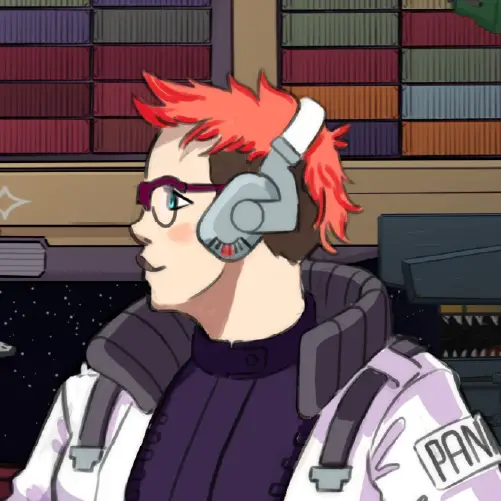
Dillin: I do keep notes. I didn’t at first, because it was just a bit. About a year ago we commissioned animatics for our YouTube videos. Sky Jacks did it too. For One Shot, we did the studio which was not a thing before I came onboard. They’re full of all of these characters and creatures that we’ve entered into the metaplot of the fictional studio we record in. It doesn’t disrupt the fact that the podcast is episodic, it’s about five minutes per episode and the games are still listenable on their own. But if you are a chronic listener to the show, you get an extra treat, and you get to follow this little plotline. I have been “dead” in the studio for weeks now. My sister was just on the most recent series [Monsters Ate my Homework]. She’s never done a podcast and never played an RPG so she was quiet the first couple of minutes of that riff. And then she says, “Does this mean I have to tell mom?” So, so funny. And I will tell you, something very big and ambitions I’m working on is a direct follow up to the meta-plot that This Wretched House set into motion.
Ciera: I really loved to hear you fully engage with that meta-plot in This Wretched House and it’s so rare to see people play as themselves, the fictional layer was the studio, but you were yourself.
Dillin: I had some real feeling that came up in that one. When I started playing I knew I wanted it to be me, and I knew I wanted it to be in the studio. I would really like to see if I can intentionally drive this bit forward because, like I said, most of the time we’re riffing for five minute or less. It’s all jokes. It’s good, it’s fun, it adds to the world. There are two potentially good outcomes to This Wretched House. I didn’t get either of them. There was a chance that we were going to have a very different situation, but here we are.
Ciera: It also can act like a stand-in for the parasocial layer that isn’t so personal.
Dillin: People in our Discord will talk to me as though I am the ghost trapped in the studio. Which is a fun way to engage with the audience that is not boundary crossing.
Ciera: You have a lot of experience in creating and playing tabletop roleplaying games. How do you believe Actual Play and the tabletop roleplay game industry intersect?
Dillin: In my experience as a game designer, I have only ever been enriched and made more successful by the existence of actual plays. I know this is not everyone’s experience, I think there are valid reasons for why different game designers would feel differently. I will never forget the one single actual play of a solo game that I put out for, I think, two dollars. That was one of the first games I made — may or may not be good. That one person playing it and exploring it on a camera made a deep emotional impact on me at that point.
On the business end of it, HUNT(er/ed), a game Megan Cross and I made together, is one of the first games I made that was intended to become a physical product. I am completely convinced people playing it on actual plays made it successful. There were so many that were beautiful, funny, and interesting. Some showed me ways of playing that I didn’t consider or types of monsters that I didn’t consider. They kept that game in conversation in the industry throughout our crowdfund. I can’t imagine pulling the two apart because I feel like they are so useful to each other.
I very recently crowdfunded a game, [All’s Fair], that I knew would not be on any actual plays unless I did it because it is a sexually explicit game. It’s the quietest that a game of mine has been in terms of actual play. The game still succeeded, it still did well. I’m very proud of it. But I do feel a little ache that I don’t get to see or hear how people interpret it. I feel the absence of actual play in that game.
You can listen to Last Train to Bremen, The Musical here and follow Dillin on social media @superdilllin. Their published games can be found on itch.io.
Images via Dillin Apelyen
Have strong thoughts about this piece you need to share? Or maybe there’s something else on your mind you’re wanting to talk about with fellow Fandomentals? Head on over to our Community server to join in the conversation!
Source: The Fandomentals – www.thefandomentals.com


