



How do we celebrate our traditions and culture? How do we stay true to the values of our ancestors while building a life for ourselves in a foreign country? This is a question that every person who has immigrated to another country, or was born to parents who immigrated from another country, struggles with. This celebration is at the heart of Temitope Ogunseitan’s art, known as TP4STYLE.
He presented three works at a recent exhibition at London’s W3 Gallery. His work “Dudu” celebrates the strength of black womanhood and pays homage to her West African heritage. Surrounded by fruits, she symbolizes nutrition and vitality of life, as well as the cultural heritage passed down through the generations from mother to son and daughter.
In this piece, the fruit is cut and freshly harvested, but it reminds me of Dutch Vanitas paintings that use fruit to remind us of the fragility of life. After all, fruit only stays fresh for a short period of time before it spoils. Although the two took different approaches to TP4STYLE’s digital paintings, they both remind us to seize the day and live the life we want. Because the days go by so quickly, and if you waste your time doing things that don’t make you happy, you’ll only regret it when it’s too late.
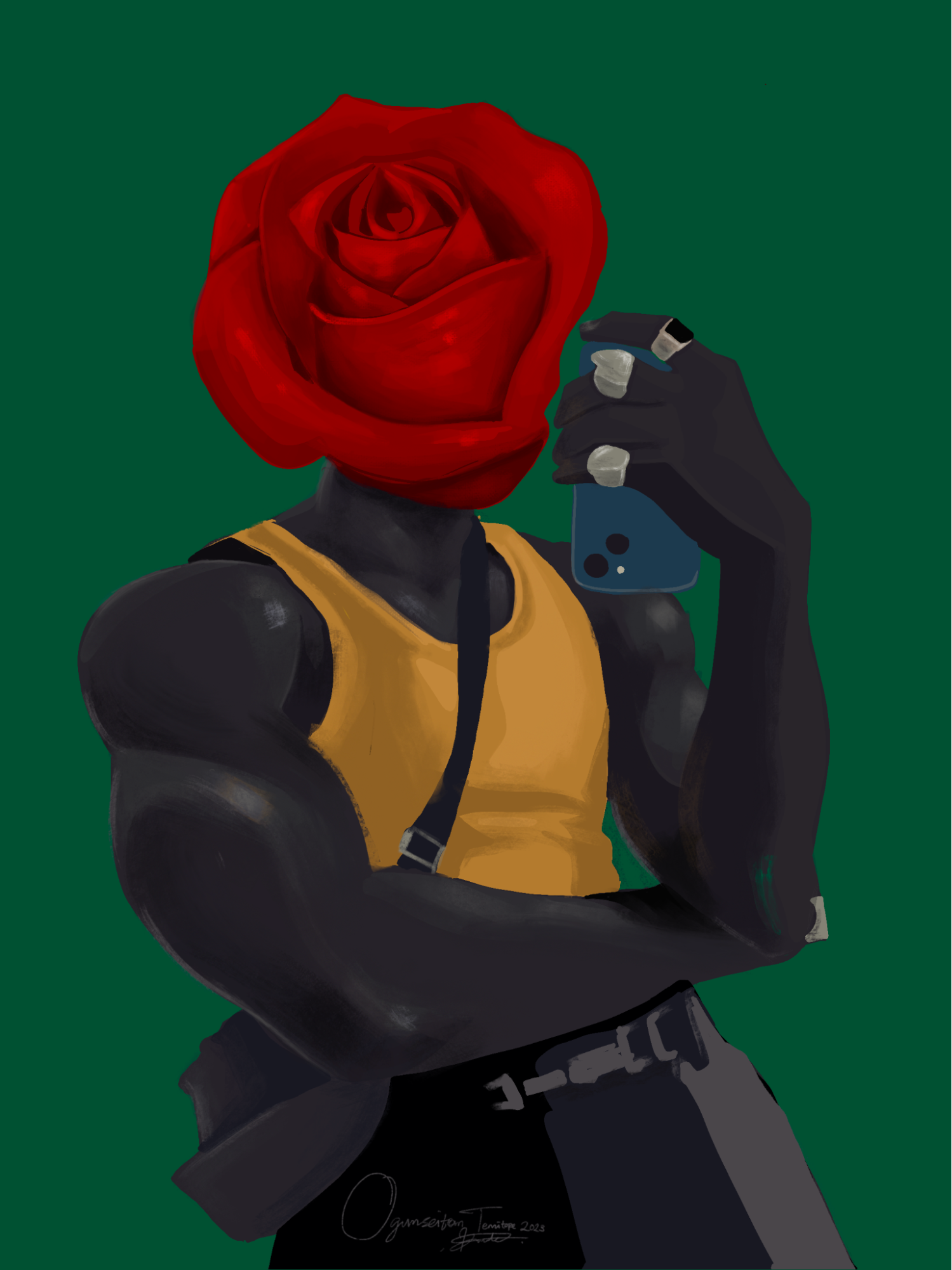
Returning to the work in the play, I was particularly drawn to the muscular man wearing a rose on his head, whose title is “Okunrin”, which means man in Yoruba. For me, this work addresses questions that are being asked around the world today about what it means to be a man and what it means to be a woman. We are told that we are experiencing a crisis of masculinity, with men unsure of their place in a world that is slowly moving toward equality.
However, there is also a toxic backlash from the “manosphere” that promotes outdated views of male dominance that do not exist in today’s world, posing a significant threat to women around the world. In this work, we see the recognition that masculinity comes from kindness, compassion, and using those muscles to help and protect others.
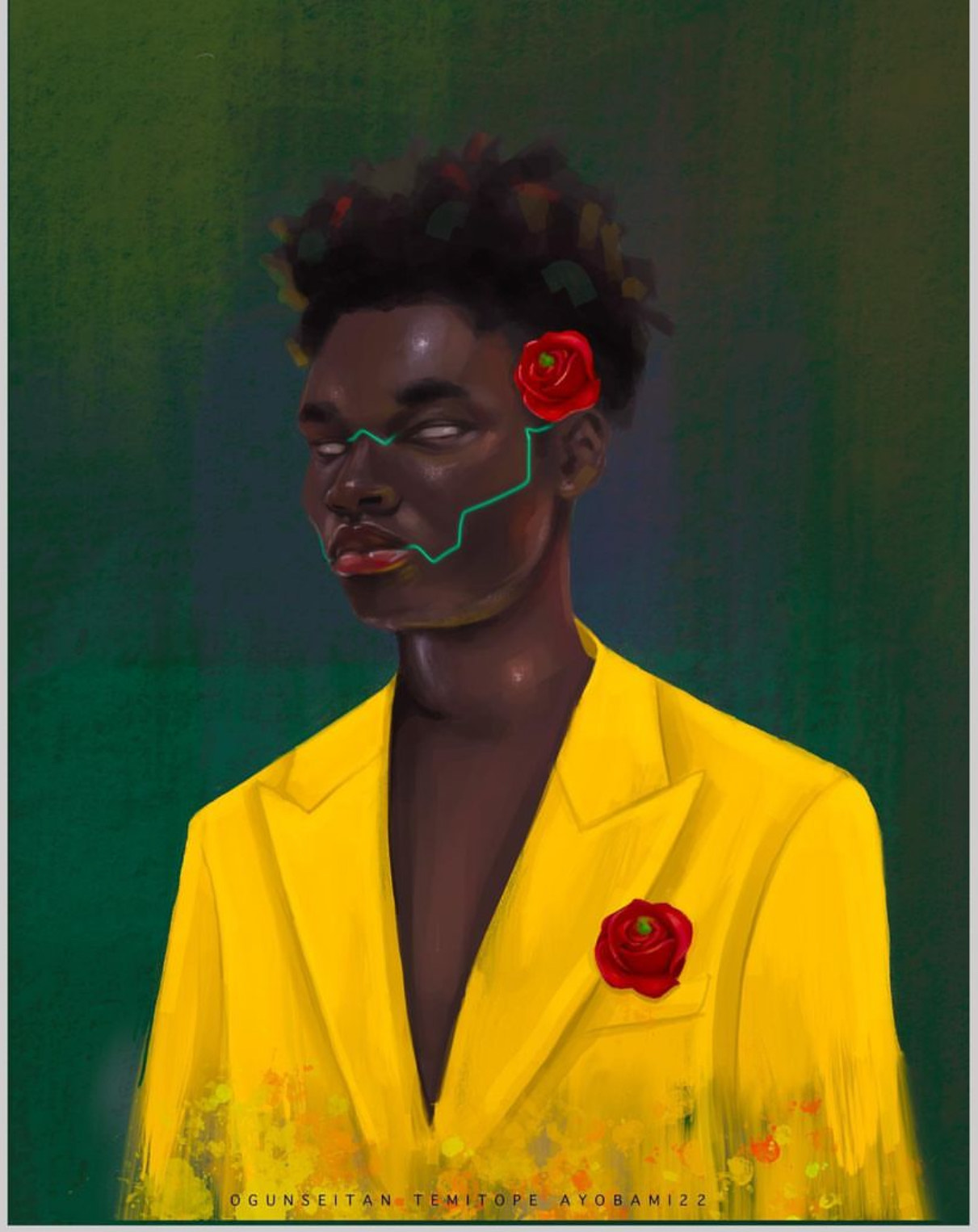
The use of flowers as a motif also touched my heart. They have long been associated with femininity. Most plants have both male and female reproductive organs, but their sex is determined only by social norms. Men give flowers to women in romantic overtures, but the reverse is rarely the case, and the same is true if the man is seeing other men. Masculinity may mean smelling the roses and embracing the beauty of the natural world.
The floral motif continues with the woman wearing a striking yellow suit with flowers above her ears and a flower on her lapel. The work’s title, Orisa, refers to West African deities, in this case Osun, the god associated with fertility. She is a life giver and sits neatly between the other two works. Although Osun is female, many Orisas fall outside of Western gender norms, and we see within them a call to embrace all people, however they choose to express themselves.
There are clear connections between these three works and the artist’s wider practice, which includes photography, sustainable fashion, textile design and illustration. Through this practice, his work focuses on embracing and celebrating different identities, combining his West African heritage with his experiences living in the UK to develop a unique interdisciplinary style.
More information about the artist can be found at: his instagram and Website.
Source: Our Culture – ourculturemag.com


