



tracy Wiseman An interdisciplinary artist and visual storyteller whose work explores identity, vulnerability, American symbolism, and the emotional tension between attachment and disillusionment. Based on my background as a professional speechwriter, Wisemanpractices are shaped by a deep engagement with narrative, persuasion, public language, and the ways in which national myths are constructed and communicated. Working across textiles, sculpture, installation, and mixed media, she often transforms familiar cultural objects through processes of stitching, alteration, accumulation, and physical destruction.
Her practice draws equally from contemporary art methodologies, craft traditions, and regional Americana, resulting in a body of work that resists categorization. Her work emphasizes emotional resonance and material transformation, balances conceptual rigor with physical immediacy, and reflects contemporary America through both individual and collective experience. Rather than offering fixed political conclusions, the film explores emotionally charged themes by inviting viewers into a space of reflection, discomfort, contradiction, and empathy.
She lives and operates studios in both Palm Springs, California and Narragansett, Rhode Island.
You worked as a speechwriter for many years before moving into the visual arts field. Does the background of persuasive language inform the construction of a work of art?
That’s right. Humans are hardwired to learn from what they hear. After all, we’ve only had a written language for about 5,000 years. Before that, we communicated and transmitted our culture orally. That’s why I used to remind my clients that every successful speech is based on a good story. To stick the idea in the audience’s mind, I used metaphors and vivid language to engage the brain as well as the visual sense. Currently, I rely on the same structure as visual artists, using familiar but altered objects to create visual metaphors that stop the viewer in their tracks. I’m particularly drawn to vintage materials because they already have a story built into them, adding depth and complexity to the piece.
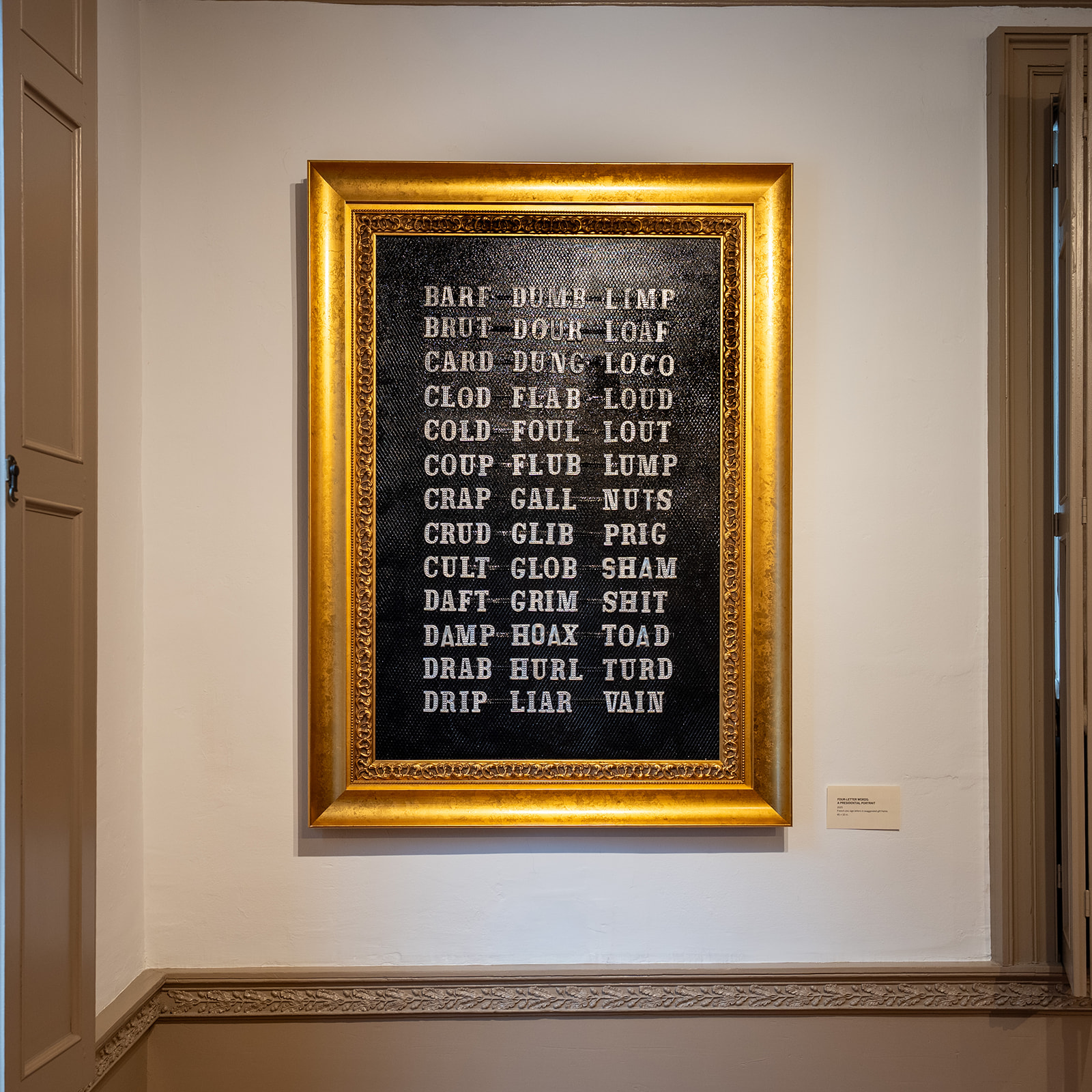
I find presidential “portraits” made of four-letter words particularly appealing. What was the process of choosing these words, and how did you navigate the line between commentary and caricature?
As a long-time word nerd, I had a lot of fun making this piece from vintage French tin sign letters. I dumped them on my work table, played Scrabble, and created as many four-letter words as I could to describe the current Oval Office staff. To balance commentary and caricature, I let the language do the work. For example, I combined humorous onomatopoeic words like glob and crud with serious expressions like vain, liar, and sham, and arranged everything in a column alphabetically to give each word equal emphasis. The triple gold frame surrounding the words leaves no doubt about the subject of the work. It’s one of my favorites on the show.
Turn quahog shells into profitable fundraisers Dr. Martin Luther King Jr. Community Center in Newport We connect this conceptual work to something very local. How did that idea come together?
Making this show helped me overcome heavy emotions such as despair, betrayal, and sadness. After getting it out of my system, I decided to fight back by, as Fred Rogers used to say, “helping those who help me.” The MLK Junior Community Center is an important resource in RI for those most directly targeted by the current administration, such as immigrants, people of color, or those struggling to put food on the table. The shells are symbolically important because, prior to colonization, RI’s indigenous peoples used the abundant quahogs as a food source, decoration, and currency. Each shell is engraved with half of George Washington’s famous quote from a 1790 letter to the Hebrew Congregation in Newport, in which he promised that America’s new government would give “no sanction to prejudice, no aid to persecution,” a fitting reminder of a divided era. This idea resonated strongly with visitors. Halfway through the show, we’ve already raised thousands of dollars.
The show has been described as being “between affection and anxiety”. Was there a particular piece where you found it most difficult to achieve that balance?
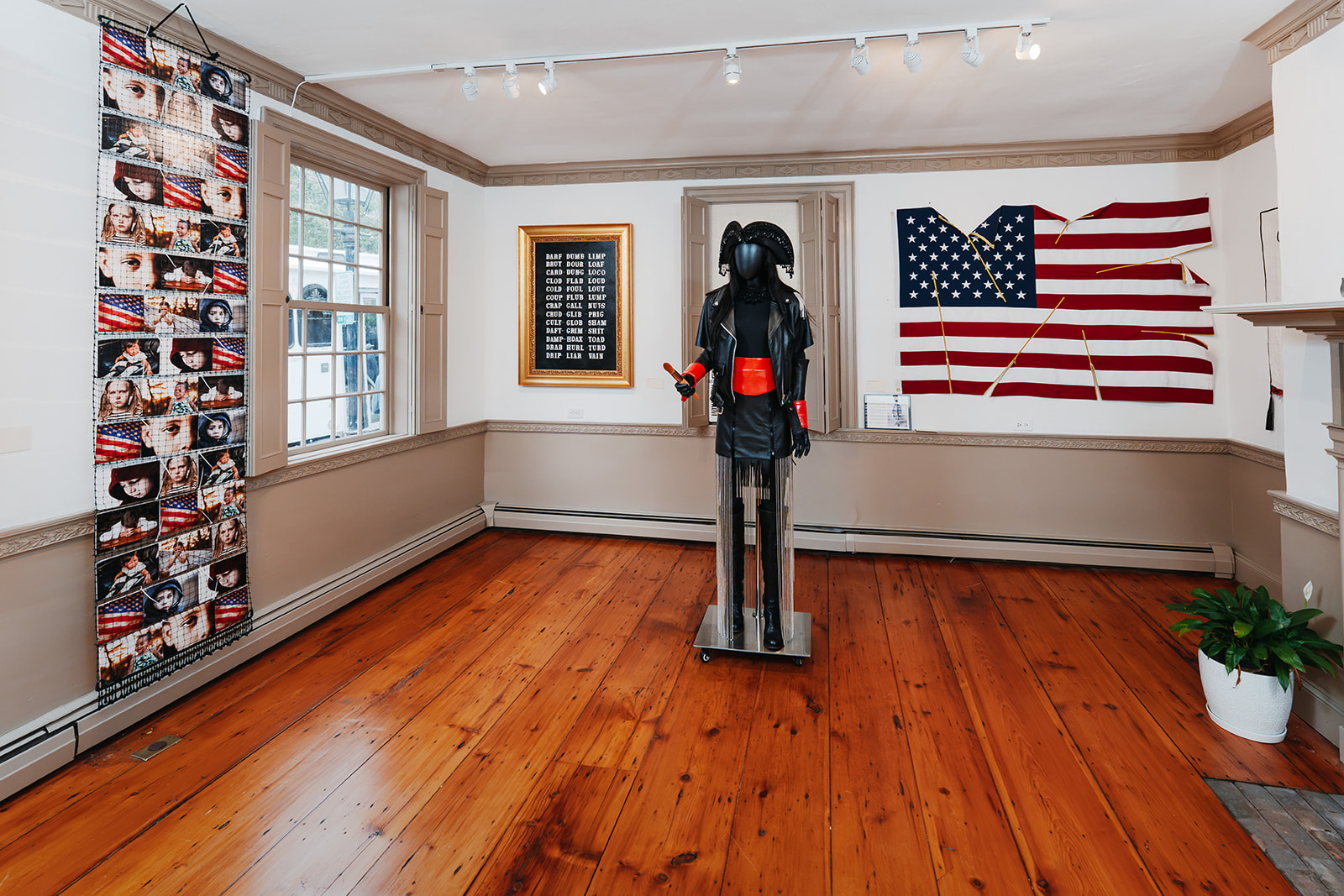
Yes, the flag with the golden zipper that gives the show its name. Someday’s birthday, America. Altering the American flag is protected as political speech under the First Amendment, but it was still heartbreaking to put scissors on the symbol of our beloved country. The insertion of a golden zipper, which can be used to either split or repair, creates a sense of uncertainty and resignation, as the flag is forever changed even if all zippers are closed.
Do you see your work as being in dialogue with other artists who are currently creating 250th anniversary art, or is it purposefully separate?
Artists are truth tellers in times of crisis, and I’m proud to add my body of work to the conversation my fellow artists are having about America as it turns 250 years old.
Are there any artists or writers who have inspired you particularly recently, perhaps related to this body of work?
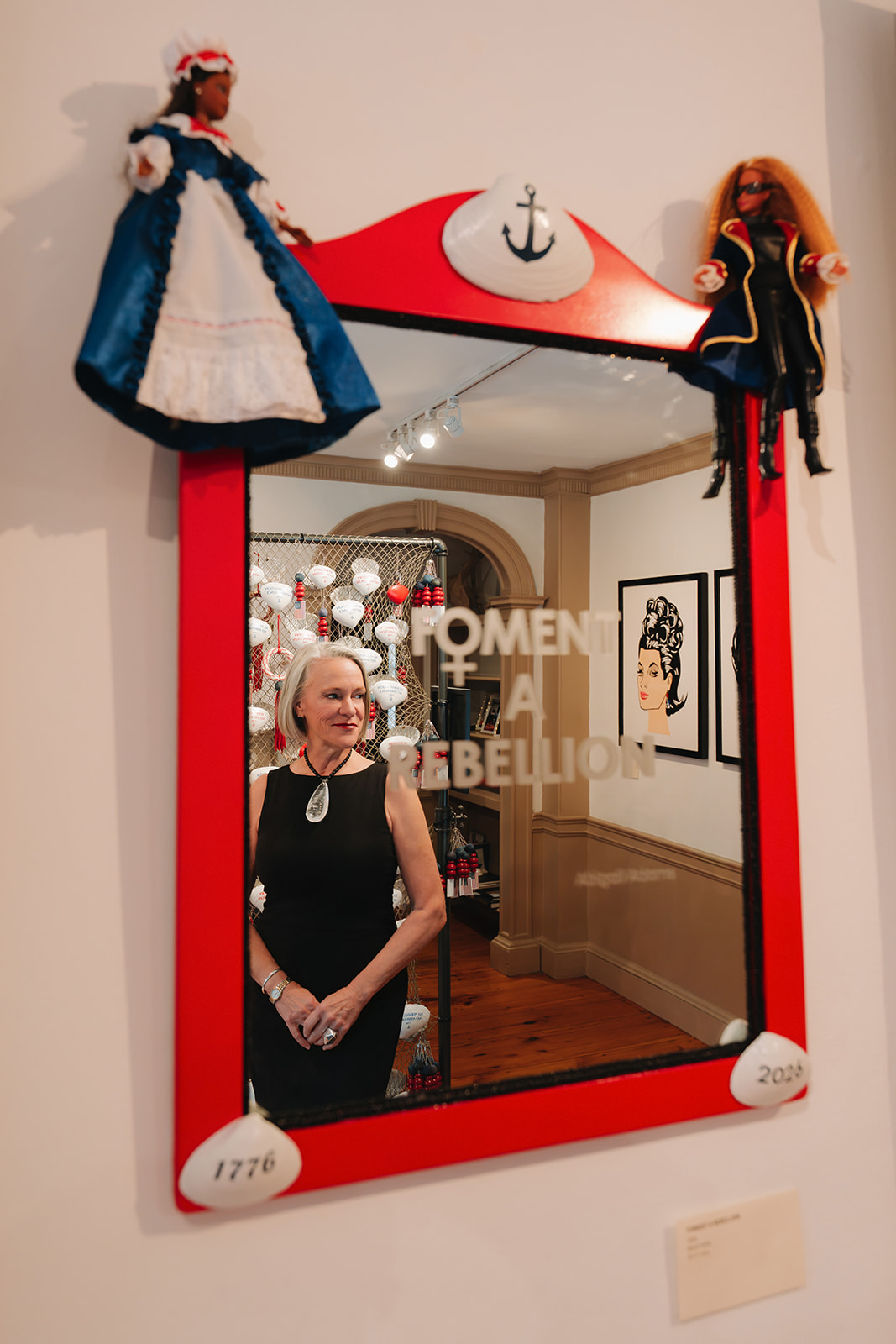
yes. I found the body of work newly commissioned by MOCA and The Brick for the recent MONUMENTS exhibition in LA to be profound, especially Kara Walker’s breathtaking work. unmanned drone, A stunning restoration of the Confederate statue of General Stonewall Jackson. I deeply relate to Walker’s fearless alteration of the familiar to tell a different story, and her work is heart-wrenching. As for writers, Abigail Adams’ March 31, 1776 letter to her husband John in Philadelphia during the Second Continental Congress also inspired me. She warned him sternly: incite a rebellion, And we will not be bound by laws in which we have no say or representation. ” The bold part of that quote became the centerpiece of one piece in my show. Moreover, as American women experience a brazen rollback of our rights, I see this as a rallying cry and a driving force for the next body of work.
Source: Our Culture – ourculturemag.com


