



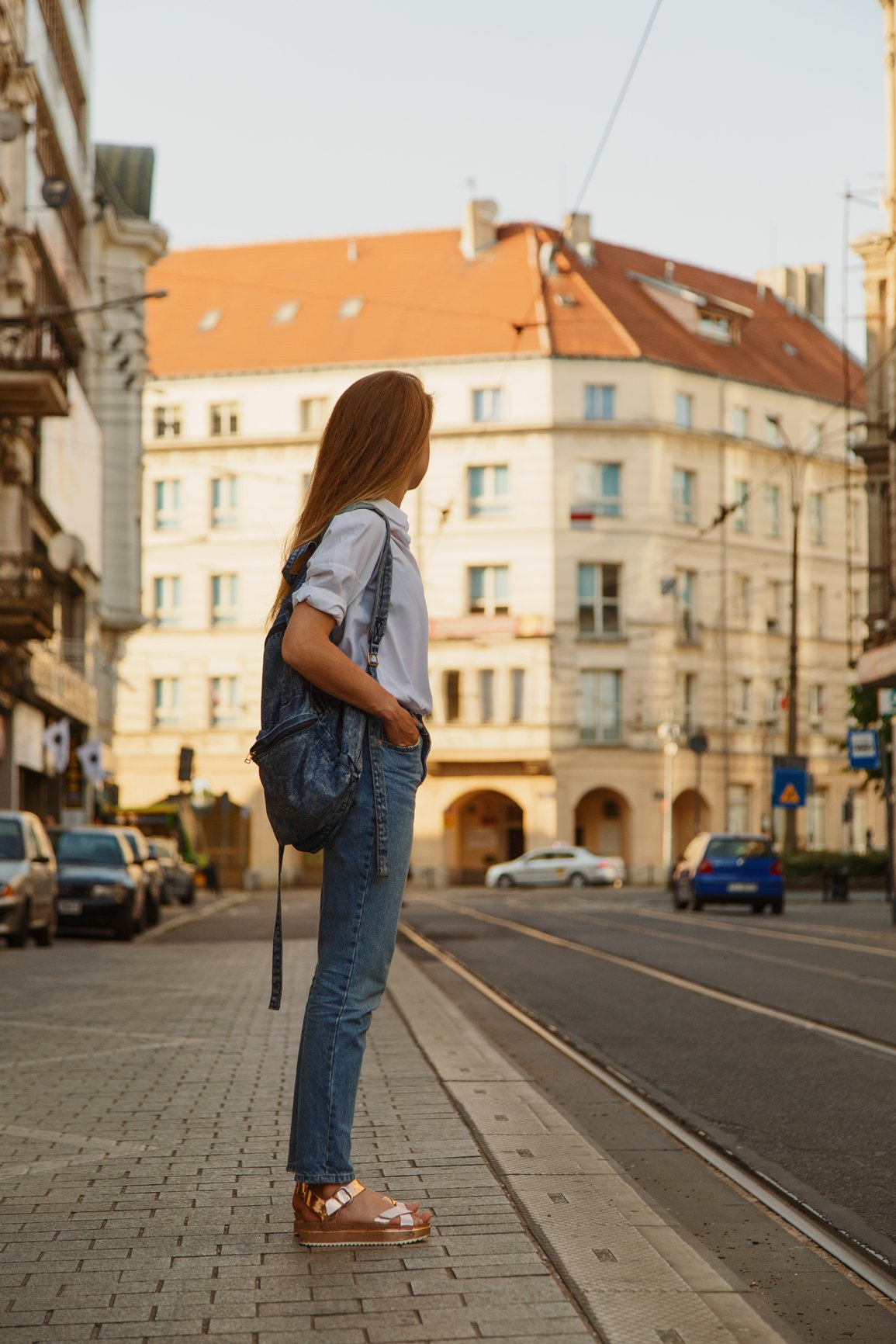
One afternoon many years ago, I dropped my bag in the middle of Prague. I don’t remember where I was going, but I do remember that it was the first time I was alone in the dizzy Wenceslas Square during my study abroad period.
I was born with cerebral palsy, so my legs were crossed and my balance was unsteady, making it difficult to weave between cars and the cobblestones under my feet didn’t help. Nevertheless, I had to go from one side to the other. Then, as I reached the last curb, I tripped. My bag slipped off my shoulder and fell a few steps forward. I got up as fast as I could to grab my bag from the ground, but the coins were already spilling out and several people ran up to grab it. I don’t remember getting hurt. I remember being embarrassed and angry.
Yet, when I look back on that semester, I see that it was a childhood victory lap spent training. From kindergarten to college, I attended the same grayscale physical therapy building several times a month, filled with people who were committed to integrating me into society. We practiced tying our shoelaces, buttoning our cardigans, and walking up stairs and across large rooms. As they stretched my legs, they talked about the little dramas and passions that occupied my childhood thoughts, and then I watched them scribble measurements that represented my degree of flexibility. Our shared goal throughout these years of medical examinations and post-surgery recovery was that we needed to get as close to normal as possible.
They cheered when I took off my walker, then my crutches, then my cane, and was able to move without assistance. Wheelchairs are reserved for special occasions like theme parks and airports, and I prided myself on finding ways to minimize my differences. By the time I arrived in Prague, I felt the invincibility that only a 20-year-old can have. But there was also a stubbornness to my confidence. I wanted to prove that I was normal.
My friends learned to lock their arms around mine as we walked on the cobblestones, and that close bond continued. These days, we rarely actually walk around Los Angeles, but we often walk arm in arm. However, 10 years have passed since I entered university, and my body has changed. I can’t push myself like I used to and they don’t forgive me as easily. More pain, more rest. The balance, honed through countless hours of physical therapy, is dependent on sleep. Of course, for a long time I hid all this. Be normal.
“Have you ever thought about buying a cane?” my sister asked me a while ago. She said it in a tone similar to what older sisters would do. As if you were thinking about it and are now laying the foundations for it. I told her that I had kept my grandma’s cane in the trunk of my car. “But there was no need for that,” I said. “I worked hard to not need it.” She said something like, “Yeah, but…” before letting it go. Then this summer, my cousin joined the conversation. “If it helps, why not?” she asked. My cousin has lived in New York City for years and knew I would soon be visiting the city on my own. We all agreed that was a good reason to buy a new cane. The stubbornness was still there, but it was loosening its grip.
A few days later, I received an email from Michael Graves, a designer who focuses on accessibility. his team is streamlined canea sophisticated accessory that can be disassembled and reassembled in a single accordion-like motion. I gratefully accepted his offer to try it out, and just before my New York trip, the fateful package arrived.
No one knows my body better than me. I know the limits and the pain, and I know what is comfortable and what brings happiness. I am the custodian of this almost continuous project, the overseer of this thing that keeps me alive even as it imprisons me. At the same time, how mysterious my body is to me. What an open secret it is to those who care about me. And what a labor of love it is to live with that tension. As I get older, I want to be able to better accept my evolving needs instead of forcing my body to meet society’s stubbornly unchanging expectations. I can be normal, or I can be normal. nature.
On a recent rainy afternoon, I was waiting on the curb in Soho as cars drove by and people hurried by. I was calm but full of energy and had a firm grip on my cane. The woman looked it up and down and praised its beauty.
“That’s very helpful,” I replied. “I don’t know why I didn’t want it before.”
kelly dawson I’m a writer, editor, and media consultant based in Los Angeles. She writes about dating people with disabilities and inviting friends with disabilities over to her home in Cup of Jo. follow her InstagramIf you don’t mind.
PS Disorder is funny (trust me). Five people with disabilities talk about how to make everyone feel welcome during the holidays.
(Photo by Danil Nevsky/Stocksy)
Source: Cup of Jo – cupofjo.com


