



🌶️ Short answer
Does Sriracha go bad? Yes, but very slowly and almost never in such a way that it becomes dangerous to eat.
Sriracha is built to last. Its main ingredients (chili pepper, distilled vinegar, salt, and garlic) are all natural preservatives, to which commercial brands such as Huy Fong have added potassium sorbate and sodium bisulfite. The result is one of the most shelf-stable seasonings in your kitchen.
What actually happens over time is a decline in quality, not deterioration. The color changes from bright red to dark brownish red. Heat levels change, but not in the direction most people expect. The bigger concern is knowing the difference between a truly aged bottle and one that has aged normally.
Short answer: An unopened bottle of Sriracha can be stored at room temperature for over 2 years. Once opened, it can be stored at room temperature for at least 6 months, or refrigerated for at least 1 year. It rarely spoils in a dangerous way, but over time its quality deteriorates and its properties change.
📅 Sriracha expiration date overview
| situation | pantry | refrigerator |
|---|---|---|
| Unopened (for business use) | 2 years or more | Indeterminate |
| Open (commercial) | 6-9 months (best quality) | 12-18 months |
| Expiration date (unopened) | In most cases, it’s okay beyond 6-12 months | — |
| Homemade Sriracha (opened) | Not recommended | 1-3 months |
| Sriracha mayo or mixed sauce | not safe | 3-5 days only |
These numbers apply to Hui Fong and comparable commercial brands. For best flavor, we recommend pantry life for 6 to 9 months. Sources don’t suddenly become unsafe the day they turn 10 months old, but the quality varies markedly.
🔬 Why Sriracha lasts so long
Three things work together to make Sriracha extremely shelf-stable.
Distilled vinegar. Vinegar is a natural antibacterial agent. Its acidity (low pH) creates an environment in which most bacteria and molds cannot survive. This is the same reason why vinegar-based hot sauces last much longer than dairy-based or fruit-based hot sauces.
Capsaicin. The compounds that make chili peppers spicy also have antibacterial properties. Capsaicin inhibits bacterial growth of various pathogens. This is part of the reason why pure hot sauce has historically been used as a food preservative in warmer climates. a 2023 review published nutrients Capsaicin’s antibacterial and antifungal effects have been confirmed against bacteria such as Salmonella enterica, Escherichia coli, and Staphylococcus aureus.
Added preservatives. Commercial Sriracha (Hui Fong and most other brands) contains potassium sorbate and sodium bisulfite. These further extend shelf life and slow down changes in color and flavor caused by exposure to air. Homemade Sriracha does not contain any of these, so it must be refrigerated and has a very short shelf life.
🌡️ Why does Sriracha get spicier over time?
This surprises most people. As Sriracha ages, the bright, fresh chili and garlic notes tend to degrade faster than the capsaicin itself, changing the flavor balance. This means that an old, opened bottle will usually taste spicier than a new bottle, even if the total capsaicin content remains the same. Huy Fong directly points out that as the chili peppers age, the sauce can become spicier. This is a quality change and not a safety issue, but it’s worth knowing if your Sriracha feels stronger than you remember.
Refrigeration slows this process considerably. If you want to maintain a constant temperature, keep the bottle cold.
🎨 Color change: normal or deterioration?
Darkening of the color is one of the most common reasons people throw away perfectly good Sriracha. It’s almost always normal.
Fresh Sriracha is a vibrant, bright red color. Over time, it changes to a deeper, more muted brownish-red color, usually after being opened for several months at room temperature. This is oxidation, the same chemical process that causes cut apples, avocados, and most other red and orange foods to darken when exposed to air. It’s not that the sriracha is rotten.
Color change occurs faster at room temperature and slower in the refrigerator. This is the main practical reason to refrigerate opened bottles, even though it’s not necessary for safety.
The only color change that indicates a real problem is different colored spots (white, green, black, gray) that look like mold growing on the surface or around the lid. It’s not oxidation. it’s pollutionthe bottle must be discarded.
🧫 Source separation: Is it corruption?
You may notice that there is some liquid left on the top of a bottle that has been stored for a while. This is normal separation, where water moves away from the denser solid. It’s not a sign that the sauce has gone bad. Shake the bottle well before use to mix the sauce.
Separation that cannot be reversed even by shaking. Thick clumps, solids that don’t crumble, or a texture that looks fundamentally different from what you bought are other issues and deserve closer inspection, along with smell and taste.
🏠 Homemade vs. Commercial: Key Differences
Commercially available Sriracha is formulated with storage stability in mind. Homemade Sriracha is not. Homemade versions without industrial preservatives rely entirely on natural preservation with vinegar, salt, and capsaicin. This makes sense, but it has its limits.
Make sure to refrigerate your homemade sriracha and use it within 1-3 months. Do not leave it at room temperature. The same goes for Sriracha-based sauces you make at home. Sriracha mayonnaise, Sriracha aioli, Sriracha butter – these all need to be refrigerated and have a shelf life of just a few days.
✅ Sriracha still a good sign
- Light red to medium dark red (some darkness is normal)
- Pour or squeeze as usual from the bottle
- Spicy, tangy, garlic-like aroma – distinctly Sriracha-like.
- Taste as expected, probably spicier than when new
- No visible growth around or on the lid
❌ Signs that Sriracha has gone bad
- Mold of a color other than red is visible on the surface or around the lid.
- It has a sour, fermented, and off-flavor that does not resemble regular Sriracha.
- The texture is so thick that the sauce doesn’t run off.
- Really different tastes — not only spicy, but also sour or unpleasant.
- Bottle appears bulging, leaking, or damaged before opening
📍 Check the expiry date of your Huy Fong bottle
The expiration date on Huy Fong Sriracha is not printed in a prominent place. The laser is directed directly near the neck of the bottle. It often feels lighter when you touch it with your fingers than when you read it with your eyes. If you can’t find it, that’s why.
See also
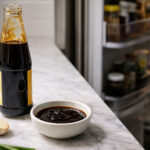
Dates are a guideline for best quality and do not indicate safety. Unopened bottles stored in a cool, dark place are usually fine for 6 to 12 months after the print date, especially if the bottle is intact and the seal has never been broken.
❓ Frequently asked questions
Can Sriracha make you sick?
If you store Sriracha properly without any mold or odor, the chances of getting sick are very low. Vinegar and preservatives make it difficult for harmful bacteria to settle in. A greater risk is from cross-contamination. Repeated soaking of cookware in bottles introduces bacteria from other foods.
Why does my Sriracha smell more vinegary than usual?
As Sriracha ages, the chili pepper and garlic components break down and the vinegar flavor becomes more pronounced. A vinegary smell in an old bottle is a normal sign of deterioration and is not spoilage, as long as there is no mold and the sauce tastes like sriracha.
Does freezing Sriracha help?
Yes, but it requires some effort. The sauce will not freeze in a standard bottle (the vinegar lowers the freezing point), but for long-term storage, you can freeze it in an ice cube tray and transfer it to an airtight bag. Keep frozen indefinitely and thaw immediately. Most people don’t need this unless they buy in bulk.
Is it okay if the Sriracha cap has dry sauce on it?
It is normal to have dry sauce around the cap. Wipe clean before use to prevent dried, potentially contaminated material from returning to the bottle. The source inside is not affected.
Does the type of Sriracha brand affect the expiry date?
Brands like Huy Fong that have added preservatives (potassium sorbate, sodium bisulfite) will last longer than brands with simpler, more natural ingredient lists. Always check the label. Artisanal or small-batch Sriracha with fewer preservatives is closer to homemade in terms of shelf life and should be treated accordingly.
Can I use Sriracha that has turned brown?
Yes, in almost all cases. Browning is oxidation, not rot. They vary in flavor somewhat, usually spicier and with a more subtle freshness, but are safe to eat. If color is the only issue, use it up and buy a new bottle when it runs out.
My sriracha is past its expiration date, but the aroma and taste are fine. OK?
yes. Best before dates reflect the highest quality, not safety standards. It smells like sriracha, tastes like sriracha, has no mold, and if you can pour it normally, there is no problem.
🧂 Related food storage guides
🍳 Recipes using Sriracha
Better Living uses affiliate links. If you make a purchase through them, we may receive a small commission at no cost to you (which we deeply appreciate)..
Source: Better Living – onbetterliving.com


