



Photo: Microsoft Stock Images
Swimming provides relaxation, exercise, and social connection. Water quality is essential for safety, but the chemicals used to keep your pool clean can affect your respiratory health. Knowing how these substances interact with the body allows swimmers to make informed choices and enjoy the water with confidence.
What effects do pool chemicals have in the water?
Most pools rely on chlorine or similar disinfectants to control bacteria and algae. These chemicals work by reacting with pollutants brought in by swimmers. When chlorine combines with these substances, byproducts called chloramines are formed, which is responsible for the strong odor often found in pools.
Chloramines are not trapped in water. Particularly in indoor facilities with limited ventilation, air can be blown just above the pool surface. This airborne exposure is often the primary factor associated with respiratory irritation.
Lung response to chemical exposure
The lungs are sensitive organs designed to exchange oxygen efficiently. When inhaled, chloramines and other chemical byproducts can irritate the lining of the airways. In some people, it can cause a cough, chest tightness, and a burning sensation in the throat.
Women with respiratory illnesses may notice symptoms sooner. Even people who have no previous lung problems may experience discomfort after spending long periods of time in poorly ventilated pool areas. Repeated exposure over time increases sensitivity and may make future reactions more pronounced.
indoor pool and air quality
Indoor pools present unique challenges for respiratory health. Without proper air circulation, chemical byproducts can accumulate on the water surface. Warm water and a large number of swimmers increase this effect, increasing the concentration of irritants in the air.
Signs your lungs may be reacting
By recognizing the early signs of inflammation, swimmers can take action before symptoms worsen. Common symptoms include a persistent cough, wheezing, shortness of breath, and unusual fatigue after swimming. Respiratory discomfort is often accompanied by eye and skin irritation, which indicates increased chemical activity.
If symptoms persist after using a pool, reducing pool exposure or choosing a facility with better ventilation may help. Showering before swimming reduces the amount of organic matter introduced into the water and reduces the production of chemical byproducts.
Final Thoughts: Safer Swimming Habits to Breathe Easier
It is also important to pay attention to how you maintain your pool. Facilities that closely monitor chemical balance tend to produce fewer irritants. Asking staff about ventilation systems and water testing routines can provide insight into overall air quality.
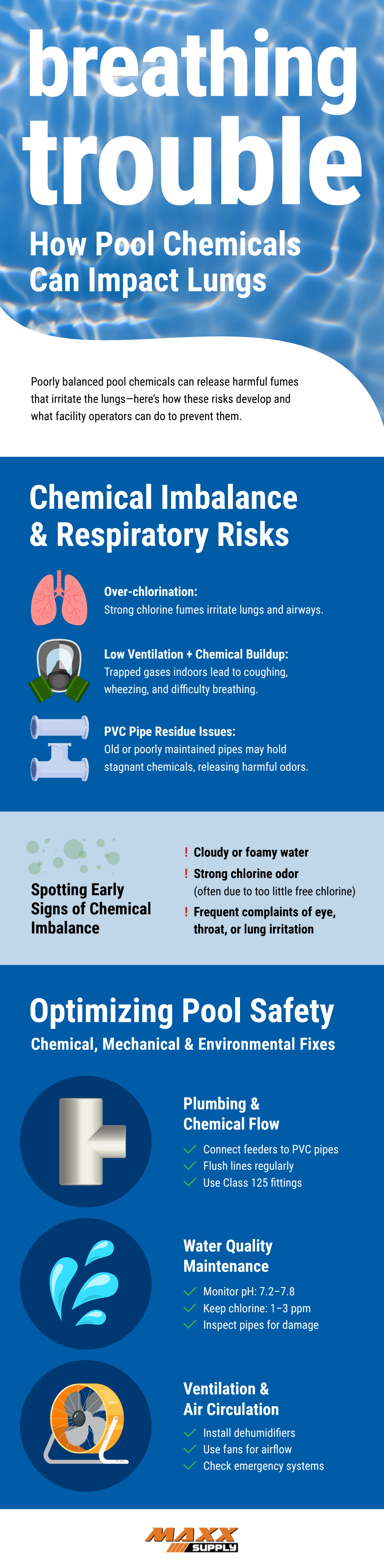
Choosing a well-maintained pool, practicing good swim hygiene, and listening to your body’s signals will support a healthier experience in the water. Developing informed habits will help you enjoy swimming while breathing easier and keeping your lungs comfortable. See the infographic below for more information.
Source: Lizbreygel: Beauty, Fashion, Lifestyle – www.lizbreygel.com



