



Wondering if you need a carbon monoxide detector for travel? Hotels and vacation rentals don’t always have working CO alarms, and carbon monoxide poisoning kills travelers every year. Here’s the portable detector we never travel without and why it could save your life.
Traveling is incredible. You get to explore new places, experience different cultures, and create lasting memories. But there’s one thing most travelers overlook that could literally save their lives.
It’s not travel insurance. It’s not a first aid kit. It’s something even more fundamental to your safety.
It’s a portable carbon monoxide detector.
I know what you’re thinking. Isn’t that being a bit paranoid? Unfortunately, no. After researching the risks and hearing real stories of travelers who didn’t make it home, I never travel without one anymore. And once you read what I’ve learned, you won’t either.
Quick Answer: Do I Need a CO Detector for Travel?
Yes. Carbon monoxide poisoning kills travelers every year in hotels, vacation rentals, and Airbnbs worldwide. Many accommodations lack working CO detectors, and laws vary by country. A portable carbon monoxide alarm is an inexpensive, potentially life-saving device that should be in every traveler’s suitcase. We recommend the First Alert 10-Year Portable CO Alarm.
Why Carbon Monoxide is a Serious Travel Risk
Carbon monoxide (CO) is called the silent killer for good reason. It’s invisible, odorless, colorless, and tasteless. You cannot detect it with your senses.
What Makes Carbon Monoxide So Dangerous?
Carbon monoxide is produced from any fuel-burning source, including:
- Furnaces and boilers
- Gas stoves and ovens
- Water heaters
- Fireplaces and chimneys
- Dryer vents
- Heating and air conditioning systems
- Generators (common in areas with power issues)
- Cars and boats
According to the Journal of Travel Medicine, CO has 200 to 250 times greater attraction to the hemoglobin in your blood than oxygen. When carbon monoxide leaks into a room, it aggressively displaces oxygen in your bloodstream, essentially suffocating you from the inside out.
The Centers for Disease Control and Prevention (CDC) reports that approximately 400 people in the United States die from unintentional carbon monoxide poisoning every year, with thousands more requiring emergency treatment.
⚠️ Critical Fact: You can be poisoned and die in your sleep without ever waking up. Early symptoms mimic common travel ailments like jet lag or food poisoning, making CO especially dangerous for travelers.
Why Hotels and Rentals Are High-Risk
The problem isn’t just that CO exists. It’s that when we travel, we enter unfamiliar spaces where:
- Systems may be improperly installed
- Equipment is poorly maintained
- Ventilation is inadequate
- CO detectors are missing, broken, or have dead batteries
- Laws requiring CO detectors vary by country and region
This can happen anywhere. Luxury five-star hotels. Budget motels. Vacation rentals. Historic inns (which we love staying in, but their old heating systems can be risky). Brand-new condos. Airbnbs. No accommodation type is immune.
And here’s the kicker: you can’t count on the property having a working carbon monoxide detector. Standards vary wildly around the world, and even in countries with strict laws, enforcement is inconsistent.
Symptoms of Carbon Monoxide Poisoning
Early detection is absolutely critical because symptoms progress quickly:
Early symptoms (often mistaken for other illnesses):
- Dizziness and confusion
- Headache
- Nausea
- Fatigue and weakness
- Shortness of breath
Advanced symptoms:
- Difficulty walking
- Increased heart rate
- Chest pain
- Vision problems
- Loss of consciousness
Severe exposure leads to:
- Brain damage
- Organ failure
- Death
Real Stories: When CO Poisoning Happens to Travelers
I’m not being paranoid or overly cautious. These are real stories of travelers who encountered carbon monoxide poisoning. Some survived. Some didn’t.
The Iowa Family in Tulum, Mexico
A family of four from Iowa died in their sleep when carbon monoxide mysteriously leaked into their vacation condo in Tulum, Mexico.
They went to bed one night during what should have been a dream vacation. None of them woke up.
The source of the CO was never definitively identified, but investigators suspected a faulty water heater or gas system. The rental had no carbon monoxide detector.
The Ireland Vacation That Nearly Ended in Tragedy
One traveler lived to tell his story but suffered severe consequences after CO poisoning during a trip to Ireland.
He woke up in the middle of the night to use the bathroom and passed out. He came to, tried again, and passed out a second time, this time suffering a seizure. When his wife awoke to the sound of him hitting the floor, she also passed out.
Suspecting carbon monoxide, he managed to tell his daughter to open the window and stay by it. They survived, but he reported suffering carbon monoxide symptoms even months after the incident, including persistent headaches and cognitive issues.
The apartment they rented had no CO detector.
These aren’t isolated incidents. Stories like these happen every year, all over the world. Most don’t make international news.
The Common Thread
In nearly every case of traveler CO poisoning, the accommodation either had no carbon monoxide detector or had one that wasn’t working. You cannot rely on properties to protect you. You have to protect yourself.
Why We’re Extra Cautious in Historic Hotels and Old Inns
We absolutely love staying in historic hotels and charming old inns. There’s something magical about sleeping in a building with centuries of stories. These properties are beautiful, well-maintained, and offer incredible hospitality. But here’s the reality: historic buildings often have older infrastructure that can pose higher carbon monoxide risks.
What makes historic properties higher-risk for CO:
- Aging heating systems – Older boilers and furnaces may have cracks or inefficient combustion
- Original fireplaces – Charming but potentially problematic chimneys and flues
- Period-appropriate ventilation – Built before modern ventilation standards
- Vintage water heaters – May not have the same safety features as newer models
- Retrofitted gas systems – Modern gas lines installed in old buildings
- Complex layouts – Additions and renovations over decades can create ventilation issues
⚠️ Important Note: This doesn’t mean historic hotels are unsafe. Most are meticulously maintained and inspected. But the combination of older systems and beautiful period features means we’re always extra vigilant with our portable CO detector. It’s a small precaution that gives us complete peace of mind.
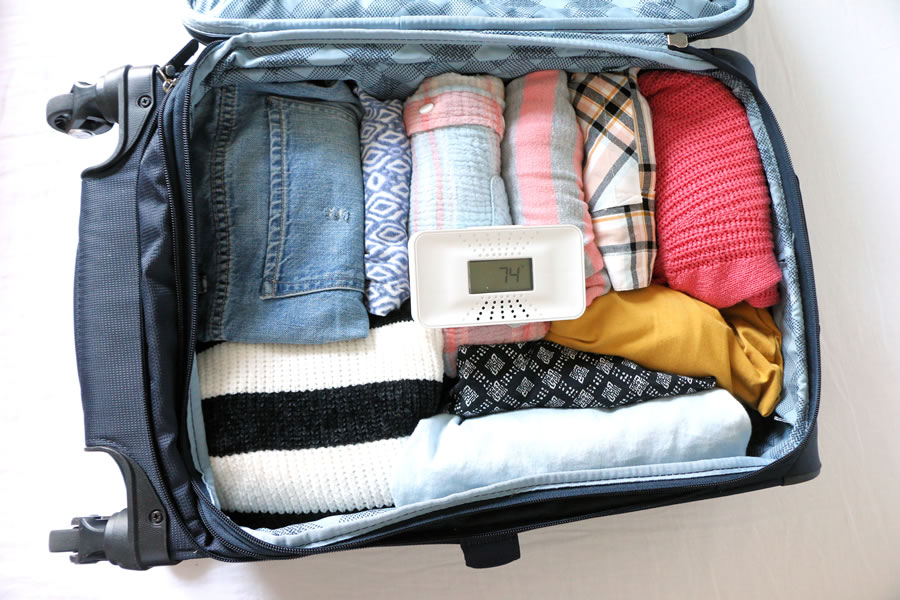
That’s exactly why our First Alert CO detector comes with us to every single historic property we visit. It takes 10 seconds to set up on the nightstand, and we sleep soundly knowing we’re protected.
Best Portable Carbon Monoxide Detector for Travel: First Alert Review
After researching options and using it for years while traveling to historic hotels, old inns, and vacation rentals, my top recommendation is the First Alert 10-Year Sealed Battery Carbon Monoxide Alarm.
Why This Is the Best Travel CO Detector
| Feature | Details | Why It Matters for Travel |
|---|---|---|
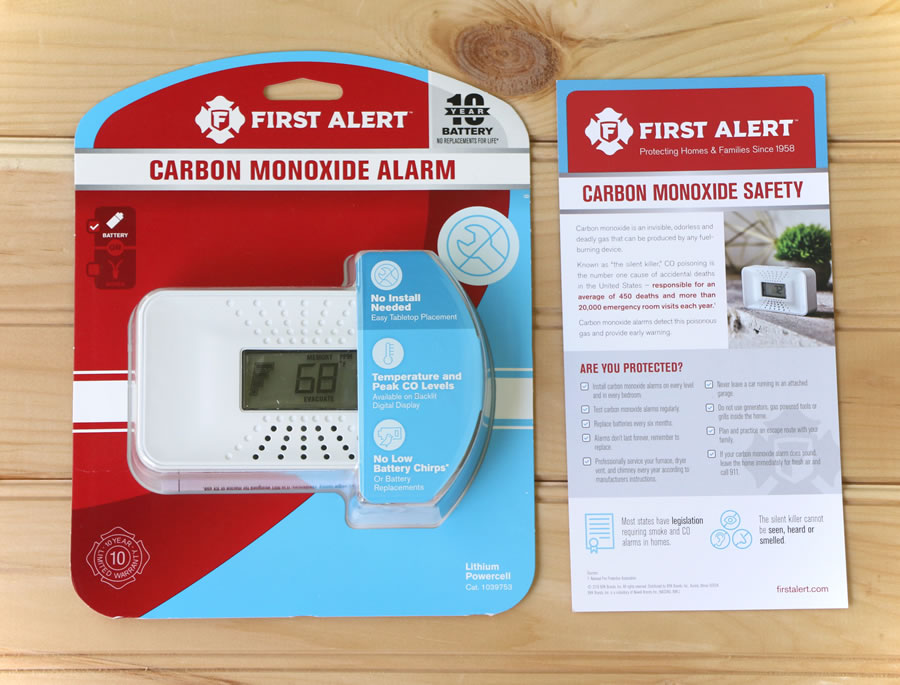
| 10-Year Battery | Sealed lithium battery lasts entire life of alarm | No battery changes needed while traveling; always ready to use |
| Compact Size | 4.8 x 4.8 x 1.8 inches | Fits easily in suitcase; doesn’t take up valuable packing space |
| Loud Alarm | 85 decibel alert | Wakes even deep sleepers; audible throughout hotel room |
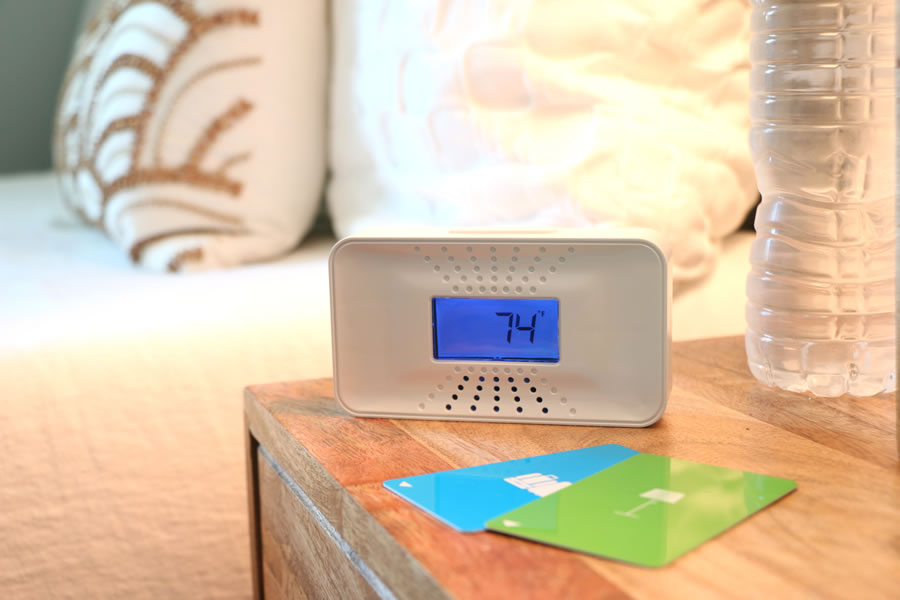
| LED Display | Shows temperature with blue backlight | Easy to read at night; dual purpose as room thermometer |
| No Installation | Just set it on nightstand or dresser | Ready to use in seconds; no tools or wall mounting required |
| TSA Compliant | Allowed in carry-on and checked bags | Can pack without airport hassles |
| Price | Around $50 | One-time investment for 10 years of protection |
How It Works
The First Alert CO alarm uses an electrochemical sensor to detect carbon monoxide in the air. When dangerous levels are detected, it sends out a sharp, loud 85-decibel beep that will wake you up immediately.
This model meets UL and NFPA safety standards for carbon monoxide detection, ensuring reliable performance when you need it most.
The LED display shows the current room temperature (a nice bonus feature), and the blue backlight makes it easy to read in the middle of the night without being too bright or disruptive.
Real-World Travel Testing
We’ve taken this detector to historic hotels with old heating systems, charming country inns with fireplaces, mountain cabins, beach rentals with questionable ventilation, and countless Airbnbs. It’s incredibly easy to pack, set up takes literally 10 seconds, and it gives us peace of mind every single night.
The temperature display is actually useful too. We’ve discovered some hotels keep rooms way too warm or cold, and we can adjust accordingly.
Pros and Cons
✅ Pros:
- No battery maintenance for 10 years
- Compact and travel-friendly size
- No installation or tools required
- Loud enough to wake heavy sleepers
- LED temperature display is useful bonus
- TSA-approved for air travel
- Reliable electrochemical sensor technology
- Wall mount option available (though not needed for travel)
❌ Cons:
- Higher upfront cost than battery-replaceable models (but worth it for travel convenience)
- Must be replaced after 10 years (alarm will notify you)
- Slightly bulkier than some ultra-compact models
Where to Buy
You can purchase the First Alert 10-Year Sealed Battery Carbon Monoxide Alarm on Amazon for around $50.
It’s a one-time investment that provides protection for a decade of travel. When you consider what you spend on travel insurance, nice luggage, or even a good packing organizer, $50 for something that could literally save your life is beyond reasonable.
How to Use Your Portable CO Detector While Traveling
Step-by-Step Travel Setup
1. Pack it in an accessible place
Keep your CO detector in your carry-on or near the top of your suitcase. You want to be able to set it up as soon as you arrive at your accommodation.
2. Place it strategically in your room
Set the detector on your nightstand, dresser, or bedside table. It should be:
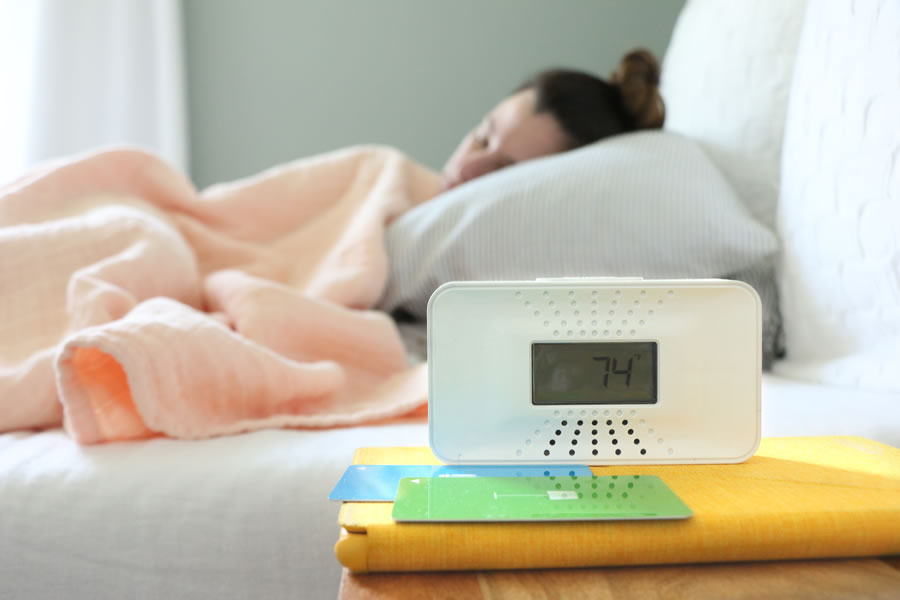
- Near where you sleep (within earshot)
- Away from windows and doors (drafts can affect readings)
- Not blocked by luggage or other items
- On a flat, stable surface
3. Check that it’s working
The First Alert model has a test button. Press it to verify the alarm is functioning. You should hear the loud beep and see the LED display light up.
4. Leave it on for your entire stay
The detector should remain active 24/7 while you’re in the room. The 10-year battery means you never have to worry about it dying.
5. What to do if the alarm goes off
See also

- Immediately evacuate the room and get to fresh air
- Alert hotel staff or property management
- Call emergency services (911 in US, 112 in Europe, or local emergency number)
- Do NOT re-enter the room until it’s been inspected and declared safe
- Seek medical attention even if you feel fine (CO effects can be delayed)
⚠️ Never Ignore the Alarm: Even if you feel fine, if the CO detector goes off, take it seriously. Carbon monoxide poisoning can make you feel confused or drowsy, which might cause you to dismiss the alarm. Always evacuate first, ask questions later.
Packing Tips for Air Travel
The First Alert CO detector is TSA-compliant and can be packed in either carry-on or checked luggage. Here are some tips:
- Carry-on is preferable (you’ll have it immediately upon arrival)
- Wrap it in soft clothing to prevent damage
- Keep the instruction manual (it explains it’s a CO detector if TSA asks)
- No special declarations needed at security
We’ve traveled with ours through dozens of airports in multiple countries and have never had any issues. Check out our full guide on packing tips for more travel essentials.
Additional Hotel and Rental Safety Tips
While a portable CO detector is your best protection, here are other ways to reduce your carbon monoxide risk while traveling:
Before You Book
- Ask if the property has carbon monoxide detectors installed
- Read recent reviews for any mentions of safety concerns
- Choose accommodations with good ventilation when possible
- Be extra cautious with older buildings or properties in regions with lax safety standards
When You Arrive
- Check if there’s a CO detector in the room (many won’t have one)
- If there is one, test it if possible
- Look for fuel-burning appliances (gas stoves, fireplaces, water heaters)
- Note the location of windows and how to open them quickly
- Request a room away from furnace rooms, parking garages, or loading docks
During Your Stay
- Open windows periodically for fresh air circulation
- Never use generators, grills, or camping stoves indoors (the U.S. Consumer Product Safety Commission reports that portable generators produce more CO than modern cars and can be deadly in enclosed spaces)
- Don’t run your car in an attached garage (even with the door open)
- Report any strange smells or sounds from heating systems immediately
- Trust your instincts – if something feels off, request a room change
Additional Travel Safety Resources
Carbon monoxide safety is just one aspect of travel security. Make sure you’re prepared with:
Common Questions About Travel CO Detectors
Do hotels have carbon monoxide detectors?
It varies widely. In the United States, many states require CO detectors in hotels, but enforcement is inconsistent. Internationally, requirements vary significantly by country. Many hotels, motels, and vacation rentals have no CO detectors at all, or have detectors with dead batteries. You cannot rely on the property to protect you.
Can I bring a carbon monoxide detector on a plane?
Yes. Portable carbon monoxide detectors like the First Alert model are TSA-compliant and allowed in both carry-on and checked baggage. You don’t need to declare it or remove it during security screening. We’ve flown with ours dozens of times without any issues.
How often do I need to replace a travel CO detector?
The First Alert 10-Year model has a sealed battery that lasts for the entire life of the unit. After 10 years, the alarm will notify you that it needs to be replaced, and you’ll purchase a new unit. This is much more convenient for travel than models requiring regular battery changes.
Is a portable CO detector as effective as a permanent one?
Yes. Portable CO detectors use the same electrochemical sensor technology as permanently installed units. The First Alert model meets UL safety standards and provides the same level of protection. The main difference is portability and power source (sealed battery vs. hardwired).
What if my CO detector goes off but I feel fine?
Evacuate immediately anyway. Carbon monoxide poisoning can cause confusion and drowsiness, which might make you unable to recognize the danger. Additionally, CO effects can be delayed, and you may feel fine initially but develop serious symptoms later. Always get to fresh air, alert property management, call emergency services, and seek medical evaluation.
Do I need a CO detector for every type of accommodation?
Yes. Carbon monoxide can leak in any building with fuel-burning appliances or systems. This includes luxury hotels, budget motels, vacation homes, Airbnbs, cabins, RVs, and boats. The type or cost of accommodation doesn’t determine CO risk. Old buildings and properties in areas with lax safety regulations pose higher risks, but CO incidents can happen anywhere.
Can I use my home CO detector for travel?
If it’s portable and battery-powered, yes. However, most home CO detectors are either hardwired or require regular battery changes, making them less convenient for travel. The First Alert 10-Year model is specifically ideal for travel because of its sealed battery and compact size.
Will a CO detector detect natural gas leaks?
No. Carbon monoxide detectors only detect CO, not natural gas (methane) or propane. Natural gas has an added odor (smells like rotten eggs) to help detect leaks. If you smell gas, evacuate immediately and call emergency services.
How much does a good travel CO detector cost?
The First Alert 10-Year model costs around $50. While there are cheaper options available, the sealed 10-year battery and reliability make this model worth the investment. It works out to about $5 per year of protection.
The Bottom Line on Travel Carbon Monoxide Safety
Carbon monoxide poisoning is a real, preventable risk that kills travelers every year. You can’t see it, smell it, or taste it. You can’t count on hotels or vacation rentals to have working detectors. And by the time you experience symptoms, it may be too late.
A portable carbon monoxide detector is one of the most important safety items you can pack. It’s more critical than travel insurance, more valuable than an expensive suitcase, and more life-saving than any other travel gadget.
The First Alert 10-Year Sealed Battery Carbon Monoxide Alarm is compact, reliable, maintenance-free, and gives you peace of mind everywhere you travel.
Whether you’re traveling solo, with friends, family, or pets to luxury hotels or historic inns, budget motels or vacation rentals, this small device could save your life.
More Travel Safety & Planning Resources
This travel safety guide was last updated on February 13, 2026. We regularly review new carbon monoxide detector models and update our recommendations based on real-world travel testing.
Better Living uses affiliate links. If you make a purchase through them, we may receive a small commission (for which we are deeply grateful) at no cost to you.
Source: Better Living – onbetterliving.com


