



If you purchase a product through a link in this article, a portion of the sales may be returned to us.
Travel has shaped my life for a long time. Traveling between coasts and countries provided structure and momentum: itineraries to follow, places to stay, people to meet, and land to cover. At one point, I was on as many as 45 flights a year, but rather than being excessive, I felt like it was proof that I was living a fulfilling life. Travel brought novelty, inspiration, and connection, but it also brought something even more compelling: direction. When you’re moving, it’s easy to feel like you know where you’re going.
Recently, I came across an idea that immediately stopped me. It’s that movement, luxury, and constant stimulation can sometimes masquerade as meaning. It made sense right away. When you travel, you have a pre-built itinerary of things to book, landmarks to see, and plans to follow. There’s very little free space, and even less room to ask what you actually want and need. In my case, the cost came gradually. After each trip, I found myself feeling fatigued for a long time, my nervous system having a hard time calming down, and my existence often being filled with expectations rather than daily life.
How to find joy where you are
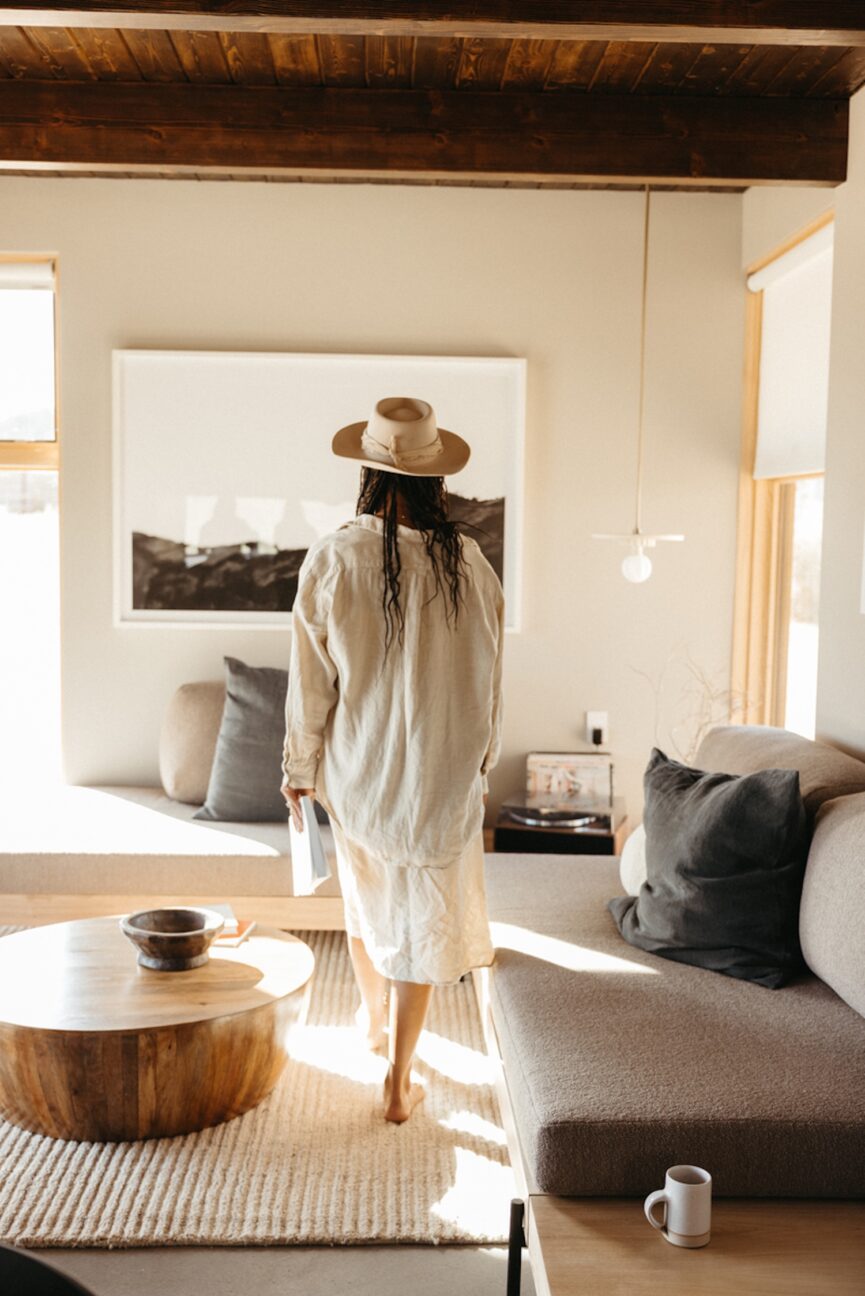
So instead of planning my next destination, I opted for another experiment: a year of less travel. Rather than rejecting curiosity and adventure, it is rooted in staying at home and paying close attention as a deliberate pause. In 2026, I choose to remain primarily in Portland and the Pacific Northwest, exploring what it means to find awe, growth, and meaning without constant movement. What I’ve discovered so far is that staying put doesn’t take away from your life’s purpose, it challenges you to create it more consciously.
Why I chose a year with less travel
Choosing a year of less travel wasn’t a reaction to burnout, it was a reprioritization. I realized that even the travel I truly love—travel filled with beauty, culture, and connection—demanded more from me than before. Recovery was even longer. The transition felt heavy. The inspiration was still there, but it came combined with a level of depletion that I could no longer ignore.
Slowing down also gave me unexpected clarity about how I wanted to live each day. When you travel more often, it becomes easier to shape your life around the temporary, like planning departures, justifying luxuries, and postponing self-care until you “get back.” Choosing a year with less travel has given me room to invest more fully in the things that actually support me: my home, my health, my creative work, and my relationships when I’m not on the road.
Most of all, I wanted to know what would happen if I stopped relying on movement to make my life feel expansive. When you don’t have travel on your calendar, all kinds of questions come to mind. Why does my day feel so full when I don’t have anything new planned? Where does novelty come from if you’re not looking for it anywhere else? A year of less travel felt like an invitation to deepen rather than disperse, to cultivate meaning from attention rather than movement.
Cost of regular business travel
For a long time, I treated the fatigue that comes with traveling as a temporary, if slightly romantic, rational trade-off. But as the trips piled up in rapid succession, the toll became hard to ignore. Emotionally, there was little room to integrate the experience before moving on. Every time I got home, my time seemed to be shorter and every time I left, I felt a little rushed.
There is also the physical reality of constant movement. Airports, time changes, unfamiliar beds, and constant stimulation keep your body in a constant state of alert. Even fun trips rarely make you feel better. Over time, I realized that I craved predictability. Not out of boredom, but because my nervous system needed something to calm it down.
Then there are the financial costs. When travel becomes a habit, expenses fade into the background: flights booked casually, accommodations framed as “value-for-money,” experiences justified as meaningful. Personally, I don’t feel that any of this is irresponsible. Long-term investments, consistency of care, and choosing the type of support you need to support your daily life all collectively shape what you can afford.
Naming these costs wasn’t a complete rejection of travel. It was about understanding how stability can be easily compromised by constant movement, and why staying at home intentionally began to feel like a form of care rather than a restriction.
How staying at home restores your energy
What struck me most about being home was not boredom, but relief. No longer constantly moving forward, my days feel broader, even when they are full. Energy is no longer something you have to recover, it’s now something you can actually build.
Staying at home has restored my energy in small steps. The morning rush has been reduced. The night lasted a long time without me collapsing from exhaustion. So much mental bandwidth that was once consumed by logistics and planning is suddenly available for everyday life.
There was also a return to normal life. Regular movement. A familiar meal. My creativity has become more stable and sustained by repetition rather than driven by novelty. Instead of looking for inspiration elsewhere, I’ve found that it comes naturally to me on walks around my neighborhood, at farmers markets, and in conversations that unfold slowly over time.
Staying at home didn’t make my world smaller. It stabilized it.
How to be in awe wherever you are
What I learned in a year of less travel is that awe doesn’t go away when you stop traveling, it just shows up closer to home. These are simple, repeatable ways I’ve cultivated curiosity and expansion without leaving the house.
1. Go back to the same place on purpose. Choose one spot, such as a park, coffee shop, or walking route, and visit it regularly. Familiarity creates depth. You will begin to notice changes.
2. Plan one solo outing each week. Traveling often requires more time alone. Instead, schedule one activity to do alone, like a walk, a museum visit, or a solo lunch, and treat it as a non-negotiable.
3. Explore your local area like it’s new. Visit areas you rarely spend time with. Learn the history of the places you pass every day. Remember: Curiosity doesn’t require distance.
4. Plan according to the season. Instead of planning around productivity, plan around light and weather. Take a long walk on a bright day. A dark early morning.
5. Set expectations at home. Whether it’s weekly dinners, monthly outings, or personal projects, having something on your calendar changes how you feel in the moment.
weekly inspirational framework
One thing that travel is good at is creating momentum. In a year with less travel, I find it helpful to restructure that without overloading my schedule.
1. One anchor plan. Choose one thing you look forward to each week. It could be a walk, a workout class, or dinner with friends.
2. A moment of curiosity. Things like visits to the cinema, chapters of my books, lectures, documentaries, etc. that stretch the mind.
3. One Intentional Night In. Just like a night out, plan what you’ll cook, what you’ll read, what you’ll watch, and when you’ll unplug.
4. One physical reset. Aimless exercise – walking, stretching, yoga.
5. One reflection check-in. Take a few minutes to journal and write down what went well, what tired you, and what you want to do more of next week.
choose silence as a season
Just because it’s a year of less travel doesn’t mean your life will be smaller. For me, it was about adjusting my life to where I am without the constant forward movement, planning, and expectations that travel requires.
I don’t think travel is an issue. I still love it. But I learned how easily movement can substitute for meaning, how a full calendar can mask fatigue, and how often I surrendered my sense of being alive to my next destination. Staying at home has demanded different things from me: attention, presence, and patience. Not necessarily glamorous, but deep and stable.
This is not the year to say no forever. It’s about saying “yes” to the season of putting down roots, recognizing what’s already here, and believing that growth doesn’t always require a boarding pass. If you’re feeling tired, untethered, or wanting more on your feet, a year of less travel may be less about retreat and more about getting back to what you need most.
Source: Camille Styles – camillestyles.com


