



BTS is officially back, but they Arirang The comeback wasn’t just a performance. It was a carefully constructed cultural moment, fusing history, technology and identity on the global stage.
The group, which consists of RM, Jin, SUGA, J-Hope, Jimin, V, and Jungkook, reunited after completing their military service in South Korea and performed as a full group for the first time in several years.
The concert is BTS Comeback Live | Arirang,dDirected by acclaimed TV veteran Hamish Hamilton and produced by Done+Dusted, the production brought a level of scale and precision rarely seen in live music. From record-breaking production to deeply intentional symbolism, here are five key details that elevated the concert beyond what most viewers saw.
The production was shot like a Hollywood movie
This was no standard concert broadcast. BTS used high-end movie cameras typically reserved for major film productions, giving their performance a level of depth, movement, and clarity rarely seen at live music events. Helmed by Hamish Hamilton and produced by Done+Dusted, the show achieved the polish and storytelling of a large-scale televised event, making it feel more like a feature film than a concert broadcast.
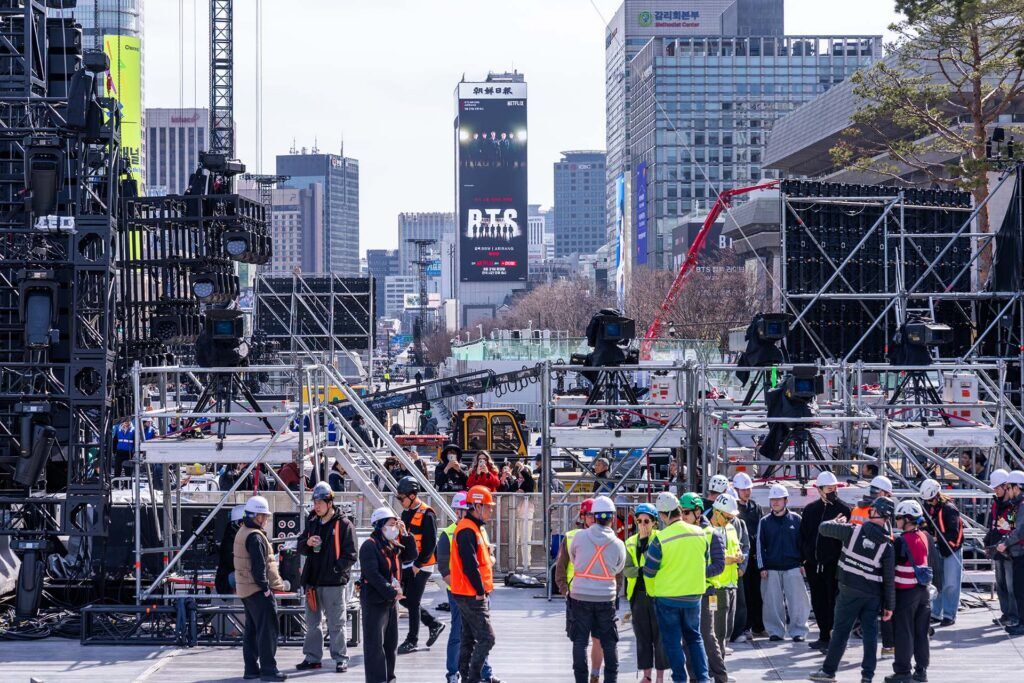
First concert at Gwanghwamun Square
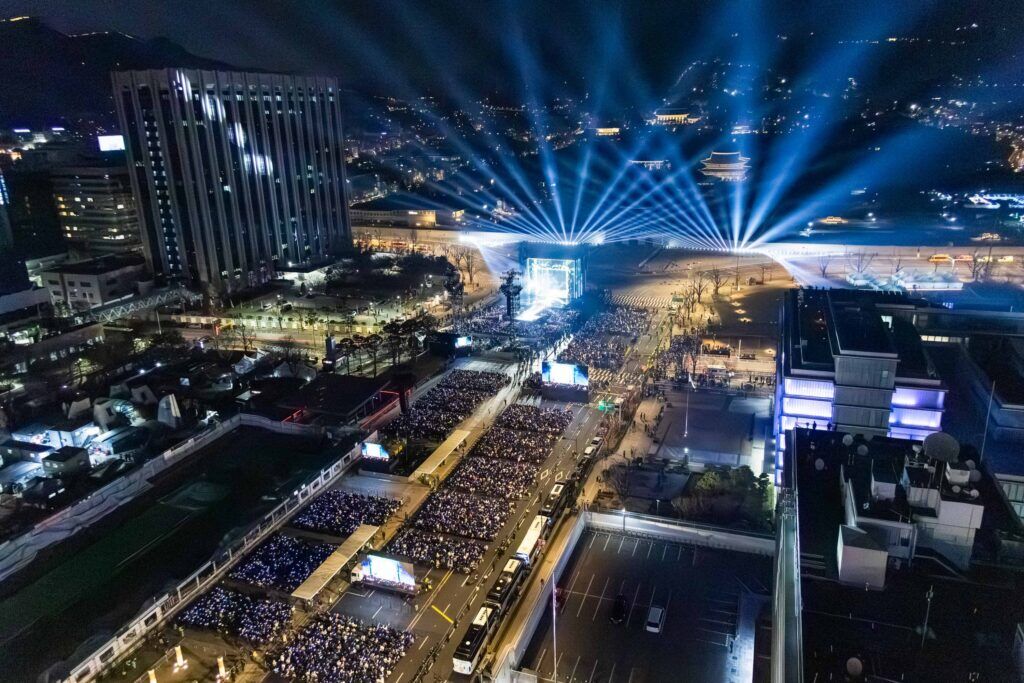
BTS made history by holding their first full-scale concert at Gwanghwamun Square. The performance, attended by more than 104,000 people, transformed a space known for its cultural and political significance into a global musical stage. The plaza has long served as a venue for rallies, protests, and public events nationwide, making BTS’ presence both iconic and unprecedented.

The stage was a living tribute to the Korean flag
The overall stage design served as a visual homage to Korea. The LED structure formed a giant square frame around Gwanghwamun and the surrounding mountains, and the graphics throughout the performance incorporated elements inspired by Taegeuk and the hexagram of the national flag. Design doesn’t just support performance. It reinforced themes that define identity, balance, and tradition. Arirang.
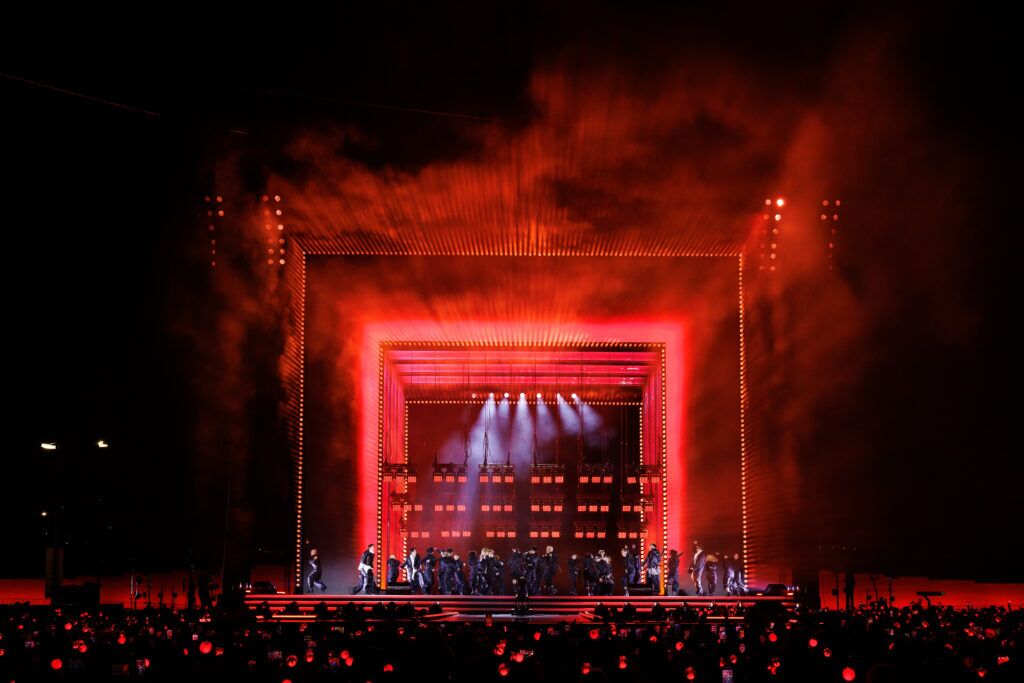
“Arirang” connects BTS’s past and present
The performance of “Body to Body” featured singers and musicians wearing traditional Hanbok from the Joseon Dynasty, and they played the melody of “Arirang” live. The song is often considered South Korea’s unofficial national anthem, and contains themes of love, separation, and resilience. These themes reflect BTS’ own journey, particularly their time apart during military service and reuniting with fans.
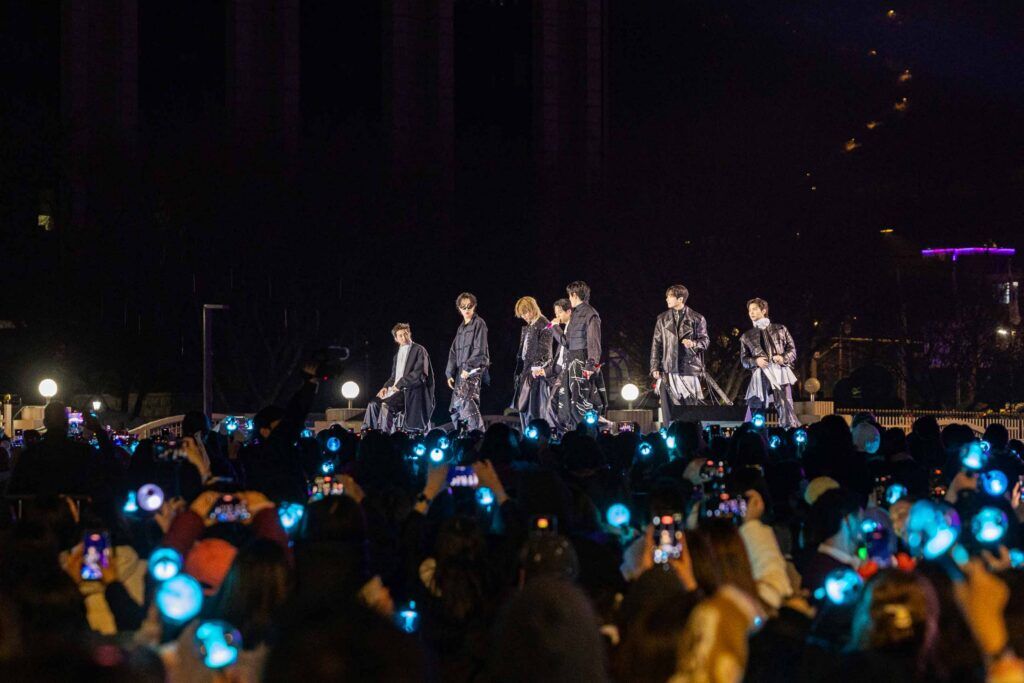
Another piece of Arirang history will be added. First recorded in 1896, the song was performed by three Korean men studying abroad and became the first Korean song recorded in the United States. This legacy of cultural exchange reflects BTS’ own trajectory as Korean artists who have built a global presence while remaining rooted in their identity.
The place that turned a concert into a national moment
The performance was held in front of Gyeongbokgung Palace, a landmark from the Joseon Dynasty, and Gwanghwamun Square spread out in front of it. The area also has bronze statues of King Sejong the Great, the founder of Hangul, and General Yi Sun-shin, a national hero. By placing their comeback in this setting, BTS aligned their return with centuries of Korean history.
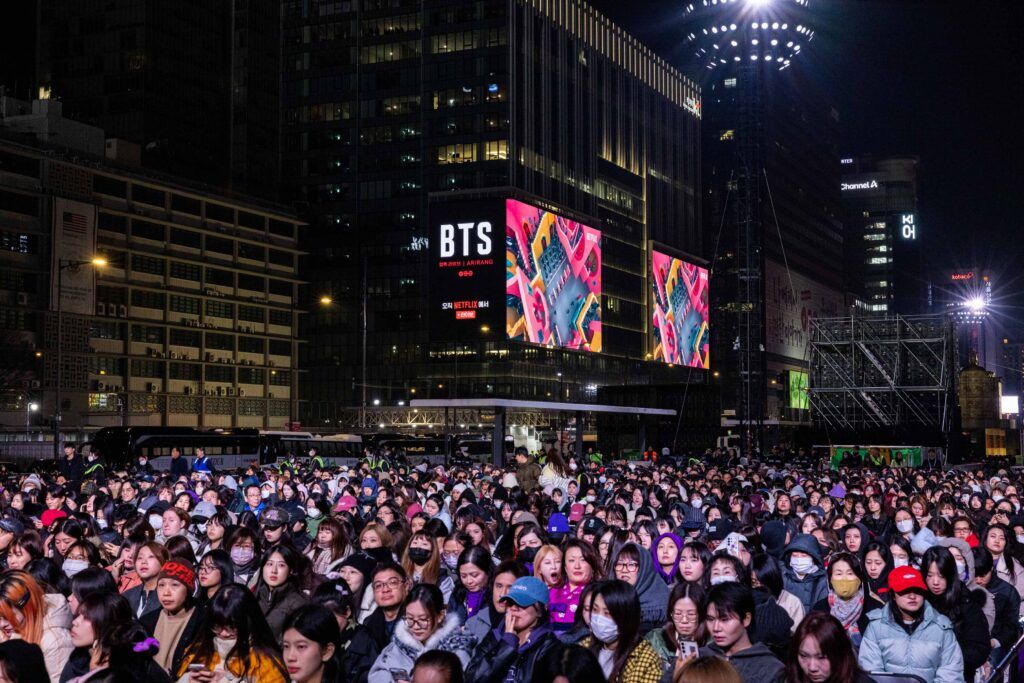
That symbolism was carried into the group’s closing remarks. Jimin told the audience, “Finally, we’re here and we can meet again. Being able to talk here… I’m so moved. I’m so happy to be on stage with the seven of us. Thank you so much to everyone. Today, Gwanghwamun Square was packed.”
bangtan boys Arirang A comeback is not just a return to music. It was a defining moment of cultural pride, filmmaking, and global reach, now preserved for audiences around the world to experience. Netflix.






Source: Gayety – gayety.com


