



Queer Happened Here by Marc Zinaman
Courtesy Prestel Publishing
From the Stonewall Inn to the Continental Baths, New York City seems to have LGBTQ+ landmarks at every corner. Queer history is everywhere, even if so much of it goes unnoticed. Now, New York native Marc Zinaman has published a book featuring photos of that history in Queer Happened Here: 100 Years of NYC’s Landmark LGBTQ+ Places.
Having run the social media account Queer Happened Here, Zinaman offers a deeper look into the city’s LGBTQ+ past from 1920 to 2020.
Related: Pride Marches From 1969 to Present in 15 Unearthed Images
“The book seamlessly weaves photographs, flyers, posters, club membership cards, and magazine spreads with first person stories and compelling research that illuminates the revolutionary role third spaces have played in queer life over the past century. Organized by decade, Queer Happened Here opens with a splash at the bathhouses, drag balls, and nightclubs of the Roaring ‘20s. It looks at the reactionary wave of persecution that pushed the LGBTQ+ community back underground until it rose up against the NYPD on June 28, 1969, signaling the Gay Liberation Movement had arrived,” according to a press release. “Queer Happened Here celebrates the indelible relationship between people and place, honoring the transformative power of pride, unity, and love.”
It traces queer NYC from the first Pride march to the AIDS crisis, all while showcasing how queer people thrived and survived the challenges the community faced.
With an introduction by drag superstar and actress Peppermint, the book features more than 400 works by artists and photographers like Tina Paul, James Van Der Zee, Linda Simpson, and more.
The Advocate spoke to Zinaman about the book, his work, and New York’s queer history. Check out the interview below.
What was the impetus to working on Queer Happened Here?
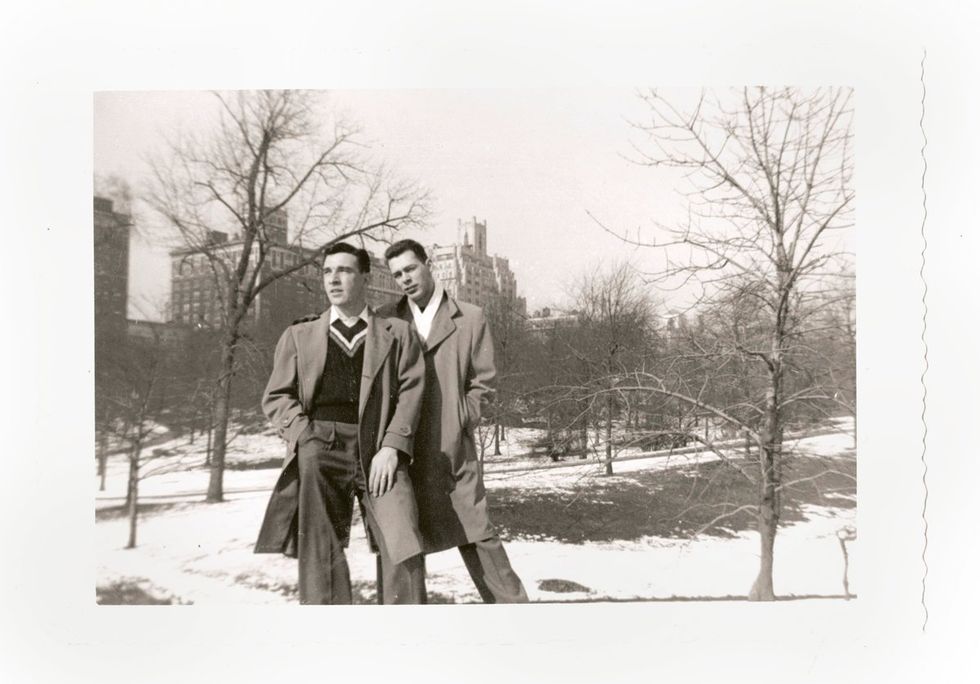
Couple Roger Pegram and Frank Bushong in Central Park, 1951
Robert Young Collection via Prestel Publishing
Prior to working on the Queer Happened Here book, I launched the Queer Happened Here social media account on Instagram in 2021, which I have been running ever since. Before that, though, this all started out as more of a personal project after I watched two back-to-back Studio 54 documentaries. While I was fairly well versed in Studio 54—which has been endlessly covered—what caught my attention in those films were the fleeting mentions of several other mind-boggling New York nightspots that I’d either never heard of or knew very little about, despite my being a native New Yorker. These were places like GG’s Barnum Room, which was a short-lived ‘70s discotheque that had transgender trapeze artists doing acrobatics atop a net that hung over the dancefloor. Another one that struck me was Crisco Disco–like, what do you mean there was a club fifty years ago with a giant Crisco can DJ booth that LGBTQ+ people just danced around–and why haven’t I ever heard of it before? So I was intrigued. What were these spaces and why didn’t I know about them?
That made me want to dig deeper, and my initial curiosity morphed into a daily ritual. Every morning, I’d research two or three places, tracking down addresses, years of operation, old photos, and whatever scraps of history I could find. I then started pinning these spots to a simple Google Map I’d made, just as a way to document them for myself. Then the COVID-19 pandemic hit and all that extra time and isolation turned this habit into an obsession. Before long, I stepped back and realized I’d mapped nearly 1,000 locations, though the map was for my eyes only and I wasn’t quite sure what it could become. Then after several conversations with other LGBTQ+ folks around my age, I realized how many of these iconic places had been poorly documented, forgotten about, or were simply unknown.
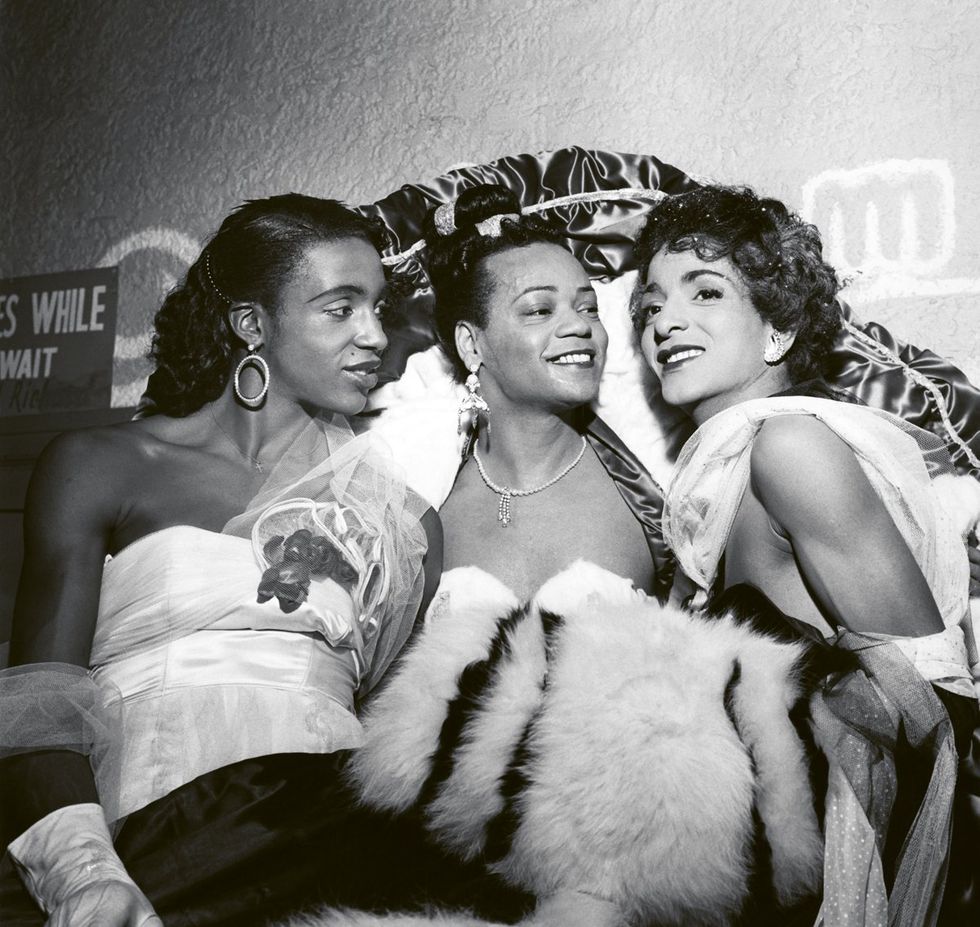
Funmakers Ball participants Eddie Mcclennon, Bobbie Lancey (first place winner for Best Costume), and Toni Evans, 1954
Johnson Publishing Company Archive via Prestel Publishing
That sparked the idea to launch the social media account—not just to share the images and histories I’d uncovered with friends, but also as a means to connect with others who might be holding on to photos, memories, and stories of their own from these venues which they could contribute. As the account gained momentum, it became clear that there was a collective longing for this kind of storytelling. And while the social media platform offered a dynamic space to help document and keep these places alive in public memory, in time it also became the foundation for this book—which can hopefully serve as a more permanent, expansive form of that archival work.
Historic images can teach us a lot about our collective past. How did you approach selecting the images for the book that you felt best represented that past?
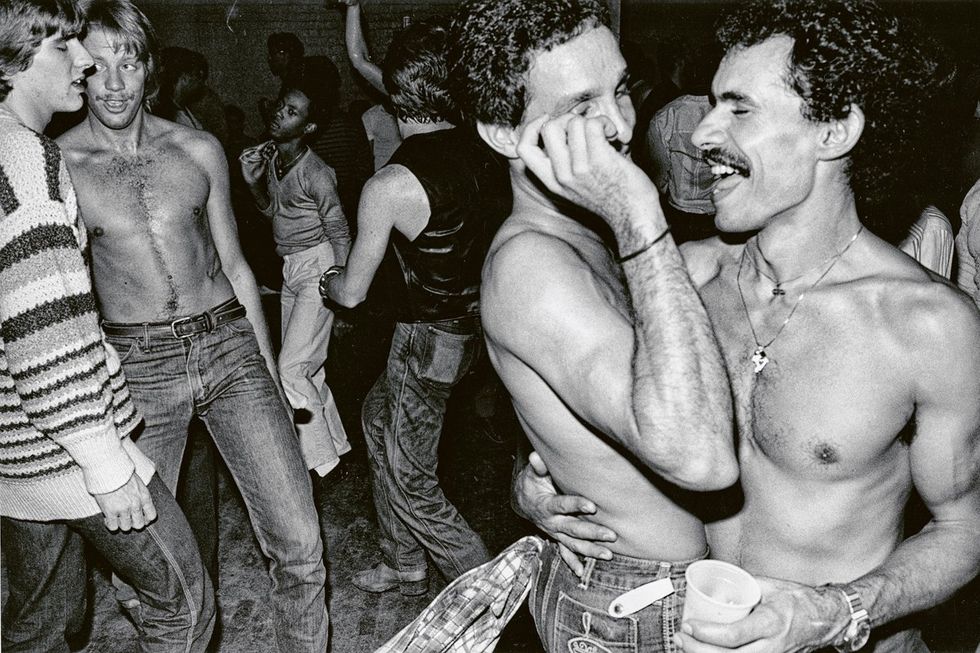
Crisco dancers, 1979
Bill Bernstein/Last Dance Archives via Prestel Publishing
Given that many of these spaces were not meant to be visually documented, I had to approach image selection from multiple vantage points. First and foremost, it required deep research and a lot of digging just to determine what materials were even out there and available. There were quite a few spaces I had hoped to cover, which I ultimately had to leave out due to a lack of photographic documentation. Still, my primary goal was to curate a broad and representative mix of queer spaces—ones that catered to different subsets of the community—drag kings, leathermen, AAPI folks, etc., while paying attention not only to what was visually striking, but also to the stories each image could tell and the histories they could help surface.
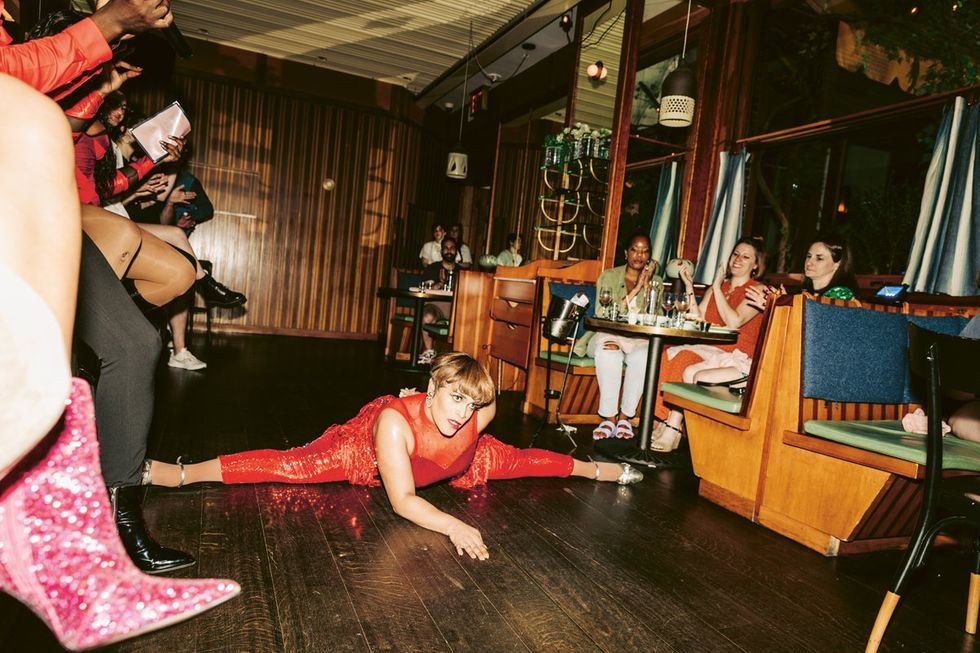
Drag performer at Pride brunch, 2023
Wes Kloefkorn via Prestel Publishing
I also wanted the photographs included to reflect the layered emotional life of these spaces: not just images that radiate joy and celebration, but also ones that capture moments of defiance, intimacy, and creative self-expression. Some of the images included in the book are extremely well known and iconic; others are far more personal, drawn from private collections or never publicly shared before. Together, I think they form a kind of patchwork memory of queer life in New York, one that honors not just the legends and headline acts, but also the regulars and unnamed figures in the crowd who helped bring these spaces to life. That approach also shaped the way I incorporated oral histories and interviews. The book includes quotes from legendary nightlife figures like Susanne Bartsch, but also from everyday people—those who simply loved to go out, be themselves, and feel connected. That mix felt essential to telling a more complete, nuanced story.
The book focuses on locations and places that are part of queer history. Why did you pick physical space instead of people to center your work?
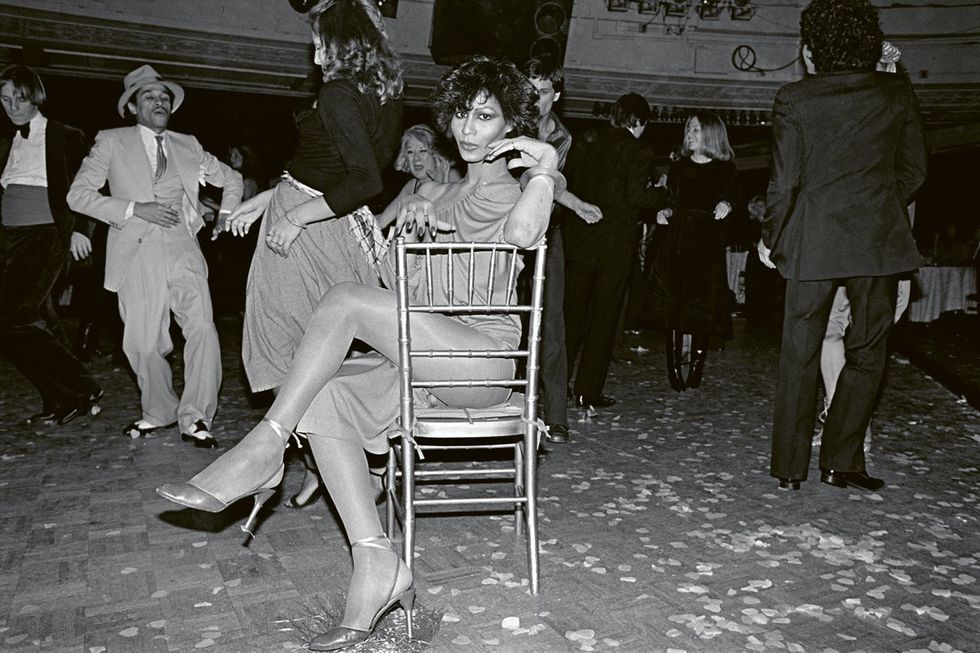
Potassa De La Fayette,1977
Bill Bernstein/Last Dance Archives via Prestel Publishing
Yes, Queer Happened Here is deeply rooted in space and place, and that focus really emerged from a core realization: How much physical queer history is hiding in plain sight. I grew up in Manhattan, and as a closeted, anxious kid with no knowledge of LGBTQ+ history, I used to walk past a stately but otherwise unremarkable building on the Upper West Side every day on my way to school. I didn’t learn until I was in my mid-20s that this building had once housed the Continental Baths—one of the most legendary gay bathhouses in history, where Bette Midler launched her career. And so I now often wonder: If I had known that a decade earlier, might it have shifted how I saw myself? Might it have helped me feel less alone to know that queer people had not only existed, but had thrived, right there on my block? So that kind of discovery turns the city into a living archive—with generations of LGBTQ+ life layered into its architecture and embedded in its sidewalks.
I also think that third spaces are where so much of queer life has historically unfolded—often in ways that were fleeting, undocumented, or deliberately erased. Historically, queer folks have typically fled from home or felt uncomfortable among their biological families, so as a result bars, clubs, bookstores, stoops, and street corners became important sites of gathering, safety, expression, resistance, and community. While people are too, of course, still at the heart of these histories, I was drawn to the idea that a space itself can hold memory and carry traces of queer joy and struggle long after the crowd has left or the building has been knocked down. So I guess by focusing on place, I wanted to explore how LGBTQ+ communities have continually reshaped the city—and how the city, in turn, has shaped queer life.
When you were working on the book, how was it different than running the successful Queer Happened Here social account?
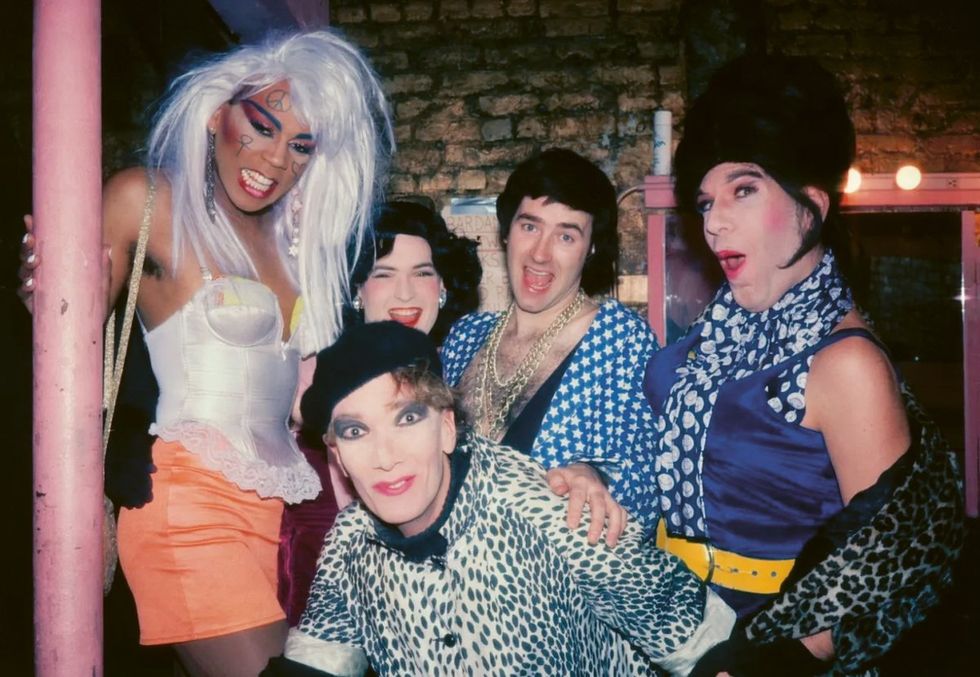
RuPaul, Billy Beyond, Larry Tee, Hapi Phace, and Hattie Hathaway (front) at the Pyramid, circa 1980s
Ande Whyland via Prestel Publishing
Oh, there were definitely some substantial differences between creating the book and curating content on social media—though having already done a good deal of research beforehand was incredibly helpful. That existing foundation gave me a head start, but with that said, while a book has many advantages it also has limits—word count, page count, and the need for structure. Those boundaries forced some tough early decisions to be made, including the choice to focus solely on Manhattan in the book. That wasn’t because the other four boroughs of New York lack significance—far from it. Each one has its own vibrant and vital queer history, and they all deserve books of their own. The book also spans a full century, from 1920 to 2020, even though queer spaces certainly existed in New York before 1920 and new ones have definitely popped up in the last five years.
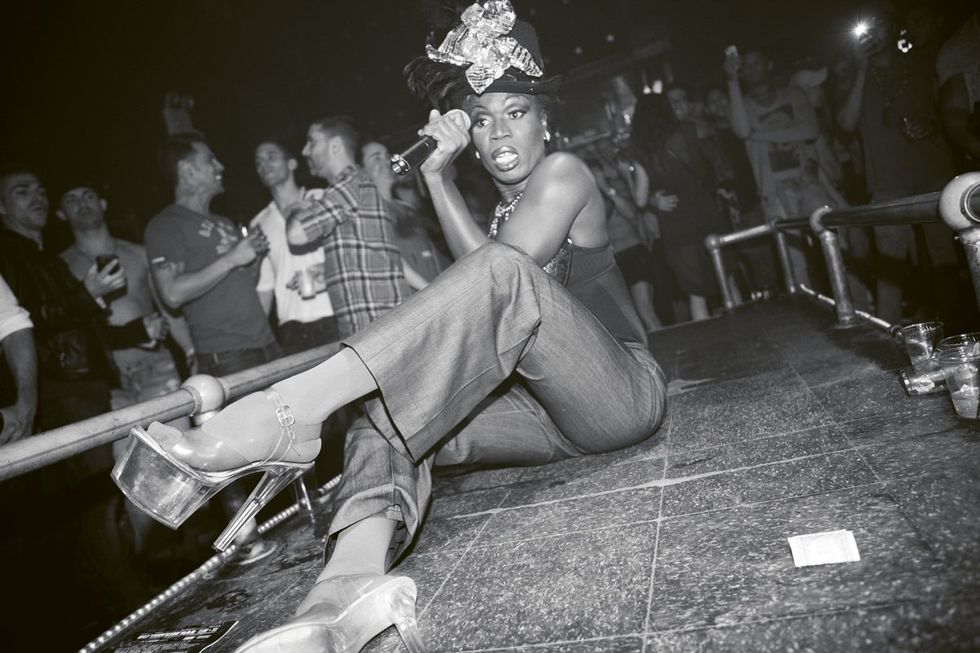
Working the runway ramp at Westgay, 2013
Cyle Suesz via Prestel Publishing
On the other hand, social media as a digital platform isn’t bound by those same physical limitations. So that’s allowed me to document venues from all five boroughs, highlight earlier spaces, and stay current with the new ones emerging now.
There are also some other practical differences: a printed book requires much more careful attention to image quality, licensing, and copyright—whereas the internet, for better or worse, can feel like a bit of a free-for-all when it comes to reposting and resharing. Even online, though, I try to credit image sources whenever possible, though Instagram doesn’t always make that easy. Still, both formats have their strengths, and together they’ve allowed me to approach this history from multiple angles.
What was the most challenging thing about working on the book?
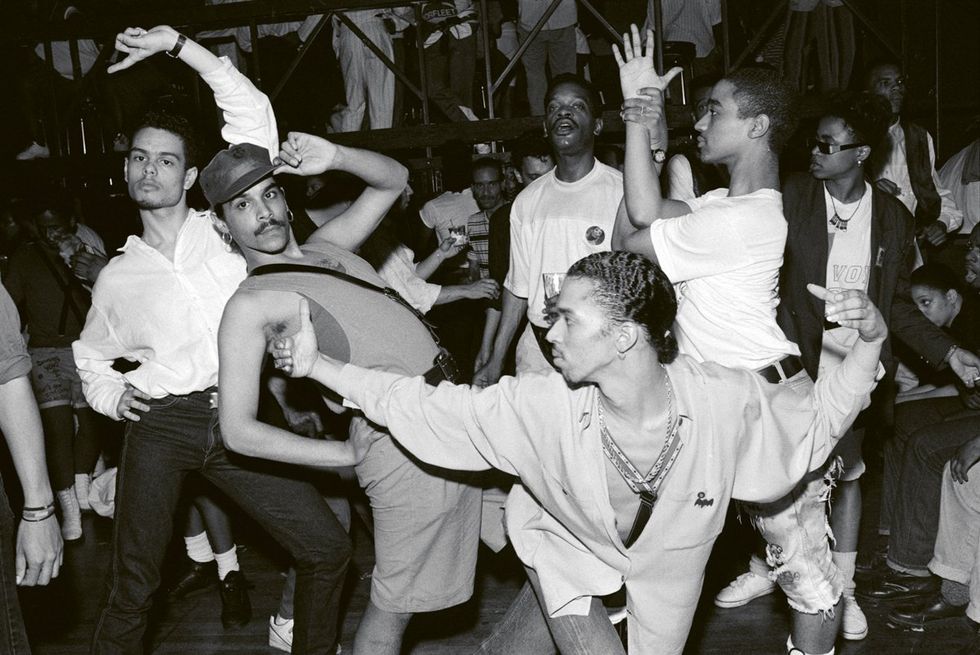
House of Xtravaganza voguing (Luis, Dany, Jose, David Ian), 1989
Chantal Regnault via Prestel Publishing
I think one of the most challenging things about working on the book was having to narrow down which spaces made it in and which didn’t. On Instagram, I’ve documented close to 1,000 venues; in the book, there are only about 70. That meant making a lot of difficult cuts—many of them due to a lack of available imagery. Take 12 West, for example. At first, I struggled to find any usable photos of the membership-based discotheque. But after hearing how deeply that space resonated with so many LGBTQ+ elders I interviewed—and recognizing how under-documented it was—I knew I had to find a way to include it. So I dug deeper, and thankfully was able to source enough visual materials needed to be able to keep it in.
In other cases, that just wasn’t possible. There was an important early hangout for trans women of color that I was determined to feature, but in the end couldn’t due to a lack of available images with usage rights. That omission was particularly painful. Still, I was able to pivot and spotlight another gathering place for trans women of color from the same era. It wasn’t a perfect solution, but it felt essential to honor those histories in some form.
What was the most rewarding?
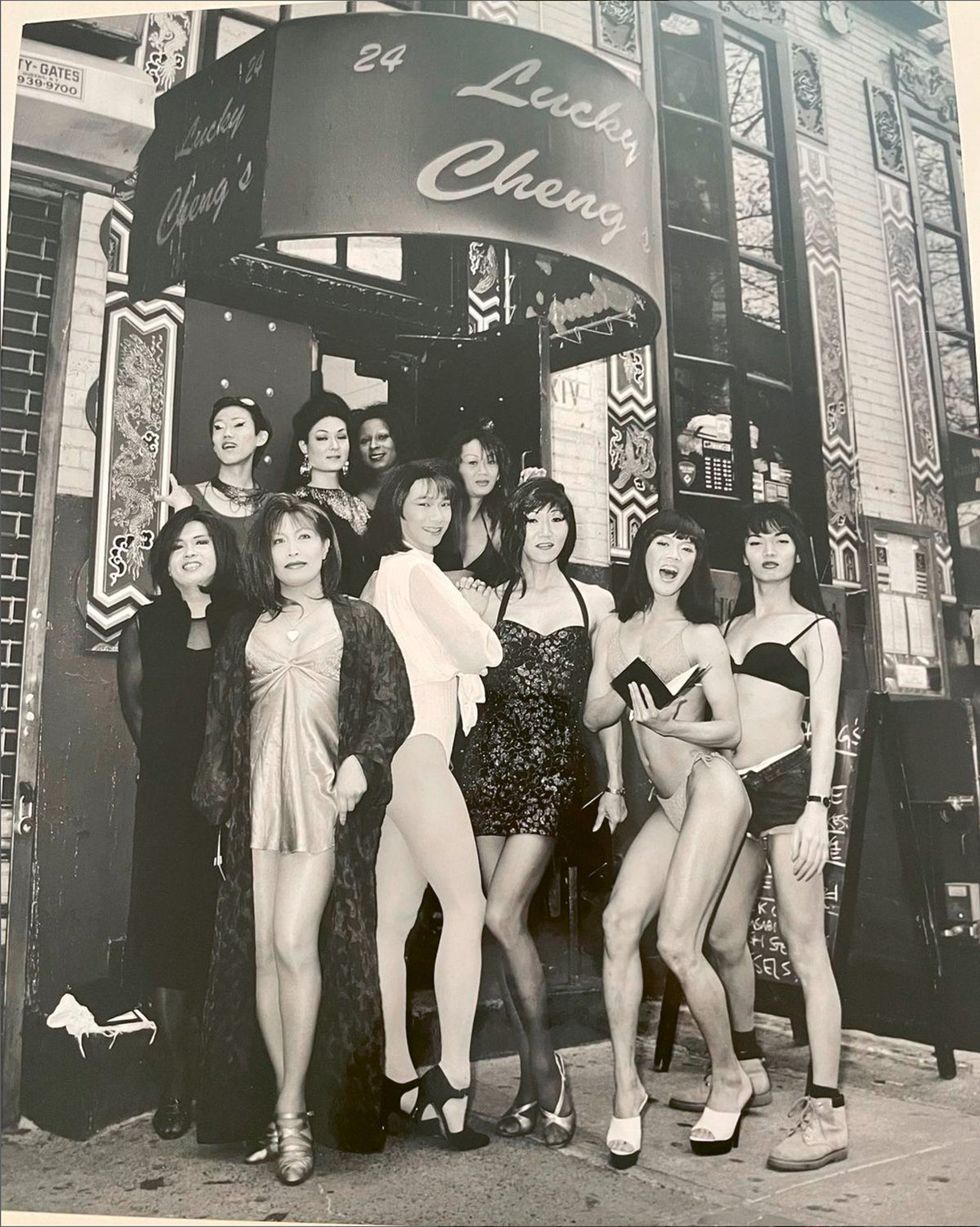
Performers in front of Lucky Cheng’s, circa 1990s-‘00s
Daisy Ang Collection via Prestel Publishing
One of the most rewarding parts of working on the book was certainly the chance I got to connect with and interview LGBTQ+ elders. Sitting with them, listening to their stories, and preserving their memories felt like both an enormous privilege and a profound responsibility. I often think about how my generation is among the first to benefit from having an older generation of queer people who, as a community, were able to live more openly, out loud, and with pride. That’s something we can’t—and shouldn’t—take for granted. Too often, these conversations don’t happen until it’s too late, and then so much rich, lived history gets lost.
There were definitely a number of people I had on my list to interview who unfortunately passed away before I could get to them. So while that was devastating, I am incredibly grateful to those I was able to connect with–many of whom not only shared their stories with me but who also became friends along the way. So collecting these oral histories was my way of honoring their experiences and making sure their voices were preserved. But also their stories brought a depth, vulnerability, and level of personal intimacy to the project that no collection of facts or photographs alone could ever convey.
Were there histories that you didn’t know of before diving into the book?
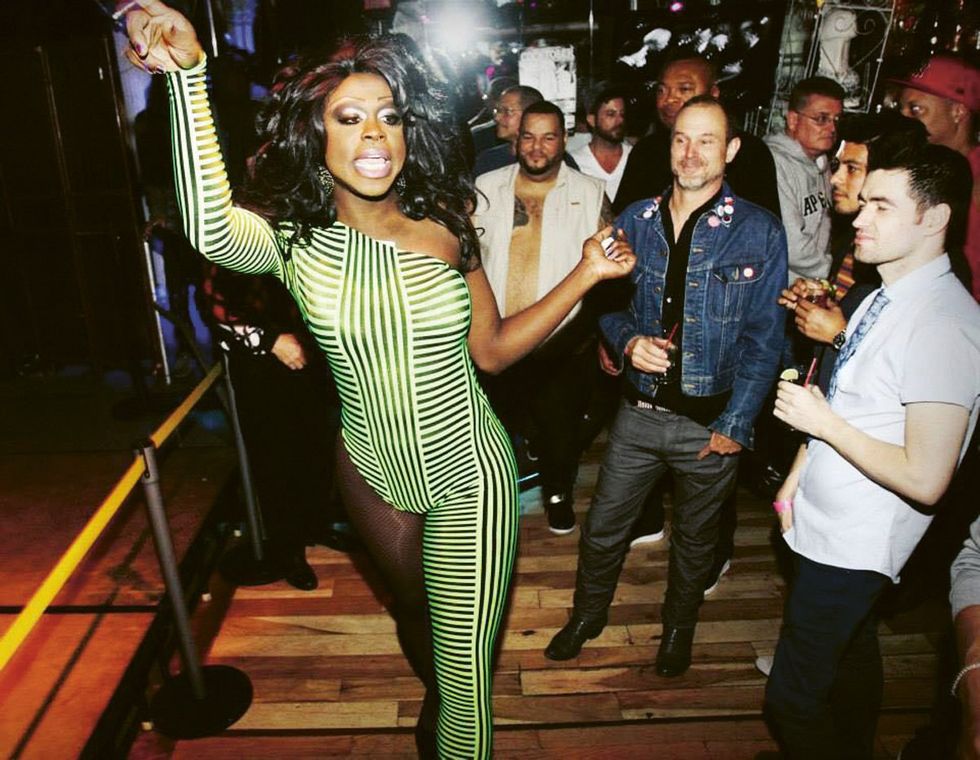
Bob the Drag Queen performing at Barracuda, 2014
Bob Pontarelli via Prestel Publishing
Prior to starting the book, I’d already spent a few years researching these histories, so I feel like I came into it with a fairly broad understanding of the landscape. But doing the deeper research and digging that the book required allowed me to really zoom in on specific venues and the people behind them—and one story that truly stood out was that of Anna Genovese. She was the second wife of Vito Genovese, the infamous head of the Genovese crime family, and she played a fascinating role in Manhattan’s mid-20th-century drag bar scene.
I already knew that the Mafia had been deeply involved with running many of the LGBTQ+ bars in New York since the days of Prohibition, but I’d say Anna Genovese took her level of involvement one step further. Anna helped run several clubs in NYC known for hiring and showcasing both female and male impersonators, including Club 82 and Club 181. But what makes her especially intriguing is the fact that despite being married to Vito, she also formed romantic relationships with some of the women who worked at her clubs. These included a woman named Gwen Saunders who worked as a club cashier, and perhaps more notably, another woman named Jackie who performed as a male impersonator under the name Duke. During their relationship, Anna even gifted her “girlfriend” Jackie a Cadillac, so their relationship couldn’t have been all that secretive. Years later, Anna’s granddaughter Mia confirmed the romantic connection, saying she met Jackie on the day that Anna passed away. So learning about Anna’s story made it clear just how deeply mob history and queer history were entwined—not just through business dealings, but also through these genuine emotional and personal relationships.
What are you hoping readers get from Queer Happened Here?
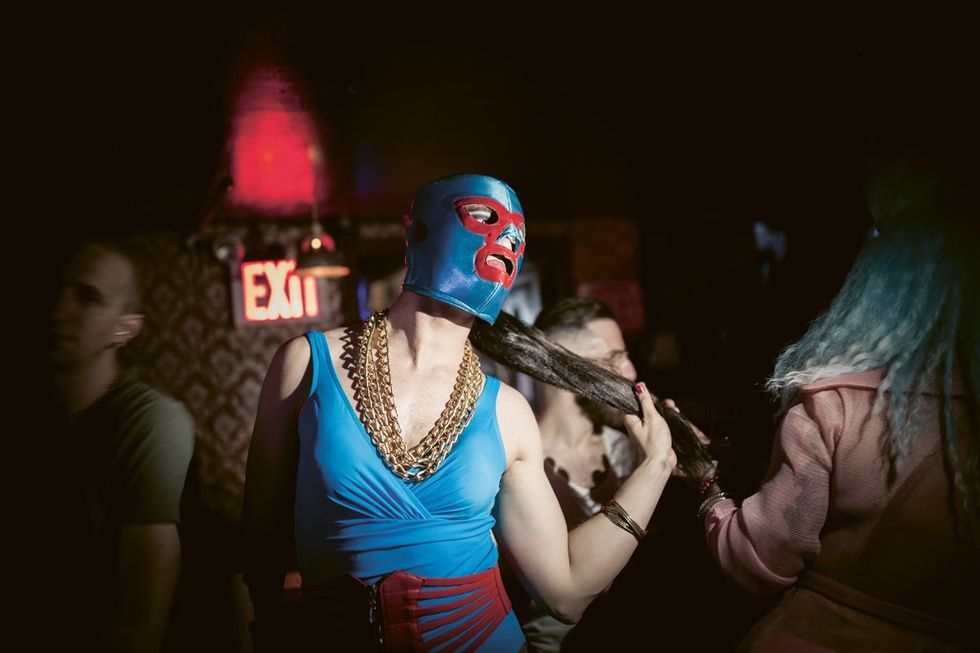
Semantha Alexander in a luchador mask at Nowhere, 2018
Daniel Albanese via Prestel Publishing
Given the current political climate, I hope readers come away with a renewed sense of just how layered, vibrant, and enduring queer history really is—especially in a city like New York, where so much of it exists just beneath the surface, hidden in plain sight. But I believe that’s true anywhere. No matter where you are, if you look closely enough, queer history is there too.
My hope is that readers will discover places they never knew existed or be transported back to spaces they once cherished. And maybe, some will even see pieces of themselves reflected in stories from venues they never had the chance to visit. At its core, this book is a reminder that LGBTQ+ people have always been here—even through trying times like the Lavender Scare or the AIDS epidemic—continually building spaces for ourselves where we can find one another, feel seen, and forge community. Even when we were being surveilled, criminalized, pushed to the margins, or grieving unimaginable loss, we have always found ways to carve out joy, beauty, and connection.
Source: Advocate.com – www.advocate.com


