



Confidence should feel empowering. Instead, for many plus-size women, confidence in the skinny world feels conditional.
Weight requirements apply.
Progress is a condition.
It depends on the amount of space you occupy on that day.
For a long time, I thought it meant I needed to put in more effort. More discipline. More self-control. Build up more and more confident practices like your personality’s to-do list.
Then I started asking another question.
What happens when you find confidence difficult because you are trying to build confidence within a system that rewards you for doubting yourself?
Once you see that, everything starts to change.
The pressure to lose weight was no accident.
At some point, I stopped wondering if this pressure was imaginary and started thinking about who was benefiting from it.
According to a report, the weight loss industry in the United States was found to earn tens of billions of dollars each year. Harvard Health Publishing. Worldwide, the diet industry is estimated to be worth more than $250 billion. Statista.
You don’t get that kind of money from women who feel confident, perfect, and secure in their bodies. It comes from frustration. From one more plan, one more app, one more promise of confidence after a reboot.
So if confidence always feels out of reach, it’s not because you’re failing. You are navigating a system designed to keep you searching.
Your body was never the problem. That was the business model.
How food culture undermines self-confidence in a rarefied world obsessed with things.
Food culture does not always announce itself.
Sometimes it manifests as a concern.
Sometimes it looks like health.
In some cases, it sounds like discipline, control, or “I just want to be healthy.”
Anti-diet nutritionist and author Christy Harrison Diet culture is described as a belief system that promotes thinness without evidence, assigns moral value to bodies and food, and connects weight to worth and health.
Once you understand that, you’ll start seeing it everywhere. A conditional compliment. In a conversation that quietly turns into a physical audit. With advice no one asked for.
Learning to discern dietary culture is not about becoming cynical. It’s about becoming fluent. You cannot opt out of a system that you do not recognize.
This pressure starts sooner than we would like to admit.
For a long time, I thought my self-confidence issues were something that would come later. After I became an adult. After the dating app. After social media, work, stress, and poorly lit fitting room mirrors.
But if you look closely, this story begins much earlier.
Most girls already know that they have to be small before they know what diet culture is.

groups like National Eating Disorder Association shared it around it 40 percent of girls aged 5 to 9 They already say they want to lose weight. Five. Until 9 o’clock. For years. old.
It’s not a matter of personal insecurity. It’s a messaging issue.
And it only grows with age. Researchers who have published papers in Women’s Psychology Quarterly found that by the age of 13, more than half of girls are dissatisfied with their bodies. By age 17, that number jumps almost 8/10.
Please sit there for a moment.
By the time most of us are old enough to articulate our discomfort, we’ve already spent years absorbing the comments, comparisons, conditional compliments, and silence that tell us that our bodies are worthy of being valued.
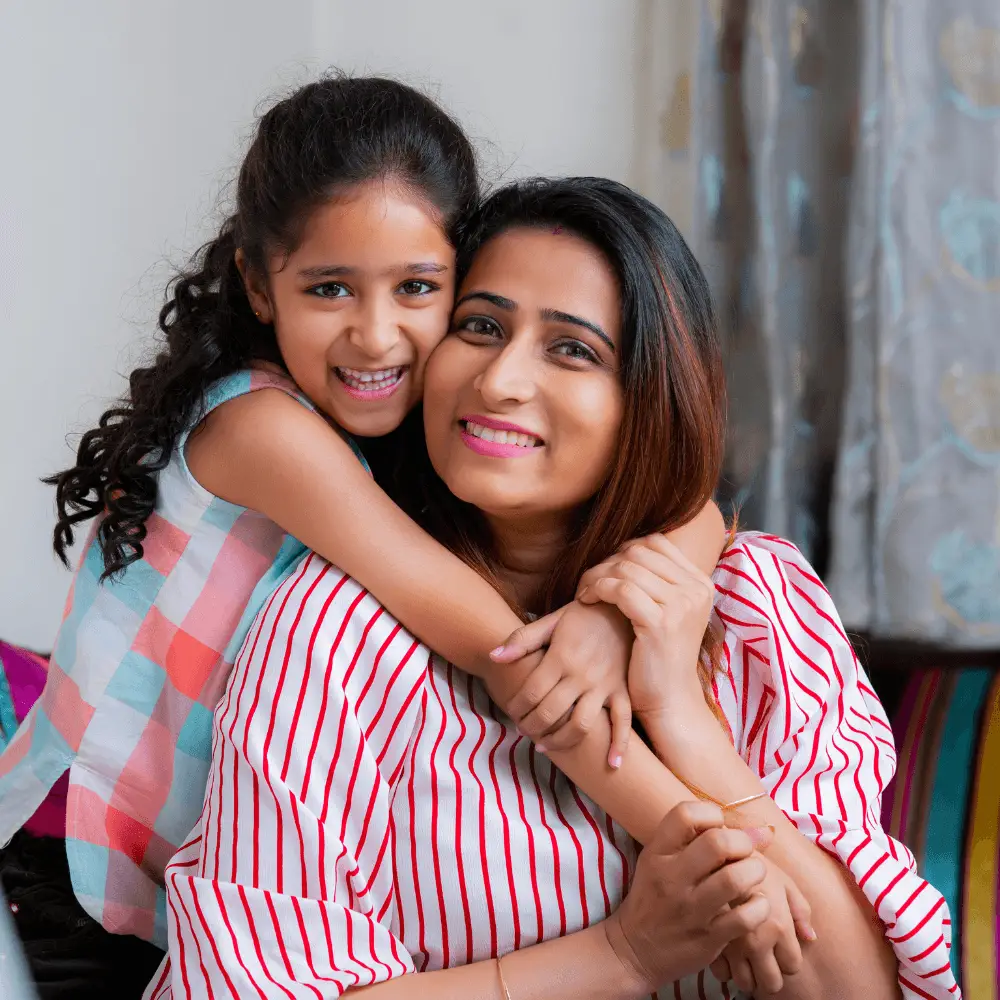
So if you find it hard to be confident right now, it’s not because you missed a step or failed to love yourself properly.
You’ve been taught to question your body long before you ever questioned yourself.
And forgetting that was never easy.
Confidence is built through compassion, not criticism.
Confidence does not respond well to bullying. Especially if it comes from your own inner voice.
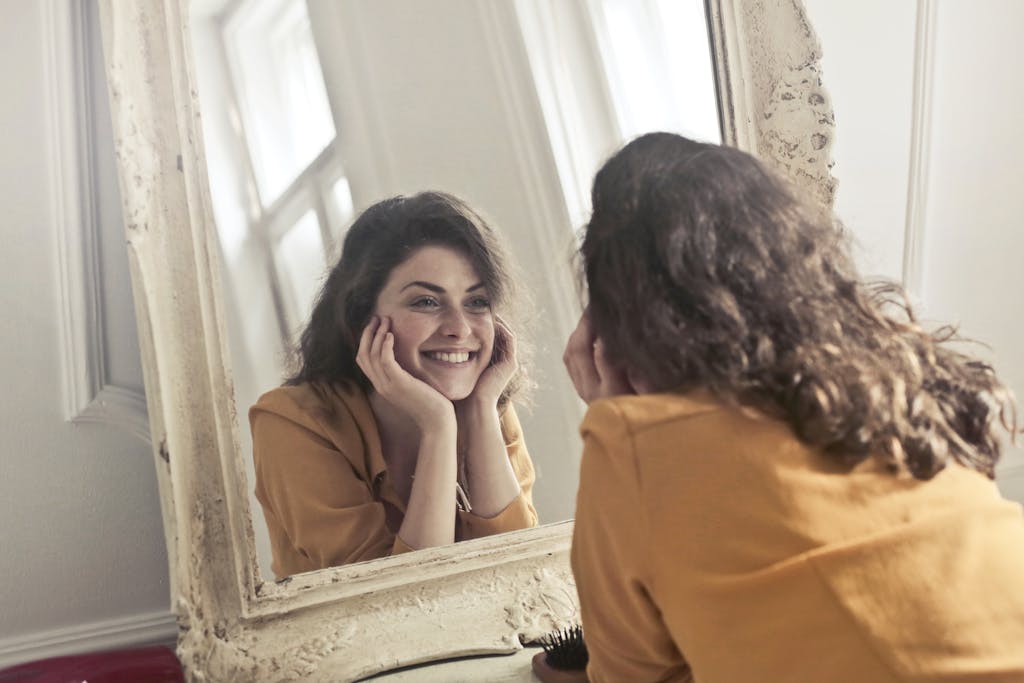
Psychologist Kristin Neff focuses on: self-pityfound that treating yourself with kindness rather than judgment is associated with greater emotional resilience and body satisfaction.
Think about how you talk to your body when no one is listening.
Would you say that to someone you love?
Do you think confidence grows in that environment?
Confidence is not built through punishment. Built with safety in mind. respect. trust.
Small daily habits that actually change your story
Confidence is not built in one breakthrough. It is built in the small, boring, everyday repetitions that we rarely appreciate.
Here’s what most people don’t tell you. Even when you think you’re just being “hard on yourself,” your brain is always paying attention. The way we talk to our bodies, the beliefs we have about how we look, and the stories we repeat in our heads all become familiar over time.
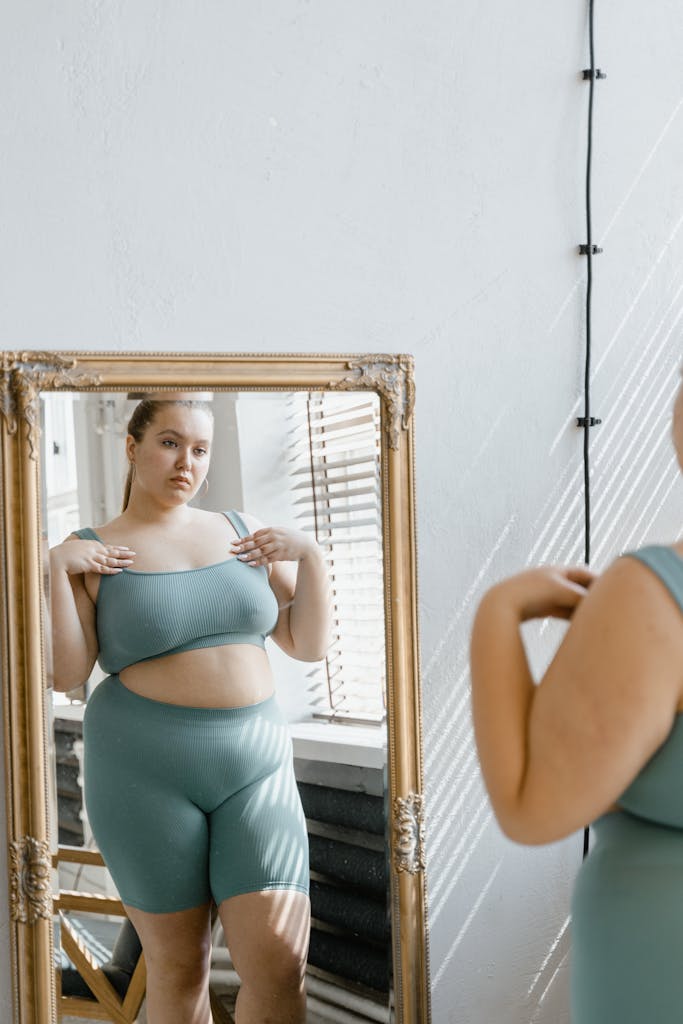
Neuroscientists call this neuroplasticitywhich is just a fancy way of saying that the brain learns through repetition. The thoughts you practice most often will be the ones that appear first. The researchers National Institutes of Health It has been shown that repeating thought patterns strengthens certain neural pathways so that those thoughts become automatic.
This is where people misunderstand affirmations.
This is not about standing in front of the mirror and trying to tell yourself that you love every inch of your body when you don’t. Forced positivity backfires. Your brain knows when you’re lying.
What is actually useful is neutral repetition. Wording that won’t excite or disappoint you.
It looks like this:
- Catch yourself before you spiral and choose neutral statements over harsh ones
- Leave notes and reminders in the places you tend to be most hard on yourself.
- Set goals based on respect, consideration, and support, not appearances or punishment.
Think of it as an affirmation rather than an affirmation. Retrain your in-house narrators.
You are not trying to convince yourself that your body is perfect. You are suspending long-standing criticism long enough to introduce another option. One that is rooted in dignity, not judgment.
Over time, these small interruptions add up. And confidence starts to feel less like something you’re chasing and more like something you’re slowly regaining.
Manage the environment because it matters
What you consume consistently becomes your inner voice.
There’s a reason why you lose confidence after a long scroll. Research has consistently shown that There is a link between increased use of social media and rising levels of body dissatisfaction, especially on platforms built around images.

This doesn’t mean social media is the enemy. That means your feed matters.
If you look at your account and feel left out, embarrassed, or like you haven’t earned the confidence yet, it’s not inspiring. I’m exhausted.
Following plus-size creators who live visibly fulfilling lives is not inevitable. It’s alignment.
Confidence grows faster in an environment where you no longer question your right to take up space.
Shift focus from form to function
Your body is not a decoration. I am a collaborator.
At some point, it became clear that the moment I stopped obsessing over how my body looked and started paying attention to what it was actually capable of, everything felt lighter. I wasn’t the only one on that shift. psychologists have discovered Focusing on function rather than appearance can lead to improved psychological well-being.
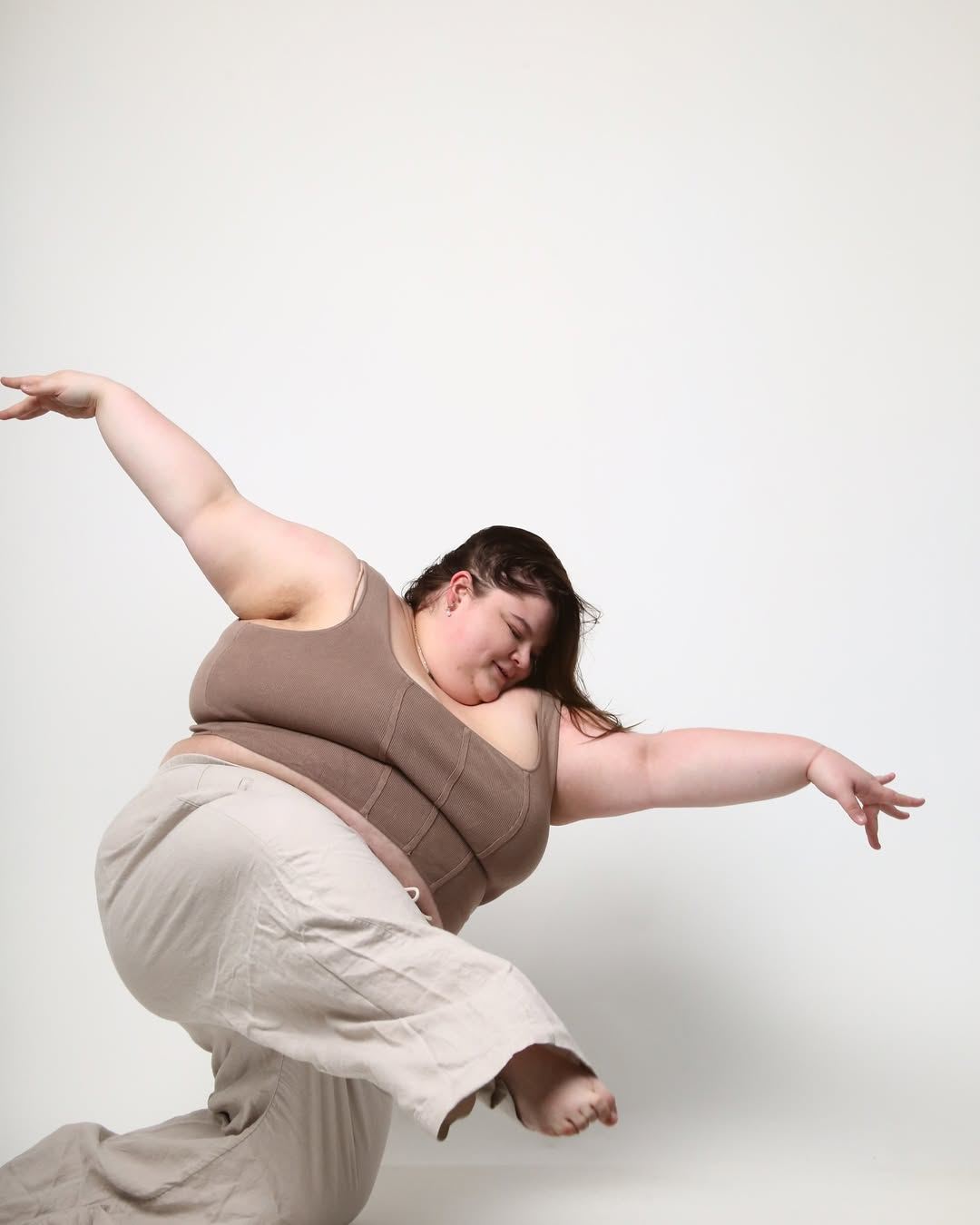
Instead of asking what your body looks like, try asking:
- How does my body support my life today?
- What kind of movements make you feel grounded and joyful?
- Things that help you feel present
Your confidence increases when your body becomes a partner rather than a project.
Set boundaries and keep the peace
You can opt out of conversations that center around dieting, weight loss, and body image criticism.
You can also change the subject.
I can say I’m not interested.
You can protect your own peace.
therapist and writer Nedra Grover Tawab It reminds us that boundaries are not about controlling others. They are about respecting yourself.
You don’t have to participate in every conversation to gain confidence.
Body neutrality is a valid starting point
If some days you feel like loving your body is too much, you are not failing.
This is where body neutrality enters the conversation.
This framework was popularized by co-founder Connie Sobczak. the body positiveas a way to completely break out of the exhausting cycle of loving and hating your body.
Body neutrality does not require us to celebrate or criticize our reflections. It gives you permission to let your body exist without comment.
researchers writing for magazines body image They found that reducing appearance surveillance can lower body-related anxiety and self-monitoring.
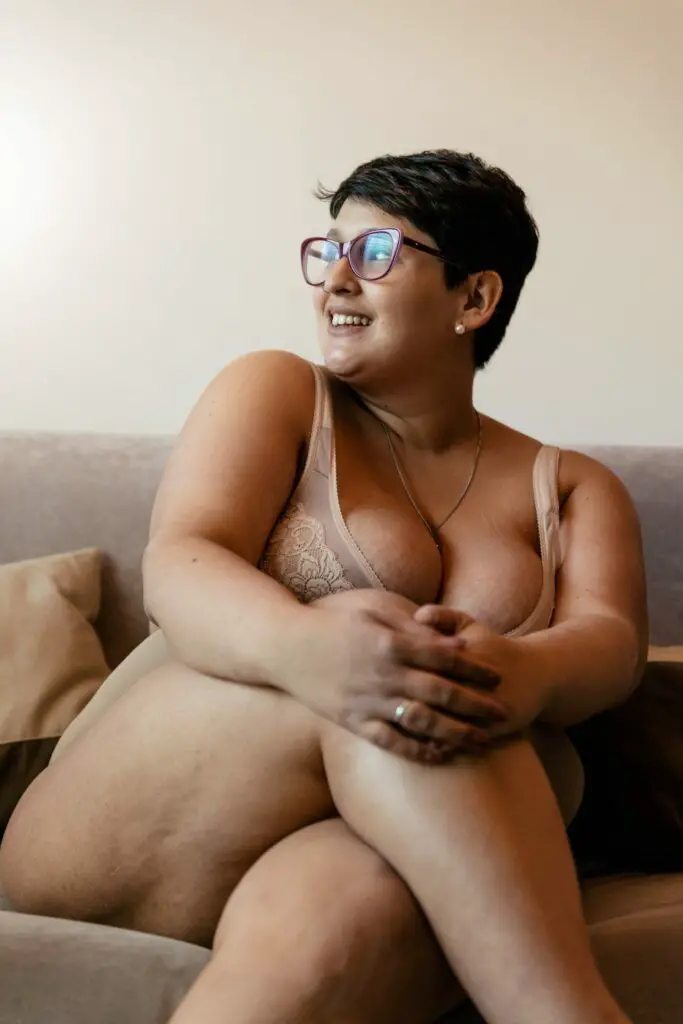
In real life, body neutrality looks like this:
My body is allowed to exist today.
I am not owed love or punishment.
I can live my life without evaluating my reflections.
For many plus-size women, that space gives them a sense of security. And sometimes, confidence begins in that stillness.
Take action before you feel ready
Confidence often comes after you take action, not before.
Please wear a dress.
Let’s go to an event.
Appear fully.
You don’t have to wait until you’re no longer afraid. You just need to be curious enough to try it.
Life doesn’t begin with gaining confidence. Confidence is built through life.
the truth that really matters
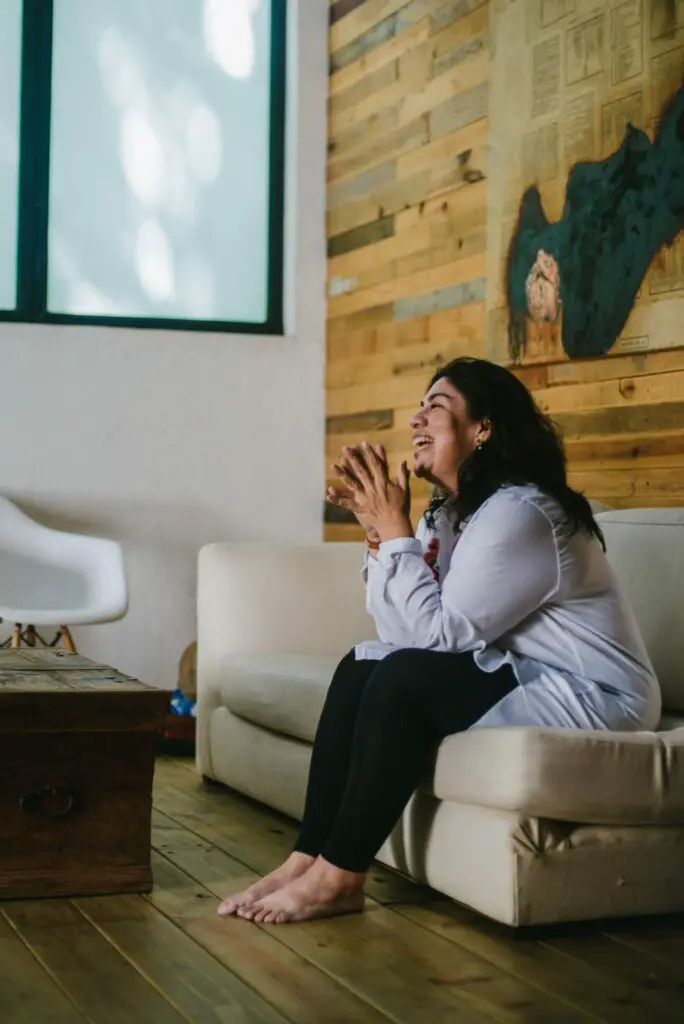
Building confidence in a less attached world is not about fixing yourself. It’s about refusing to participate in a system that profits from your insecurities.
There will be good days and there will be tough days. That doesn’t mean we’re going backwards. It means you are human.
Your body gave you everything you survived.
That alone is worthy of respect.
and confidence
true confidence
You grow when you finally stop asking for permission to exist.
Source: The Curvy Fashionista – thecurvyfashionista.com


