



Approximately 67% of American women wear a size 14 or larger, yet many in the fashion industry still act as if wearing a size 14 or larger is optional. According to a recent study, the global plus-size clothing market was valued at approximately $197 billion in 2023 and is projected to grow from $125 billion in 2025 to more than $202 billion by 2034. polaris market. These facts alone reveal one of the biggest myths about plus-size fashion: that this market is “too small to matter.” Even as new wellness trends emerge, the reality is that body diversity is not a fad, and continues to be ignored by constant fads.
Myth 1: Plus size means enlarging a regular pattern
One of the most common misconceptions about plus size fashion is that you can simply scale up a standard pattern and call it inclusive design. True plus-size design is more than just adding inches to a tiny pattern. Professional designers know that scaling a size 8 pattern to 18 ignores proportions, bust-to-hip ratio, and movement. Authentic plus size fashion requires patterns designed for fuller body types. Because fit is a science, not an afterthought. Many brands fail with plus-size lines not because there’s no interest, but because they don’t invest in proper fit, testing, and marketing. Inclusion without understanding design is performative, not progressive.
Myth 2: Runway representation has no impact on retail.
runway visibility A blueprint for retail innovation. When only 0.3% (just 26 of 8,703) of Spring 2025 looks featured plus-size models, the message to buyers and designers was clear. Curvaceous bodies are not yet the fashion default. The lack of size diversity on the runway limits designs, samples, and what’s sold. If you don’t see versatility at the top, it won’t trickle down to the rack.
Myth 3: Body positivity solves everything.
Many believe that the body positivity movement has solved the inclusion gap, but this is one of the most misleading of plus size fashion myths. The body positivity movement changed the culture, but the system wasn’t good enough. In 2020, plus-size models made up 2.8% of runway performers. By spring/summer 2025, that number had dropped dramatically. Progress cannot be sustained with recognition without institutional accountability. The next stage of inclusion requires structural commitment, not hashtags.
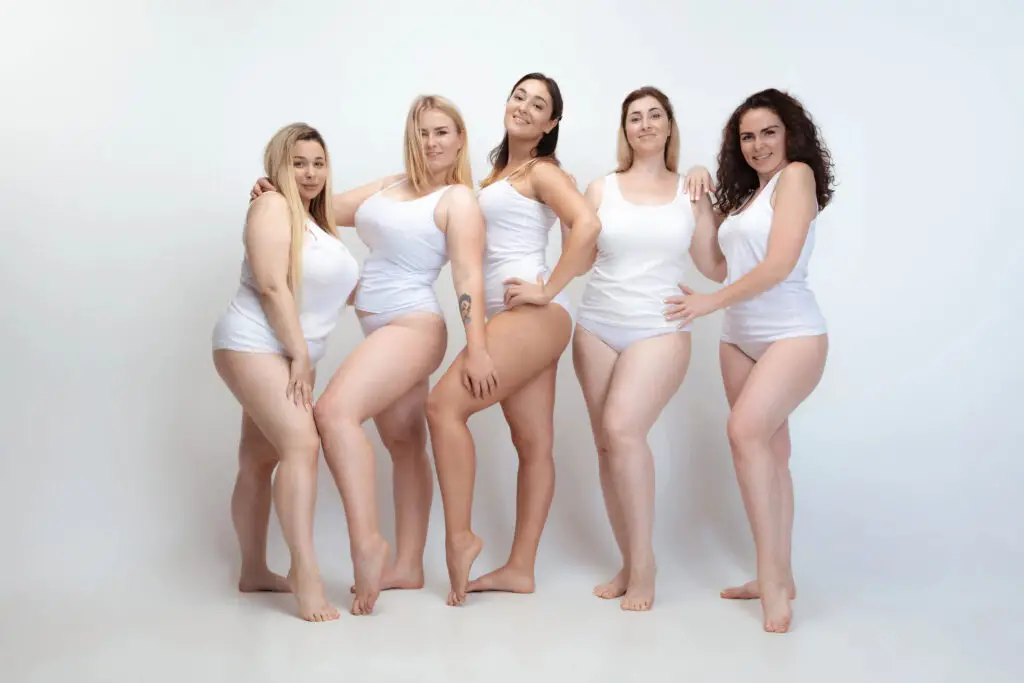
Myth 4: Plus-size fashion is inherently expensive
The “extra fabric equals higher price” narrative does not hold up under scrutiny. Although fabric costs make a small contribution, high prices are often due to low production volumes and poor planning. As brands integrate extended sizing into mainline production and commit to production volumes, the cost differential narrows. Independent labels like Loud Bodies and Universal Standard are proving that affordability and quality can go together when inclusion is part of the business model rather than a marketing strategy.
Myth 5: Curves only look good in loose, flowing styles.
Perhaps one of the most harmful plus size fashion myths is that curvaceous bodies can only wear oversized silhouettes. Ironically, this is reality. Designers like Pieter Mulier of Alaïa and Miuccia Prada celebrate the idea of curves on the runway. but still cast A model exclusively for straight sizes. Fashion loves the concept of curves, but often avoids reality. truth? The curvaceous body looks strong in structure, tailoring, and bold silhouettes. Trust doesn’t come from coverage, it comes from representation.
Myth 6: Online shopping has solved the plus-size access problem.

E-commerce opened the door, but introduced new frustrations such as inconsistent sizing, inadequate data, and high return rates. Without standardization, online shopping becomes guesswork. Brands are leading the way by investing in technology such as 3D fit mapping, realistic mannequins, and body-inclusive size charts. Access should not mean compromise, and digital innovation must work for everyone, not just the few.
Myth 7: The industry is already doing enough.
One of the biggest misconceptions about plus size fashion today is that online is inclusive. “Enough” doesn’t look like a collection of tokens or an occasional campaign. Large retailers like Old Navy and Nordstrom have scaled back their expansions, exposing how fragile their efforts are. Inclusion that recedes under pressure is not inclusion, but convenience. True evolution of the industry means embedding plus-size design at the center of brand identity rather than at the edges.
Myth 8: The future of fashion will automatically be inclusive.
Changes don’t happen on autopilot. Despite clear data, a booming market, and endless consumer demand, systemic myths are holding the industry back from meaningful inclusion. The technology exists. The audience exists. Money exists. What is missing is the collective will to design for all bodies, not just those considered sample size.
The fashion industry can’t afford to cling to outdated plus-size fashion myths. Inclusion is not charity. It’s smart business, creative opportunity, and cultural leadership. The next chapter in fashion must move beyond performative gestures and towards authentic expression. The question is not whether plus-size consumers belong in fashion; They already belong to fashion. The question is when the industry will finally catch up.
Source: The Curvy Fashionista – thecurvyfashionista.com


