



Yiyang Chen’s work is located in that place, theory and touch, not fighting for the universe, but not working together. The Glasgow-based Chinese artist and researcher moves easily between painting, images, pottery, performance and writing from both her long-standing training and her desire to experiment. What brings it all together is the way that it is steady focus on the body, such as surfaces, gestures, edges, and is shaped, seen and sometimes bent by culture, technology, and mythology.
She is currently at the point in her career where her work is gaining traction in the arts world. At exhibitions in the UK, Europe and Asia, she carves out her reputation as someone who can bridge research into one.
in Myth of denial (2024), the oil and acrylic on canvas come together in a scene where they refuse to calm down. Hover somewhere between familiar and strange. Part of the table, green patches, reddish vertical stripes, white marks that can turn into clouds or torn cloth. The internal space feels like fractured like a memory regeneration, but it’s not completely in place. The title suggests continued interest in certain stories, particularly women and non-binary people. The painting reflects that and prevents it from providing a complete and neat picture. The canvas surface is a kind of stand-up for the skin, layered and hidden, but still lets something pass through.
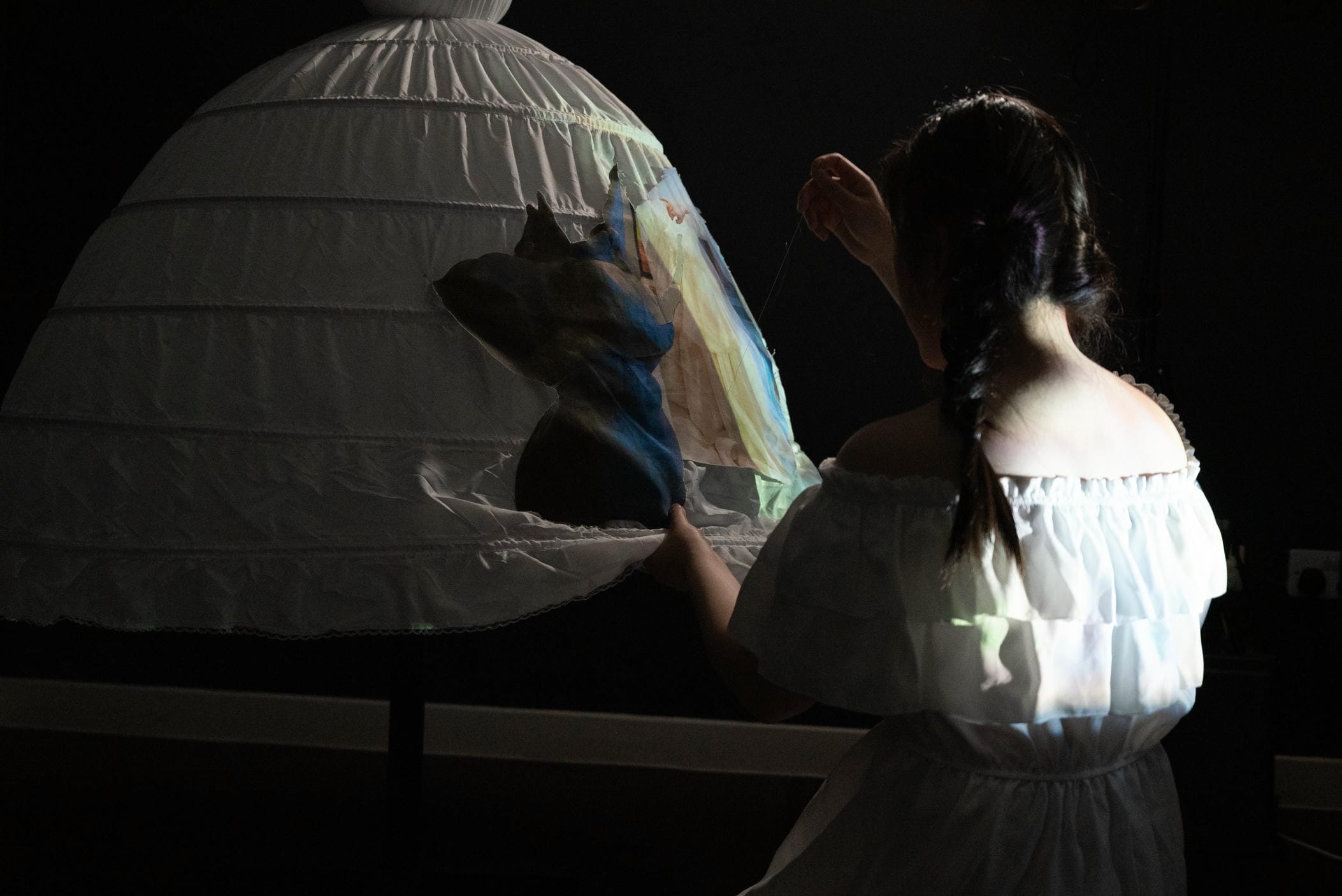
Her performance Maid, bride, body (2022) Make that ratio Phor physical. The piece is collaged with the image, combining a video of the giant white hoop skirt with the skirt itself. During the performance, Chen hand-held these collages in dimly lit spaces while streaming live on Instagram. Once restrictive and flashy clothing, the hoop skirt becomes the surface of projection and change. Lights and shadows move with each stitch. She pulls Laura Mulvey’s film theory, but overtakes it, seeing how East Asian women’s bodies are reconstructed in the online space, not just in films, but with all the filters and quick statement judgments. In her hands, the skirt stops being a relic of control and begins to become a retreat.
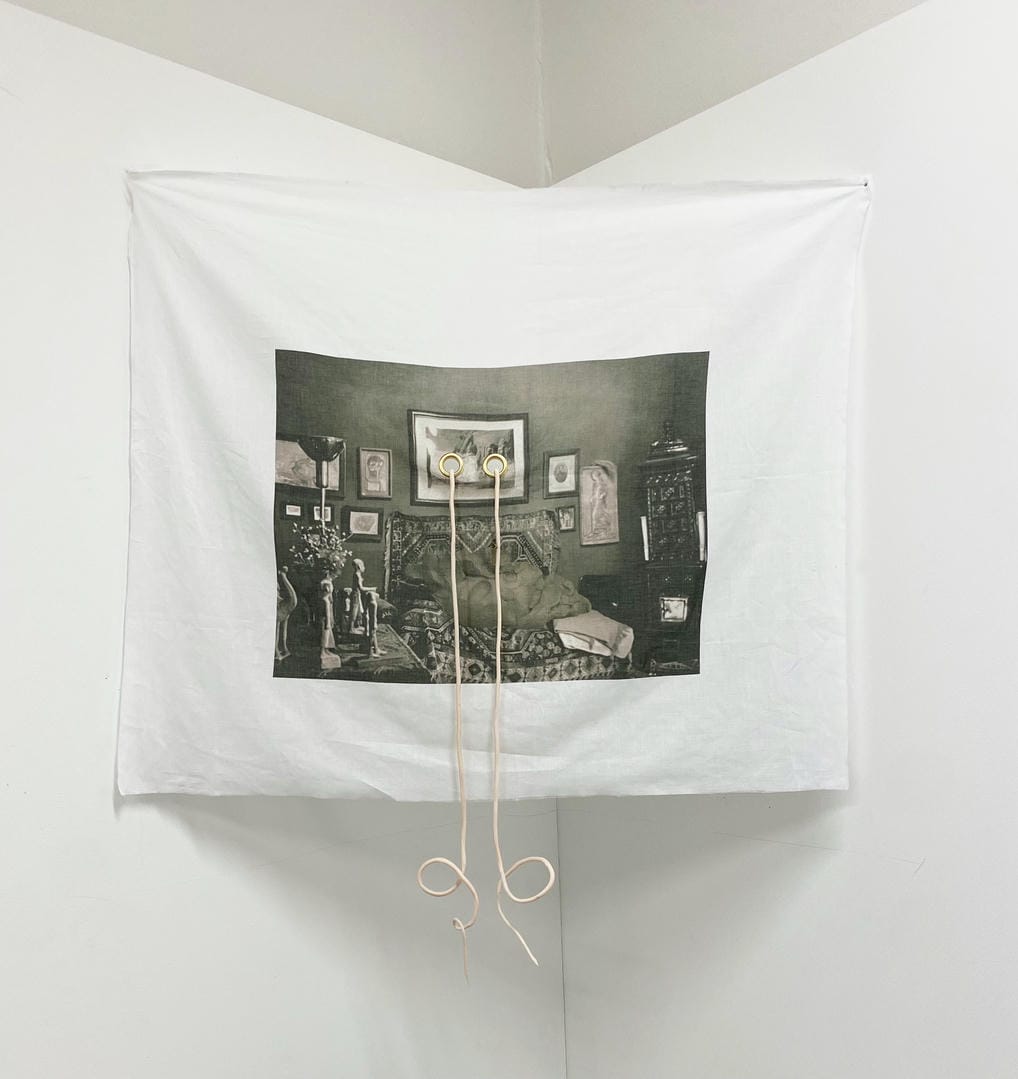
Glitter (2025) It feels quiet, but it still lands violently. White textiles hang on the wall with black and white photographs of a room filled with flashy objects decorated on the wall. Two small metal grommets drill holes in the picture, from which they hung a light cord that loops into the floor. They look like drawstrings or tendons, spilling into the room from flat images. It is small but sharp movement that breaks the sealed feel of old photographs, makes them porous and reachable. It’s not just about touching here, it’s not just about feeling. We’ll go into history and see what’s spilling out.
Throughout these works, Chen’s idea of ”becoming a monster” appears again and again, but it’s not a horror film. The monster here is refusing to fit neatly in the boxes people have set up. In paintings, the rejection is shown in an incomplete or slippery form. Performance is about changing the meaning of an object by working on it in real time. In textiles, the body leaks into photographs that are not intended to hold it.
She pays attention to the materials. In paint, she bares some canvases so that the work can breathe. With the fabric, she leaned over its softness and how it can hold memory. In the video, she treats light and projection like another physical material, stacking them up until one stops and the other begins. in Glitterthe empty space is not empty at all. They hold their weight.
She is also good at taking theory and turning it into something that you can actually feel. Her work nods to feminist theory of the 1970s, but she doesn’t just recycle it. She points to places where things are missed, especially around race, class and sexuality, and points to opening up more possibilities with other ideas like trance theory. The mix can connect to a wide range of audiences, while continuing to ground the work to her own cultural background.
Her show reaches people in the UK, Germany, China and South Korea, and it’s easy to see why. The themes are big enough to cross borders, but the way she handles them feels personal and concrete. Her education and research makes her talk with others.
What stands out most is how she treats her body as a collaborator, not just a subject. in Glitterit is in the code spilling out of the photo. in Maid, bride, bodyit’s partially hidden, but still driving at work. in Myth of denialit was in a fragmented space and felt more than I could have seen. It is a body that does not sit still, crossing lines and transforming its own surface into a place of both play and resistance.
Her job invites you to spend time. In a world where everything is pushed away to grab you faster, Chen’s piece slows you down. This doesn’t mean it’s late for the show. It’s enough to notice small changes in texture, spaces between marks, and how light falls in the folds of the fabric.
Ultimately, Chen’s art regains the skin not as a wall, but as something to be exhibited, but as a place where contact can occur, care can and can change things. She shows that painting can peel things off, performance can take ownership, and textiles can open cracks in the past. Her work is more than just a gallery. It sticks to you and shifts how you look and perhaps how you touch.
Source: Our Culture – ourculturemag.com


