



“Peace Together” is an international exhibition of cutting-edge mosaic art organized by the British Association for Modern Mosaic (BAMM). This represents a new era of co-authorship, where individual voices and shared creativity come together to redefine the boundaries of this timeless medium. The end result is a vibrant collection of 65 pieces that transports viewers into a fascinating world of mosaic art. From shimmering tesserae reminiscent of light-dappled water to tactile fragments that form soaring birds and abstract rhythms, this collection celebrates the limitless potential of often underappreciated materials.
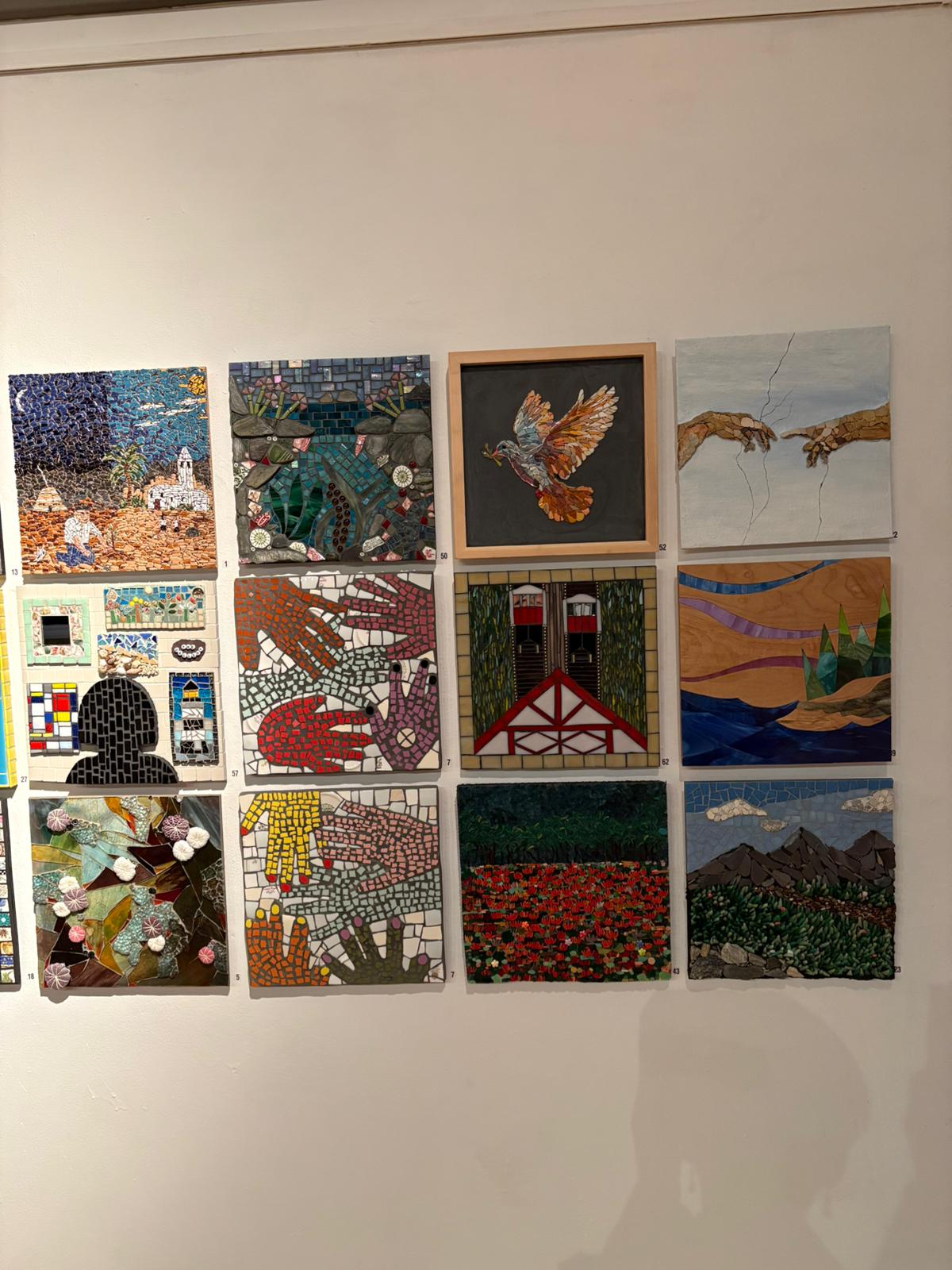
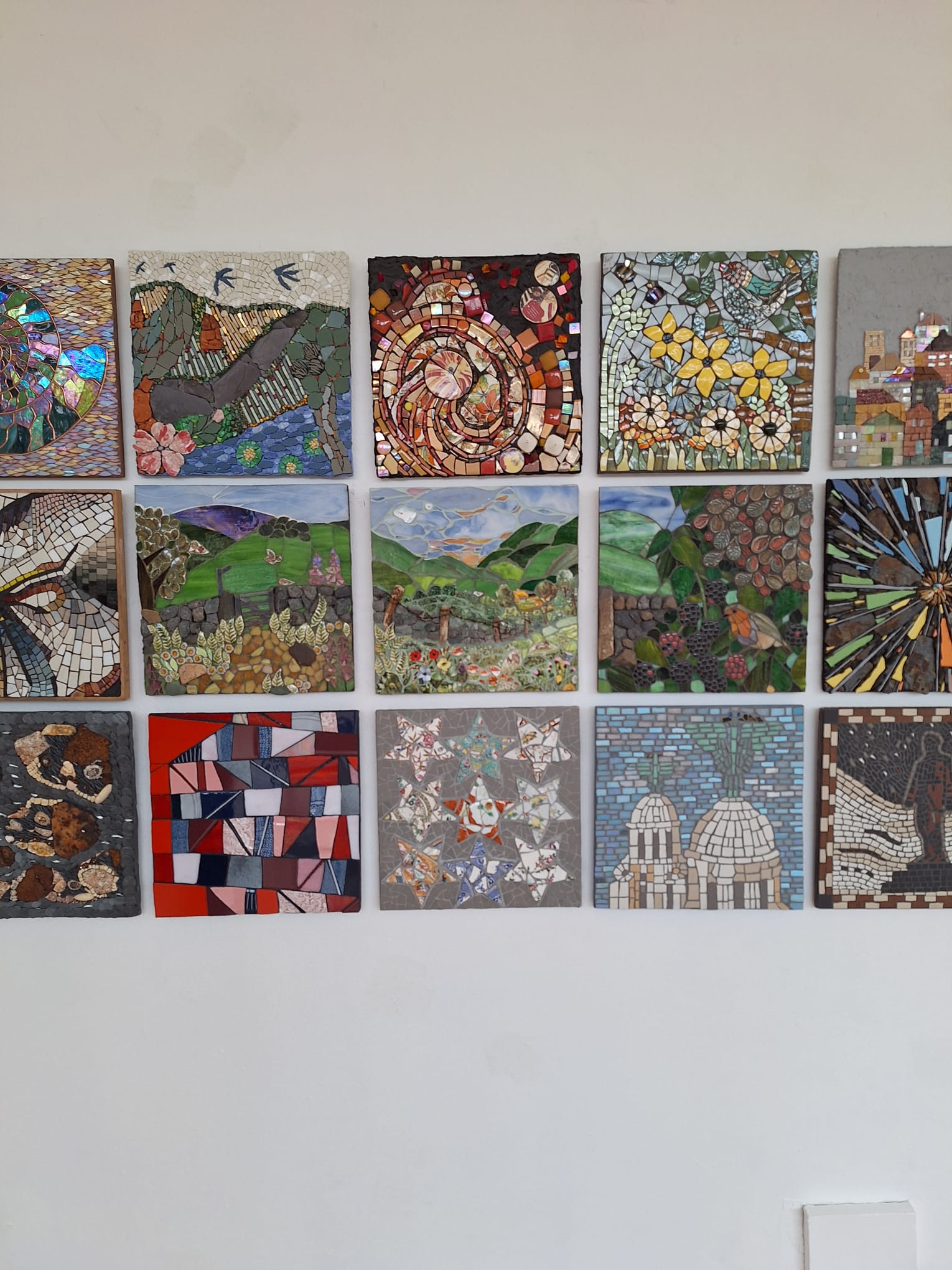
There is a long-standing contradiction between the singular and collective aspects of mosaic art. The individual tesserae of a mosaic depend on each other to create a coherent image, as well as the artist’s decisions and skill, which are influenced by traditional techniques, artistry, and the time-consuming process of assembling the mosaic. Piece Together expands on this duality to include the actual creation of a collective mosaic. The theme of the exhibition is collaboration, through working together and exchanging materials. The exhibition was curated by Crescent Arts, a contemporary art charity based in Scarborough. Each artist participating in the project exchanged materials, ideas, or parts of their work in order to create a new work of art together. The collective aspect of the exhibition is reflected in its layout. The 65 mosaics are placed in a row on the wall, forming a 30 cm grid of panels, acting as a single entity made up of individual mosaics of many colors and textures.
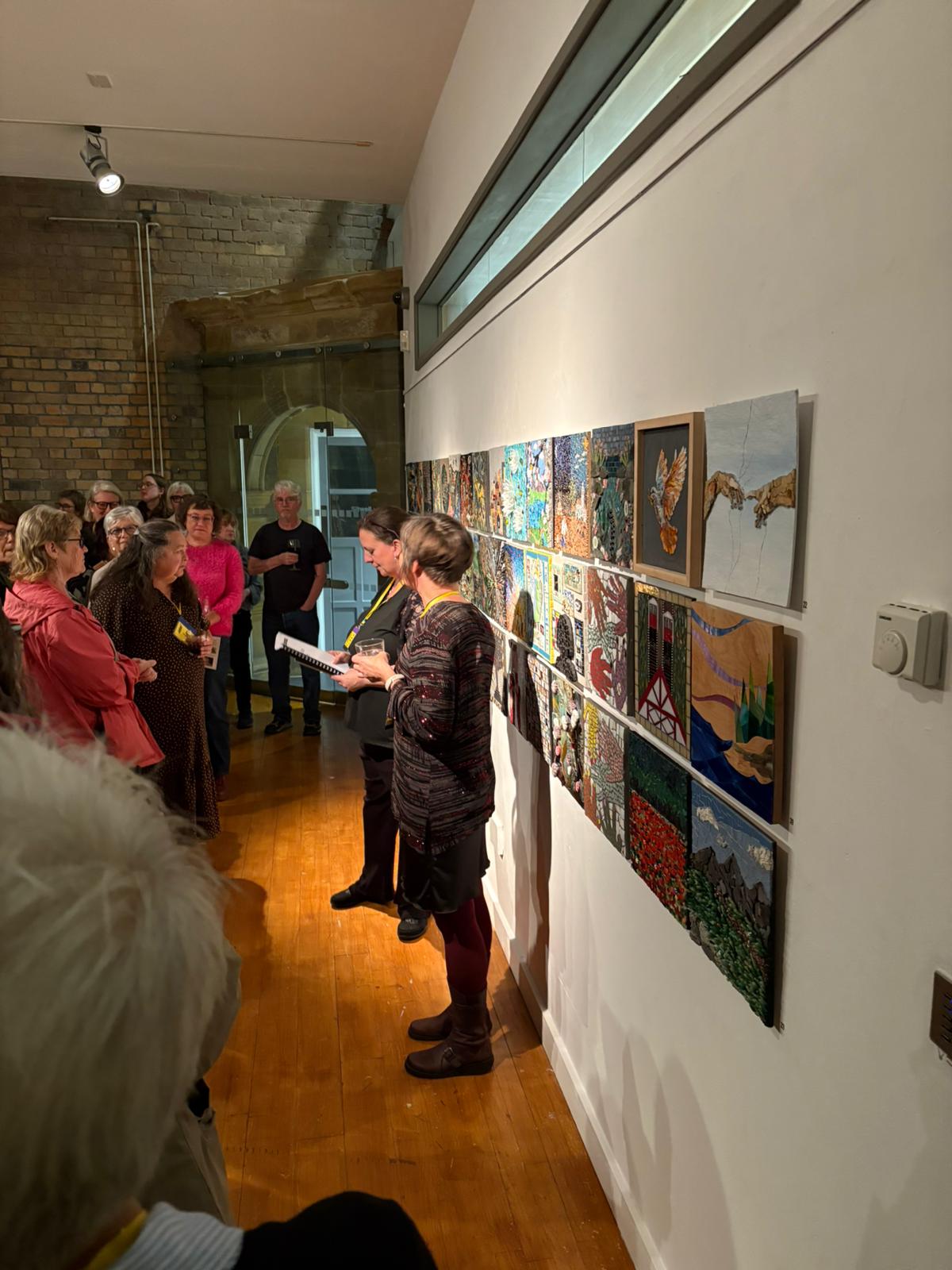
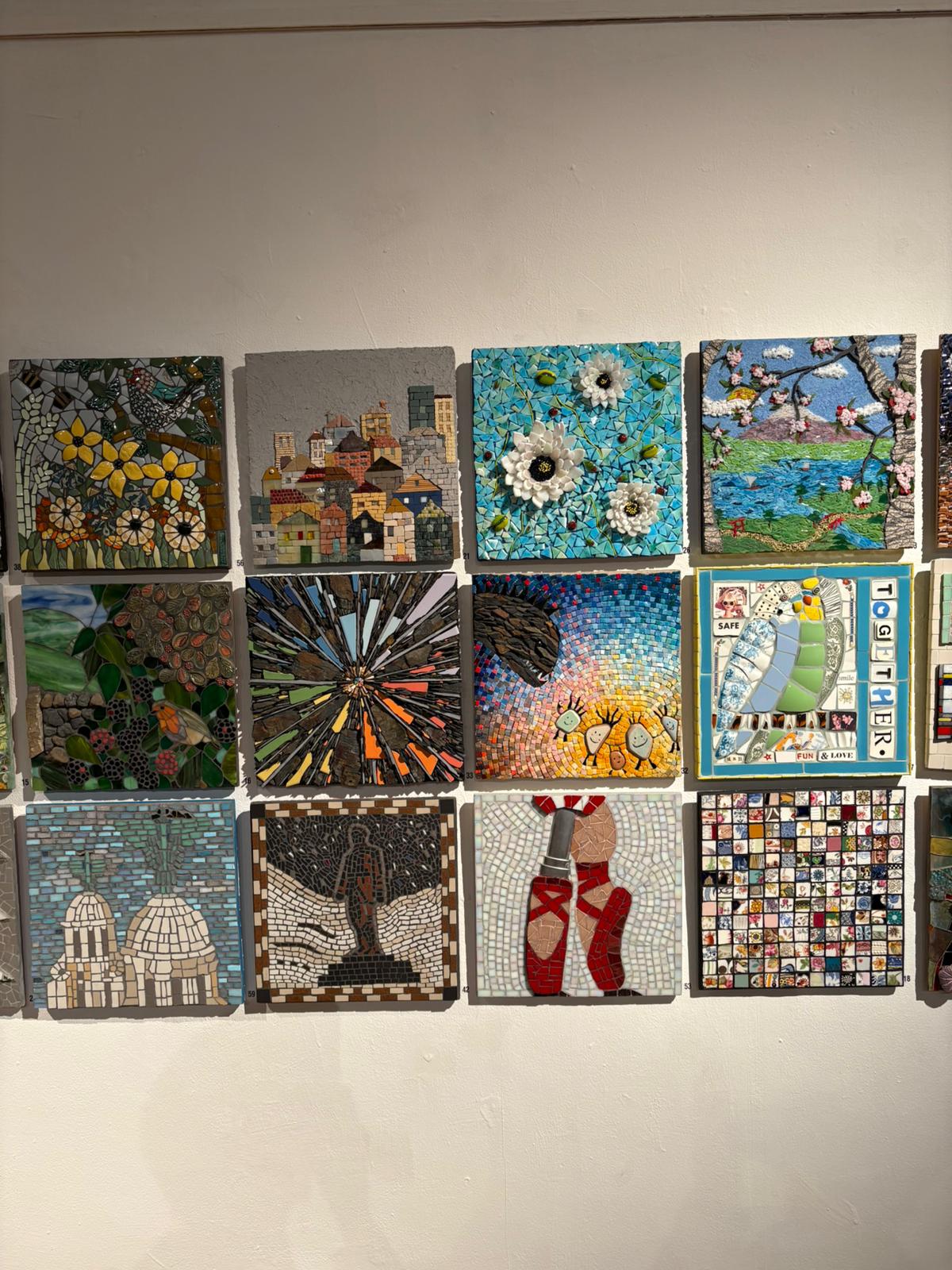
Although no two panels represent the same language, they are part of a common vocabulary. Some mosaics sparkle with glass and light, while others rest in the down-to-earth beauty of ceramic, stone, and slate. While many of the mosaics show recognizable images, others are abstracted and blurred, with individual tiles becoming subjects rather than tools used to depict the subject matter. Collectively, mosaics demonstrate a medium freed from its historical associations with decoration and monumentalism, using the medium instead to explore experimentation, environmental consciousness, and emotional expression.
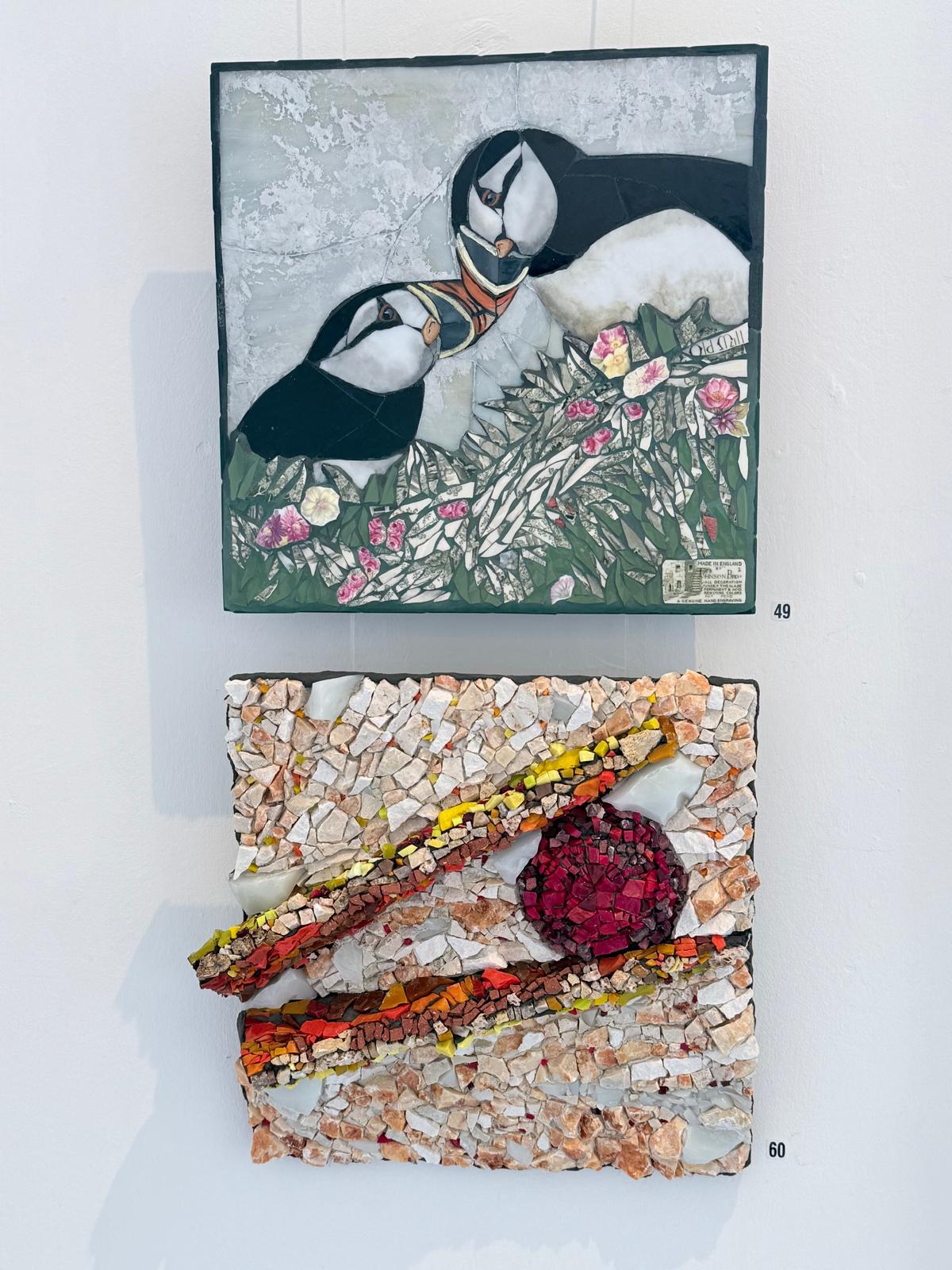
Several of the works exhibited at Piece Together demonstrate new directions for the medium. For example, Gillian Goldsmith and Sarah Bourne’s delicate depiction of two puffins, entitled ‘Puffin – Sea Crown Collaboration’, swaps out stained glass for ceramic plates. Puffins are delicately depicted from hand-carved stained glass against a gray-blue sky. Precise cuts create softness and give an overall delicate impression. Next to this work is a more tactile abstraction of thick stone and glass shards in red, ocher, and sulfur yellow, pushing the mosaic into the realm of sculptural relief. This work by artist Sandrine Soubet, entitled Red Fruit, depicts a bird’s beak gently grasping a small fruit. The work’s uneven surface casts shadows that change throughout the day, suggesting movement and instability. The juxtaposition of these two works demonstrates the exhibition’s curatorial approach based on contrast. The first work celebrates expression and tenderness, the second celebrates material energy and fragmentation.
In addition to exploring the potential of mosaics to express stories, several works in the exhibition use mosaics as a way to tell stories. For example, a panel depicting a crocodile, a bird, and a turtle in unlikely coexistence illustrates a classically arranged piece by Judy Torcher entitled “Reaching for the Golden Pear.” Each animal is represented by tiles of varying scale and tonality, creating a dynamic rhythm within the surface. Immediately below this piece is a monochromatic black, white, and ocher geometric pattern by Coralie Turpin titled “Posh not posh,” which recalls Roman paving motifs but updated with broken symmetry and varying thicknesses of stone. Both works reflect the exhibition’s ability to balance history and innovation without prioritizing one over the other.
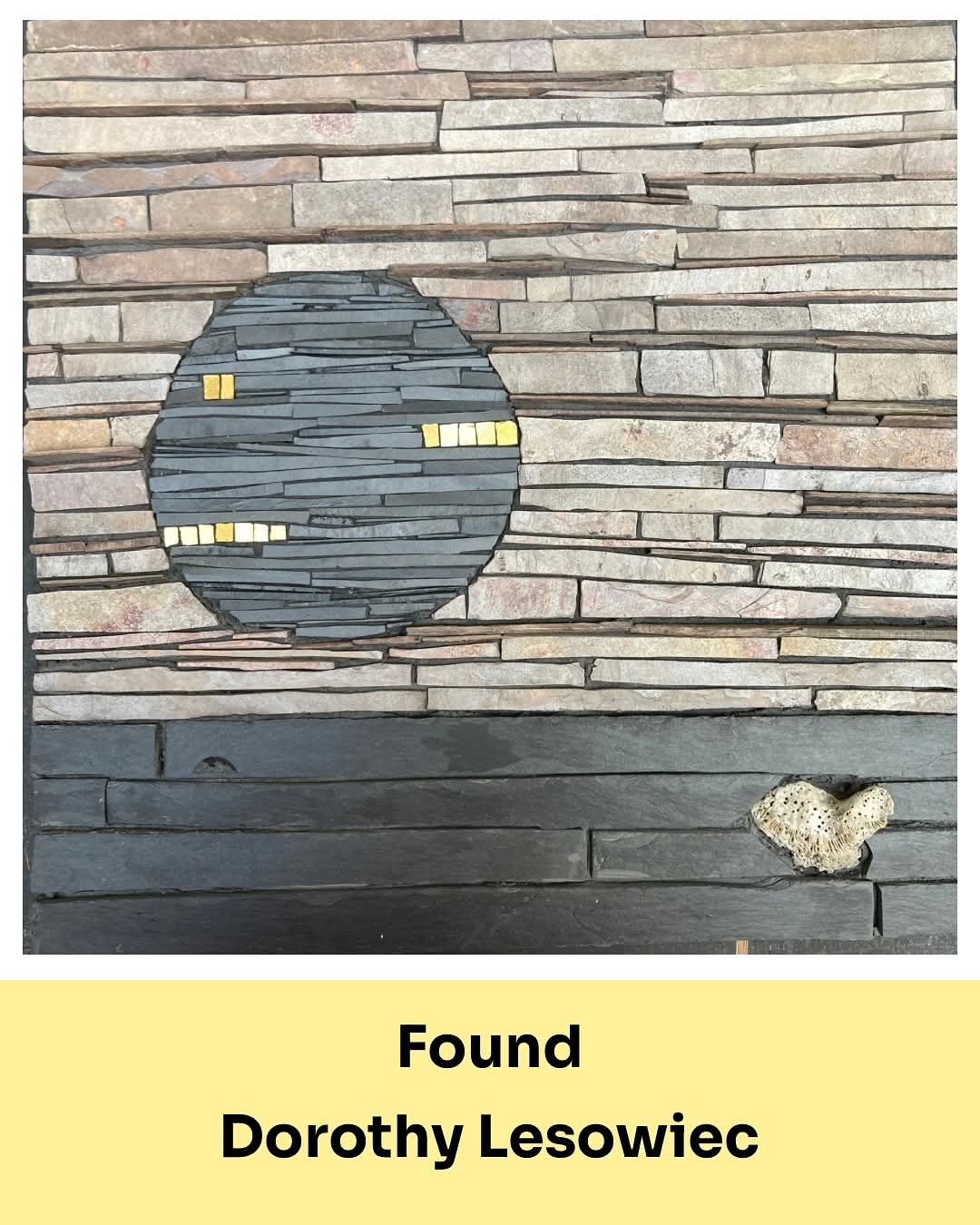
Dorothy Lesowiec’s Found is a deeply personal work celebrating the rediscovery of family, with a tender ending. Gold smalti shines on the surface, symbolizing the richness of love, belonging, and reunification.
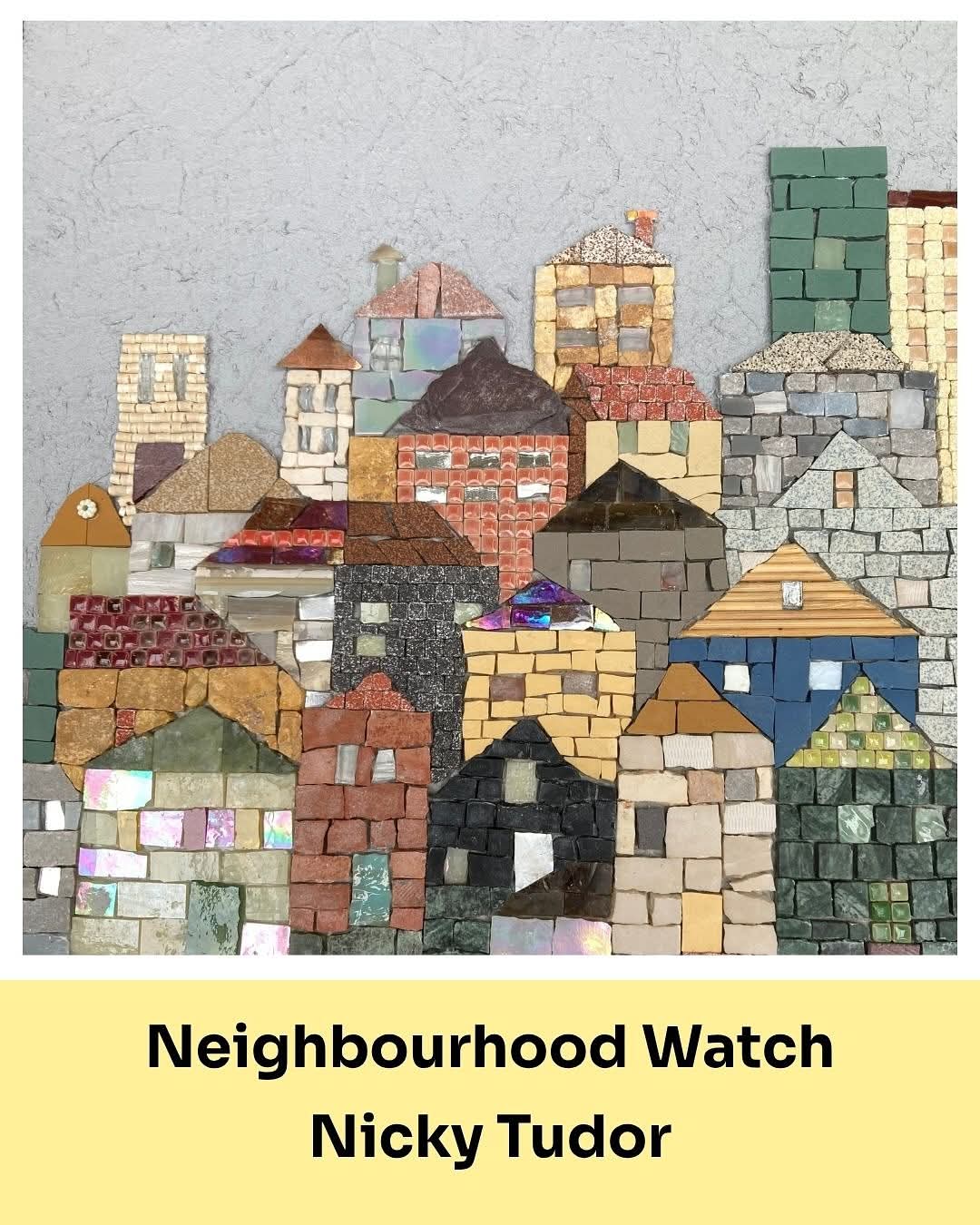
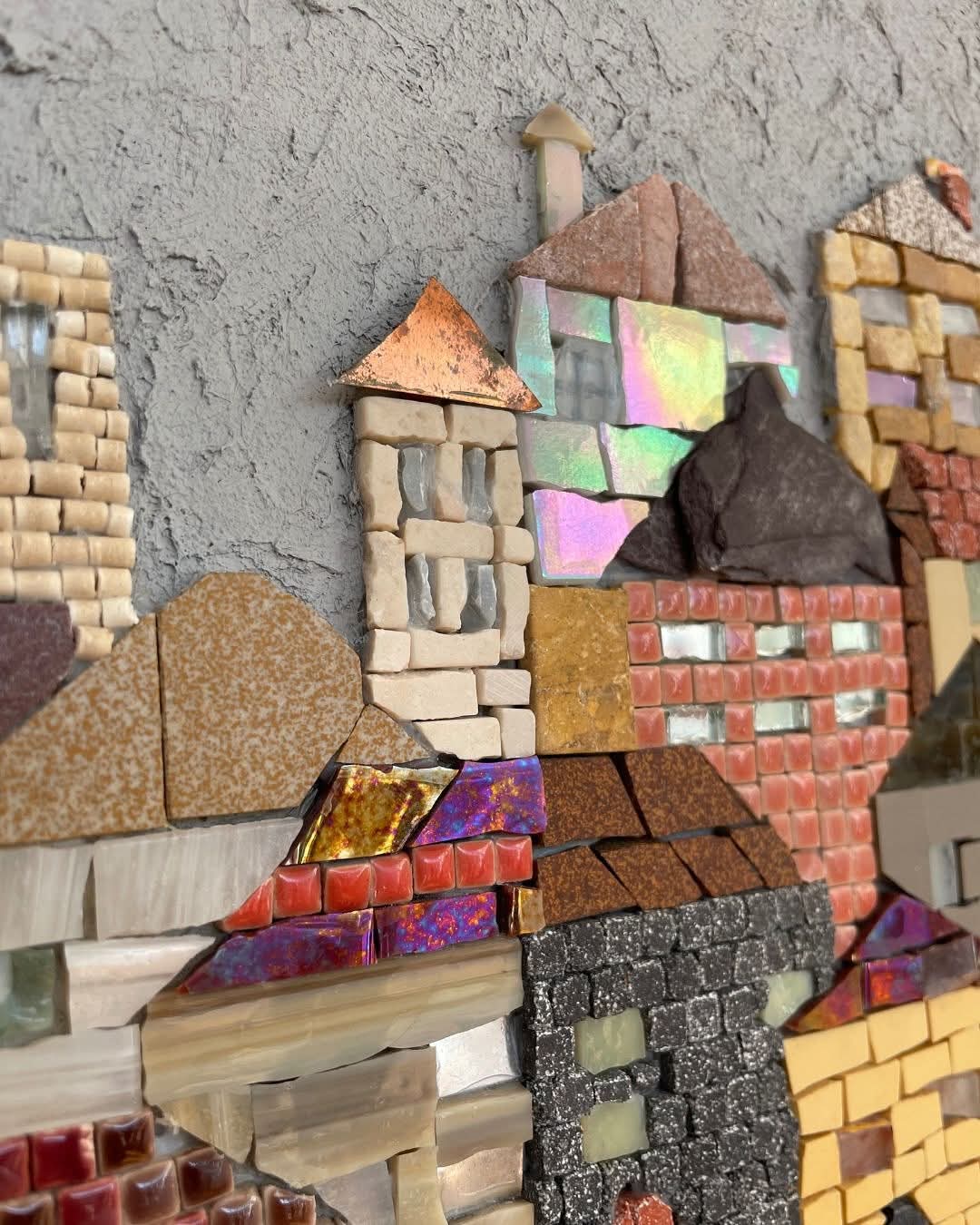
Neighborhood Watch by Nikki Tudor celebrates the quiet strength of community – the everyday acts of kindness that bring neighbors together. Tudor translated the spirit of connection into a richly textured mosaic. Tudor assembles pieces of unglazed ceramic, colored and glazed tiles, beads, bamboo skewers, marble, aluminum, copper, and mirrors. Each material within the mosaic captures light in a different way, like an individual voice in a collective harmony. This is a shining tribute to the beauty of unity and the resilience of our shared humanity.
Taken as a whole, the 65 mosaic walls function as a musical score, with each piece contributing a note to a complex cross-cultural symphony. There are also works that stand out for their brilliance, such as works using blue glass that shines in iridescent colors reminiscent of water and the sky. In other works, earth tones and heavy textures anchor the composition. The natural tendency to interpret stories and emotions in patterns makes it impossible to avoid reading individual mosaics as a cohesive unit. The viewer’s eye moves from one fragment to another, following the visual threads of technique and color that run through the walls, like invisible lines of communication between artists.
The curator’s decision to limit the works to uniform dimensions was crucial to the success of the exhibition. This decision abolished hierarchy and emphasized dialogue. A larger-than-average mosaic could have claimed superiority on size alone. Here, all the works share the same space, forcing the viewer to focus on the nuances rather than the sheer scale. This exhibition is worth a long viewing. Each panel of the mosaic displays subtle decisions, such as the tension between smooth and rough surfaces, the contrast between precise cuts and spontaneous cuts. These contradictions reflect the very collaborative process in which compromise and conflict can be creative catalysts.
. Piece Together situates mosaic in terms of collaboration, process, and global exchange, and therefore within the discussion of conceptual and social practice art. The works presented here are more than just visual or aesthetic. They represent records of communication, dialogue, and mutual trust. Each joint, each line of grout serves as evidence of numerous decisions and layers of authorship.
Piece Together also gains additional significance through the inclusion of documents detailing the collaboration between Turner Prize winners Jeremy Deller and Coralie Turpin. Working with local communities, conservationists and archaeologists, the two artists have created a permanent public mosaic installation along the Scarborough coast. Inspired by Scarborough’s Roman past and the rich marine life of the local coastline, the work ‘Roman Mosaic, c. 2025’ forms part of the new sea watching station on Marine Drive. The inclusion of documentation related to this project in the form of ephemera and preparatory materials broadens the conceptual scope of the exhibition. Through this, Piece Together positions mosaic as a democratic art form that can connect local experiences with global issues such as environment, heritage, and collective identity.
Piece Together is both intimate and monumental. Some works function like personal meditations, exploring texture and rhythm as metaphors for memory and emotion. As a statement of sustainability, some pieces utilize recycled materials or found debris to directly address social or environmental issues. The inherent need for reuse and recombination in mosaics lends itself to such themes. In some works, the tesserae contain pieces of porcelain, mirrors, and broken tiles, each piece holding remnants of a previous life. Through careful placement, the disparate components of these fragments achieve a new coherence, reinforcing the exhibition’s overall message that beauty and meaning come from unity rather than uniformity.
Formally, most of the artists in this exhibition resist the flatness traditionally associated with mosaics. Common features of these works are relief and three-dimensional lamination. Examples include an abstract composition featuring alternating bands of red and orange; Additionally, there are intentionally irregular surfaces that force the viewer to interact with the tactile aspects of the medium. Such a formal choice returns the mosaic to its material basis and at the same time frees it from attempts to imitate painting. Rather than striving to create the illusion of depth, the artists acknowledge the physical presence of stone and glass. The artwork appears to “breathe” with a rhythmic creation process, the surface rising and falling in a manner reminiscent of geological formations.
Although the exhibition’s collaborative premise tends to lead to thematic repetition, the variety of outcomes maintains the exhibition’s vitality. Some combinations of artists blend styles harmoniously, while others create a deliberate dissonance. Two artists with different sensibilities combine their approaches, and the resulting tension is evident in the structural elements of the work. The sudden change in size, color, and orientation of the tesserae indicates the crossing of two sets of hands. The visible seam between these two sets of hands serves as a metaphor for dialogue, showing where two individuals communicated and resolved their differences and disagreements.
Part of Piece Together’s success lies in the way it transforms the mosaic into the language of time. Each tesserae represents a decision frozen in time, but collectively the tesserae express movement and rhythm. The labor involved in cutting and placing tesserae is slow and meditative, making it the antithesis of the rapid pace of modern digital culture. As such, Piece Together acts as a quiet resistance to the rapid pace and isolation of modern society. Piece Together reminds us that creative endeavors can be collaborative efforts of patience, and that dialogue can continue despite distance and delay.
This aspect is further emphasized by the fact that the exhibition is located within Scarborough Museum & Gallery. White walls and soft natural light provide the perfect conditions to express your work without distraction. Light reflects off the glass, and the texture changes as the light changes, just as a conversation changes depending on who is speaking and when. The spatial rhythm of the installation invites the viewer to walk around and revisit the installation. From a distance, the installation looks like one large tapestry, but up close it breaks down into hundreds of individual decisions. The viewer oscillates between viewing the installation as a whole and viewing the myriad decisions that make up the installation individually, reflecting the collaborative process itself.
It should be stated that Piece Together is an exploration of empathy. Collaborating with mosaics requires not only trust in the other artist, but also in the material’s ability to combine elements. The title of the exhibition is a clear expression of this trust. While the exhibition title articulates the concept of literal assembly, it also conveys the psychological process of constructing perspectives, aesthetics, and experiences. The final product is not a unified whole, but a mosaic of voices that maintain their individuality while contributing to a larger shared entity.
About BAMM
Founded in 1999, the British Association for Modern Mosaics (BAMM) is a membership organization whose aim is to promote, encourage and support excellence in contemporary mosaic art, in order to raise public awareness of mosaics and the artists who create them.
These vibrant mosaics are best seen in person, so if you’re in Scarborough and can visit the exhibition, definitely do it. You won’t be disappointed.
The ‘Peace Together’ exhibition will run until 14 November 2025 at Woodend Gallery, part of Scarborough Museum and Gallery.
Website: bamm.org.uk
Source: Our Culture – ourculturemag.com


