



Icy Qiao is a London-based interdisciplinary artist whose work spans animation, inspiring images, sculptures and installations. Her practice explores the structure of hidden, deep roots of psychological experience. In essence, autobiographical, her work explores trauma, identity, East Asian family structures and analyzes her own history to reflect broader social realities.
A graduate of the Royal College of Art’s Story Animation Program, Icy blends narrative and experimental techniques into her work, challenging the scope of traditional linear animation and prefers emotionally driven expressions. By transforming memories, trauma and anxiety into tactile and visual forms, she regains control of her inner world while opening up space for emotional resonance with her audience.
Her work was collected forever by the National First Layer Museum in China in 2023 and demonstrates important recognition in both international and domestic art contexts. She sees artistic creation as a continuous process of psychoanalysis. This is a way to reconstruct the inner order through continuous analysis of memories and emotions. Through this process, she has carved out a clear space in the contemporary field of interdisciplinary arts.
Sculpture anxiety: Psychological repair from dreams to materials
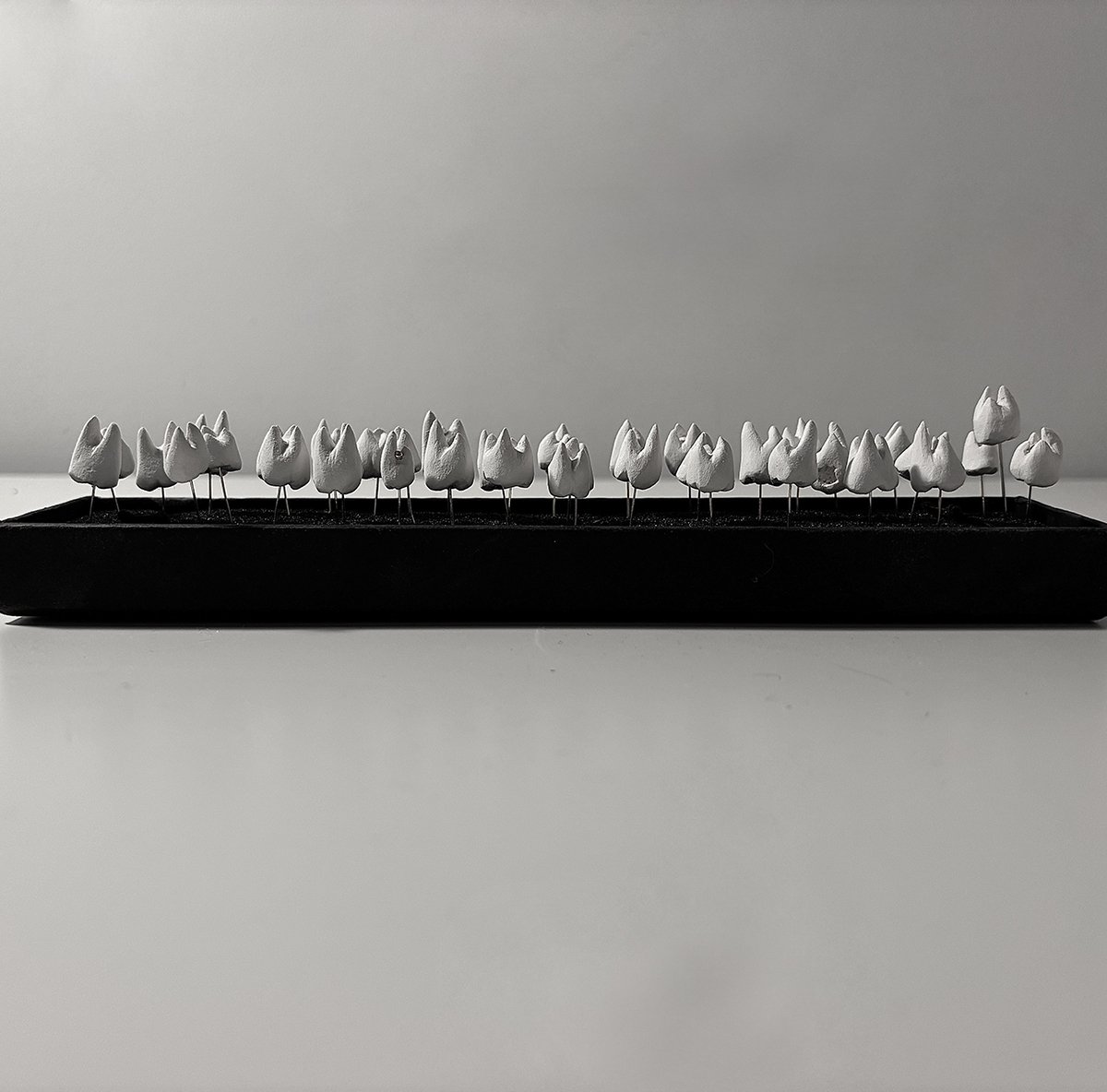
Her 2025 work features “A dream of falling teeth, now a real dream,” visualizing subconscious anxiety through icy clay teeth sculptures. Starting with a recurring dream where her teeth are constantly falling and swallowed, she embarks on a process of emotional reactions and psychological repair. The act of molding each tooth in a slow, repetitive rhythm is a physical ritual of healing. Each tooth has a fragment of a dream, symbolizing the reconstruction of personal boundaries and expressive abilities.
As Icy explains:
“During the period of recurrence of my dreams, when my teeth fell and swallowed the whole, I began to recreate each one with clay, as if extracting internalized emotional fragments from my body. The anxiety of reality gradually eased.”
This work further demonstrates not only the continued deep involvement with psychology, but also the use of multimedia to delve into personal experiences.
Self-harm Pain: Tracking emotional ultrasounds in a family fracture
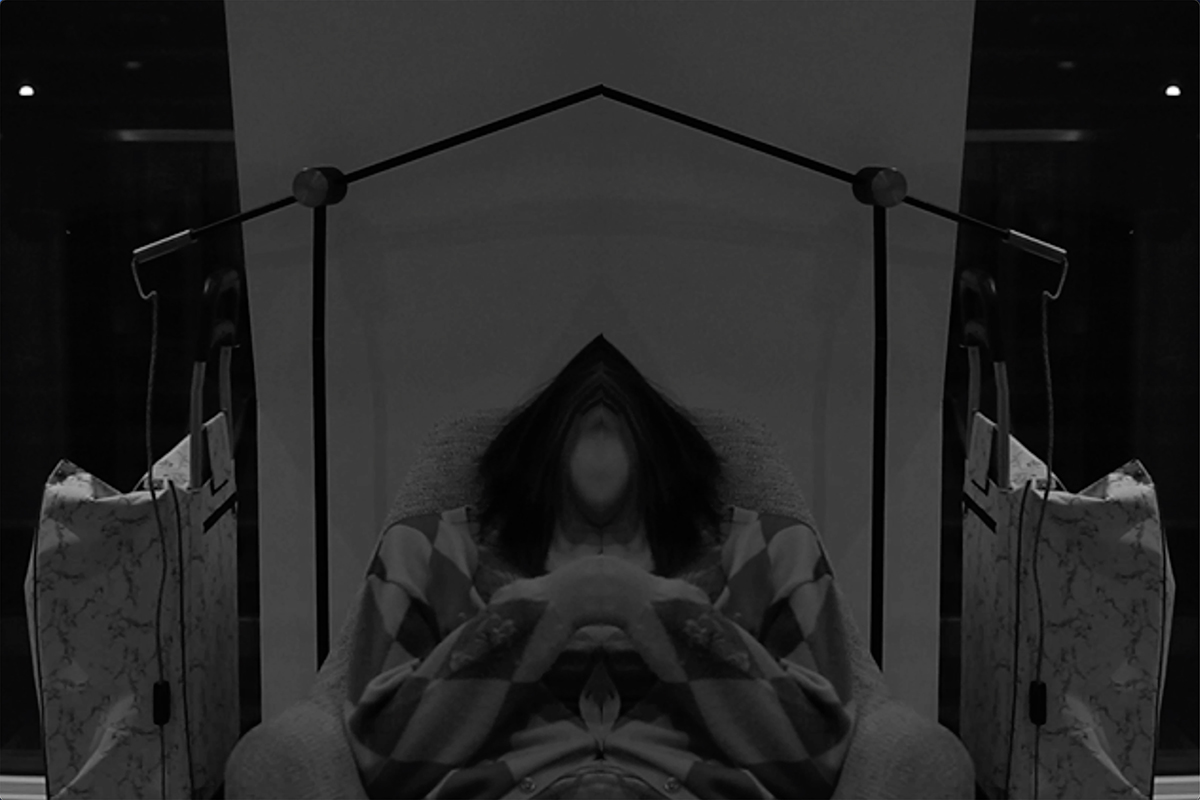
Created in 2019, “The Pain of Self-Harmony” is one of Icy’s most emotionally recharged early works. The two-minute short film blends live-action and animation, breaks traditional narrative structures and explores how emotions ferment nonlinearly through memory.
The work was inspired by a quiet act of rebellion that was the starting point for Icy’s reflection on the internalization of childhood memories of seeing her mother cut through her face from a series of family photographs, silence, psychological ruptures, and pain. Referring to Adler’s idea of “Trauma Comfort Zone,” she explores how emotional mechanisms lock individuals in periodic replays of past events.
Incorporating seven elements and six action, the film gradually blurs the boundaries between imaginary pain and reality.
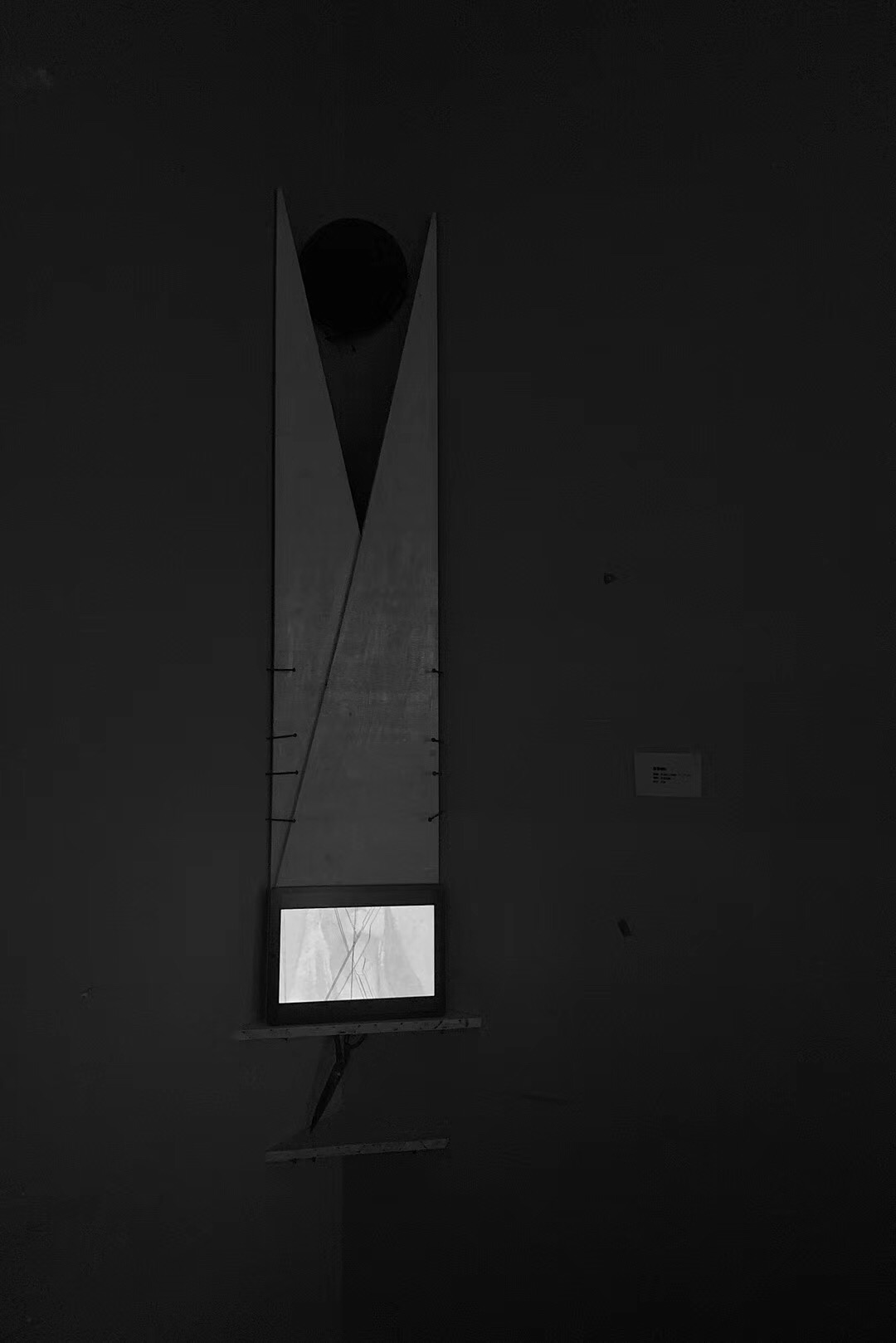
As one of her early works, its form is restrained, but through structural dismantling and rhythmic repetition, Icy begins to transform private family memories into abstraction
Visual language, allowing individual experiences to resonate emotionally with the audience. This work marks the beginning of her ongoing quest for emotional, memory and physical relationships.
The collapse of the story: Absurdity and fragmentation of the information age
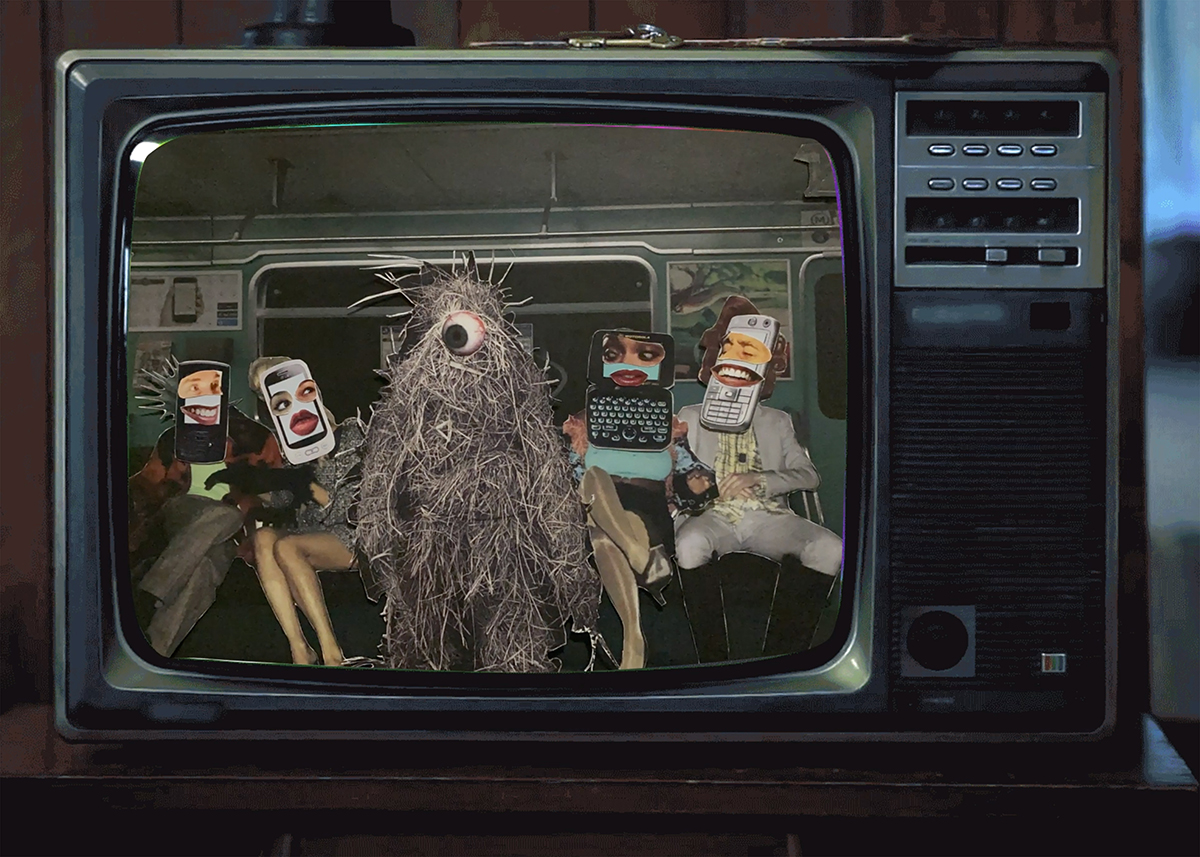
In works such as “Brain Travel” and “Stream,” Icy continues to use animation and live-action technology to criticize cognitive disruption and social homogenization in the digital age. She consciously breaks the consistency of linear storytelling, allowing fragmentation, repetition and ambiguity, and becomes the structural core of an emotional story that reflects the anxiety and fragmentation experienced in real life.
Her practice not only shapes the media form but also the ability of the story itself to carry emotional experiences.
Icy’s work consistently examines East Asian family culture, particularly the complex psychological dynamics of pathological symbiosis, blurred emotional boundaries, and long-term inhibition. She explores phenomena such as the “giant baby syndrome” and the “great mother” family dynamics, and translates these culturally embedded structures into iconic visual language through animation, video and installations.
Through this continuous process of self-analysis, she provides viewers with a space to reflect how we are shaped by cultural forces and how art becomes a gentle form of resistance.
Icy’s artistic process is not constrained by the medium. For her, art is language, and medium is its phrase. She does not impose a fixed form, but the credibility of expression guides her choices and selects the best medium for the emotional and theme weights of each project. Animation, live action, installations, sculpture – these are the changing vocabulary she uses to tell her story.
Her work is often born at the intersection of personal memory and social psychology, and focuses on how individuals find themselves within family structures, cultural identity, and emotional trauma. When faced with unexpressible experiences, she carefully constructs a formal, narrative framework, giving space to land emotions, opening up the possibilities for deep, reflective dialogue with the audience.
In her practice, there is no fixed techniques or pre-determined aesthetics, but only a permanent pursuit of emotional resonance that always begins with content. It is this freedom and integrity that gives her work lasting strength.
Source: Our Culture – ourculturemag.com


