



In the calm and serene interior of Batsford Gallery, Kairos: Between choice and destiny Appear quietly. Nothing speaks out loud to you. Instead, this show is begging for your attention. Things like surfaces, weight, and how objects keep time. Curated by Huan Zhou and Qi Hui, Kairos The work can be read as a series of interrupted moments, a series of decisions, and an inevitable future.
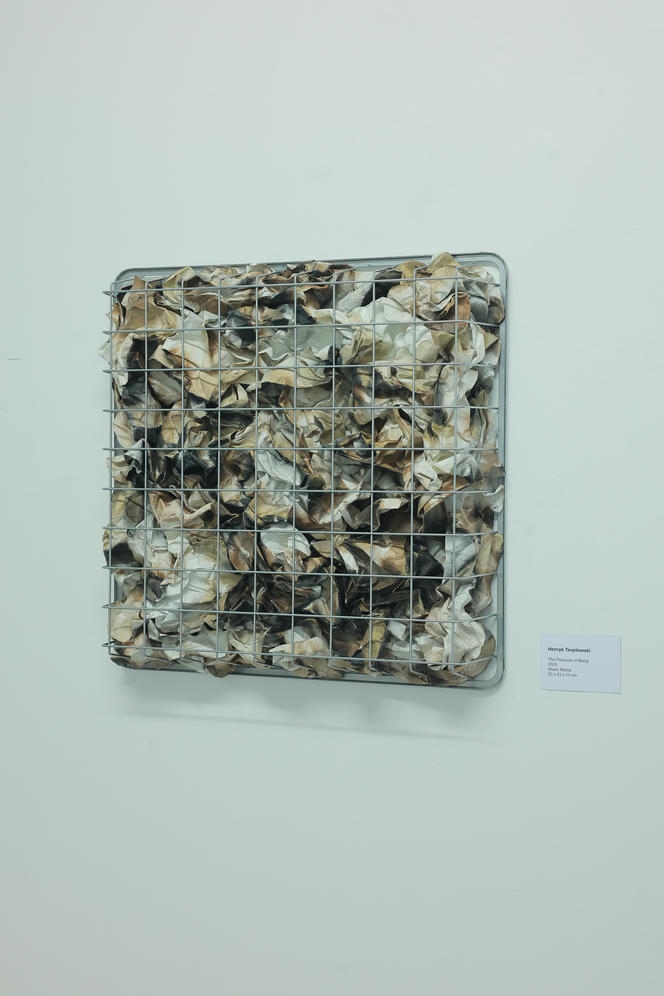
The work does not suggest a clear narrative path. Two wall-mounted assemblies are placed opposite each other and housed in a rigid metal grid. Compacted organic matter – Dry leaves, debris, and blackened debris are pressed against the trellis and freeze in mid-autumn. One piece includes a circular object resembling a handle or mechanical ring, which appears to be intentional, but its meaning is still ambiguous. Control, movement, and direction are all suggested, but all are thwarted by restraint and immobility.
A similar dialectic exists throughout the exhibition, showing the relationship between containment and subjectivity. Zhou’s role as curator is most evident in her use of space to slow down the viewer. The pieces are spaced out to create a line of sight, allowing the viewer to pause naturally. As a result, meaning develops slowly over time through repetition and proximity rather than explanation.
A painting opposite these two collective works provides a new record. The organic shapes floating on the surface are painted in vibrant shades of green, yellow, blue, and earthy red. Branching, vein-like lines extend to connect shapes that can be interpreted as hands, roots, and internal organs. Although the painting clearly suggests a physical connection, it does not become metaphorical. It suggests systems (biological, emotional, environmental) that exist independently of our conscious choices. The paint appears layered but fluid, suggesting that the shapes were brought to the surface through accumulation, rather than intentionality.
Materiality becomes a means of expression in itself. The installation is made up of long, dangling strands of fiber that weave downward until they touch the ground. The strands are soft and pooled at the roots. The installation slowly moves back and forth as people walk by. It is both brittle and durable, blocking space but not dominating it. Fibers remember the shape of wear and unevenness. It looks less constructed than collected, as if shaped by time rather than design.
Zhou’s sensitivity to the behavior of materials is central to her curatorial approach. Rather than forcing consistency, she allows different elements to coexist in a state of uncertainty. It is in this moment, when the material seems to be in flux, that the show engages with the concept of . Kairos The most obvious.
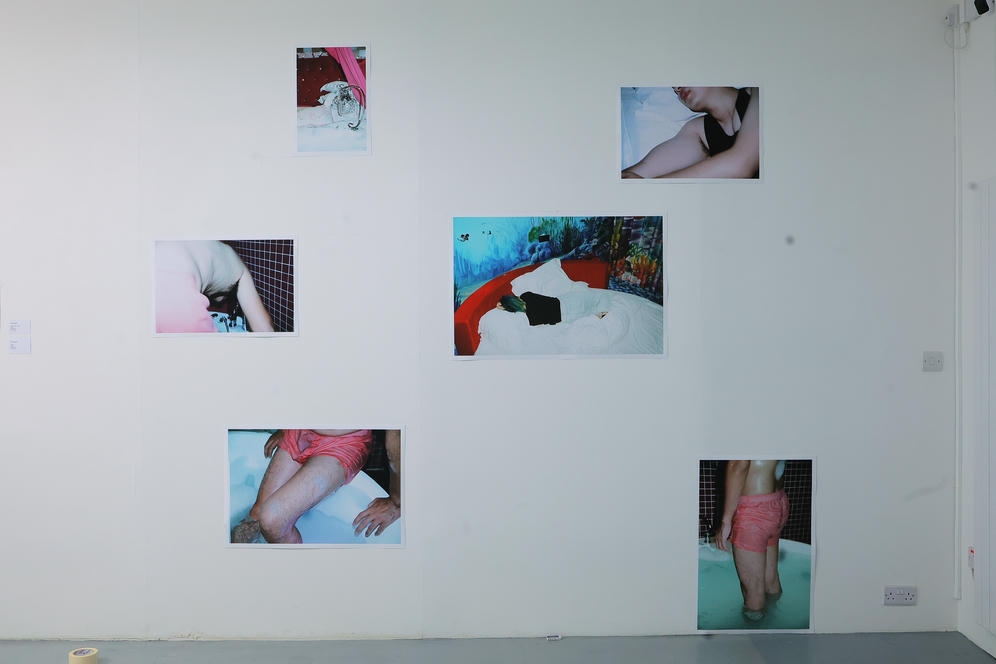
Pictures adorn the walls, creating a quieter, more personal tension. Images that capture bodies, domestic environments, and partial gestures appear disconnected from a linear narrative. A person lying in bed against a digitally rendered underwater background. The human limbs are firmly fixed piecemeal and partially. Unlike many photographs, these do not invite the viewer into the depicted space as a voyeur. The separation of the photos creates a sense of distance, as if the moment has passed.
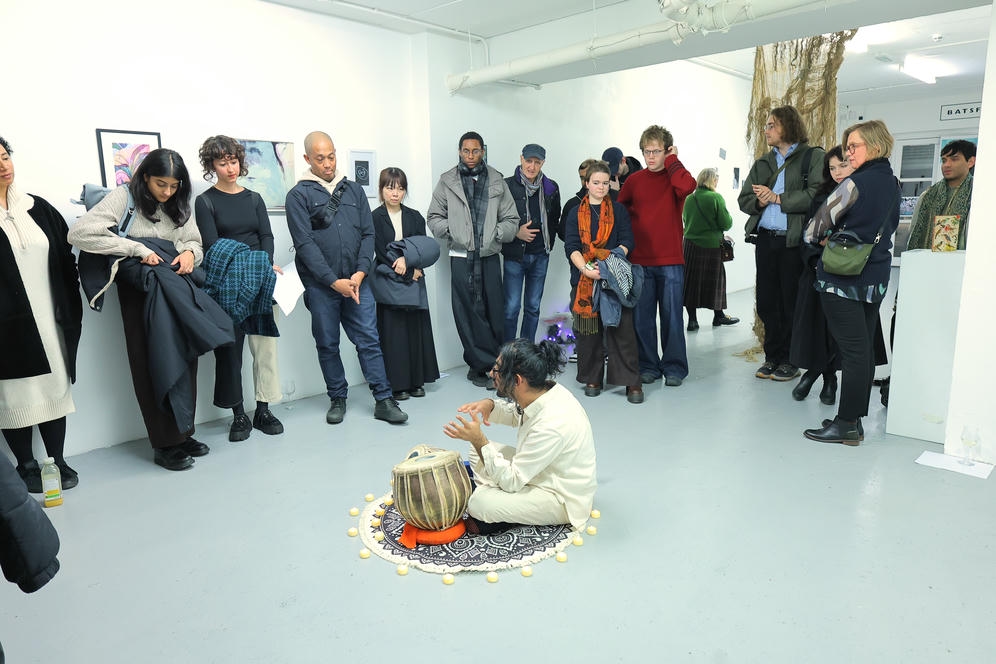
Chou’s restraint as a curator gives the works a unique sense of ambiguity, with minimal text available to guide the viewer’s interpretation of what kind of freedom or destiny the work represents. The show doesn’t tell viewers how to view these concepts. Instead, it constructs an environment for the viewer to experience both freedom and destiny as provisional and as products of structural, emotional, and material constraints.
The connection between all the works is not aesthetics, but a similar attention to conditionality and how bodies, objects, and decisions function within systems larger than themselves. This is not an expression of freedom as something autonomous, but rather as an evolving, momentary, and often limited concept.
The exhibition’s main strength is its restraint, but this same tranquility can sometimes become opaque. A lack of contextual framing can prevent certain works from being activated, especially for viewers who are not familiar with the conceptual language of material-driven practices. After a while, the balance between openness and withholding feels more unresolved than productively ambiguous.
Kairos: Between choice and destiny It succeeds because it is not resolved. Kairos It’s not a theatrical depiction of the subject matter. Kairos expresses its subject matter with tranquility as it settles into the room and into the viewer’s path through the exhibition space.
Therefore, Zhou’s method of curatorship does not work through spectacle, but rather through calibration: the calibration of distance, pace, and material presence. While many exhibitions seek to convey their relevance and importance, Chou presents something even more unusual. Stop. Meaning often emerges not at the moment of choice, but at and immediately after that moment, reminding us that the moment of choice and the moment of inevitable destiny occupy the same space.
Source: Our Culture – ourculturemag.com


